

Past Perfect Tense in Hindi – Rules, Examples and Exercises
Past Perfect Tense का प्रयोग सामान्यतया Complex Sentences में होता है। जब ये घटनायें भूतकाल में एक के बाद एक घटें और उनका आपस में घनिष्ठ सम्बन्ध हो व्रों पहली घटना की Past Perfect Tense में व्यक्त करते हैं और बाद में होने वाली घटना को Past Indefinite Tense में व्यक्त करते हैं। Simple Sentence में भी Already, By the end of …… By the time, At the age of …… आदि जैसे वाक्यांशों के होने पर Past Perfect Tense का प्रयोग हो जाता है।
Past Perfect Tense के वाक्यों के अन्त में चुका था, चुके थे, गया था, पहुँचे थे आदि शब्द-समूहों का प्रयोग होता है।
नीचे दी गई टेबल को ध्यानपूर्वक पढ़िए:
| Person (पुरुष) |
Singular (एकवचन) |
Plural (बहुवचन) |
|---|---|---|
| I Person | I had gone. मैं जा चुका था। |
We had gone. हम जा चुके थे। |
| II Person | You had gone. तुम जा चुके थे। |
You had gone. तुम जा चुके थे। |
| III Person | He (She, It) had gone. वह जा चुका था। |
They had gone. वे जा चुके थे। |
Rules (नियम):
- प्रत्येक कर्ता (I, We, You, They, He She, It, Singular Noun तथा Plural Noun) के लिए Had के साथ Verb की Third Form प्रयोग होता है।
नोट-
- Had सहायक क्रिया (Helping Verb) है तथा Third Form वाली क्रिया Main Verb (मुख्य क्रिया) होती है।
- इस Tense में ‘कल’ के लिए Yesterday का प्रयोग होता है।
- इस Tense में Tomorrow का प्रयोग नहीं होता है।
(A) Affirmative (Positive) Sentences
1. पुलिस के आने से पहले चोर घर से बाहर चला गया था।
The thief had gone out of the house before the police came.
2. चोर के जाने के पश्चात पुलिस वहाँ पहुँची थी।
The police reached there after the thief had gone.
3. उसने मुझे बताया कि अंकुर ने कार्य कर लिया है।
He told me that Ankur had done the work.
4. मैं यह समाचार पहले ही सुन चुका था।
I had already heard the news (OR) I had heard the news before.
5. सात बजे तक सब दुकानें बन्द हो चुकी थीं।
By seven o’clock all the shops had closed.
6. अठारह वर्ष की अवस्था में मैं ग्रेजुएट हो गया था।
At eighteen years of age I had become a graduate.
7. पिछले वर्ष के समाप्ति पर दो हजार गांवों को बिजली मिल गयी थी।
By the end of last year two thousand villages had got electricity.
8. चाय के समय तक हमारी टीम 300 रन बना चुकी थी।
By tea time our team had scored 300 runs.
9. वह पांच बजे तक यहां आ गया था।
He had come here till five o’clock.
10. जब हम कालेज पहुंचे, तब घंटी बज चुकी थी।
When we reached the college, the bell had rung.
(B) Negative Sentences
11. तुम्हारे स्टेशन पहुंचने से पहले रेलगाड़ी नहीं गयी थी।
The train had not gone before you reached the station.
12. पिताजी के आने के बाद डाक्टर साहब नहीं आये थे।
The doctor did not come after father had gone.
13. हमने इतना मोटा आदमी पहले कभी नहीं देखा था।
We had never seen such a fat man before.
14. मैंने कलकत्ता पहले कभी नहीं देखा था।
I had never seen Calcutta before.
15. मुझे आज तक तुम्हारा पत्र नहीं मिला।
I had not received your letter till today.
16. वह कल शाम तक वापस नहीं आया था।
He had not returned till last evening.
(C) Interrogative Sentences (Question Form)
First Type (क्या से आरम्भ होने वाले वाक्य):
17. सूर्य अस्त होने से पहले क्या तुमने अपना कार्य समाप्त कर लिया था?
Had you finished your work before the sun set?
18. क्या डाक्टर साहब के जाने के बाद मरीज मर गया था?
Did the patient die after the doctor had gone?
19. क्या तुम यह समाचार पहले ही सुन चुके थे?
Had you already heard the news?
20. क्या तुमने यह समाचार पहले कभी नहीं सुना था?
Had you never heard the news before?
Second Type (Wh-Type Questions):
21. तुम्हारे सोने से पहले मुकेश यहाँ क्यों नहीं आया था?
Why had Mukesh not come here before you slept?
22. तुम्हारे सोने के बाद मुकेश यहाँ से क्यों नहीं चला गया था?
Why did Mukesh not go away from here after you had slept?
पहचान और अनुवाद के नियम
पहचान-
- इन वाक्यों के अंत में चुका था, चुके थे, चुकी थी आदि शब्द आते हैं और इनमें क्रिया का समय, एक निश्चित समय होता है।
- इस Tense का प्रयोग भूतकाल में उस कार्य या घटना को व्यक्त करने के लिए होता है जो भूतकाल में किसी दूसरी घटना या समय से पहले घट चुकी हो। सामान्यतः इस Tense में दो क्रियाएं होती हैं- एक पहले घट चुकी होती है (Past Perfect Tense) और दूसरी बाद में घटती है (Past Tense)।
- इस Tense का प्रयोग भूतकाल में कार्य या घटना को बताने के लिए किया जाता है जो किसी निश्चित समय (Point of Time in the past) से पूर्व समाप्त हो चुकी हो।
- ऐसे वाक्य Simple Sentence होते हैं। इनमें Already, till आदि का प्रयोग होता है।
- पहले और बाद वाले वाक्य Complex Sentence है।
अनुवाद के नियम-
(A) Affirmative Sentences
- पहले समाप्त होने वाले कार्य में प्रत्येक कर्ता के साथ Had + Verb की Third Form का प्रयोग होता है और बाद में समाप्त होने वाले कार्य में Verb की Second Form आती है।
- यदि वाक्य में पहले या पूर्व हो तो Before का प्रयोग होता है। वाक्यों में Before से पहले आने वाली Clause (उपवाक्य) Principal Clause (मुख्य उपवाक्य) होती है और Before से आरम्भ होने वाली Clause-Adverb Clause होती है। ऐसे वाक्यों में Principal Clause में Had + Verb की Third Form का प्रयोग होता है और Adverb Clause-Past Indefinite Tense में बनती है।
- यदि वाक्य में ‘पश्चात’ या ‘बाद में’ हो तो After का प्रयोग होता है। ऐसे वाक्य में After से आरम्भ होने वाली Clause- Adverb Clause होती है और दूसरी Clause Principal Clause होती है। ऐसे वाक्यों में Had + Verb की Third Form का प्रयोग Adverb Clause में होता है। इस Tense में Had का प्रयोग सहायक क्रिया (Helping Verb) की तरह होता है।
- उदाहरण 1. इस वाक्य को ध्यानपूर्वक पढ़िए-
पुलिस के आने से पहले (पूर्व) चोर घर से बाहर चला गया था। - इस वाक्य के भाव को इस प्रकार भी प्रकट किया जा सकता है-
पुलिस आने भी नहीं पायी थी कि चोर घर से बाहर चला गया। - अतः दोनों वाक्यों की अंग्रेजी इस प्रकार बनेगी-
The thief had gone out out of the house before the police came. - इस वाक्य में दो Clauses इस प्रकार है-
(i) The thief had gone out out of the house. (Principal Clause)
(ii) Before the police came. (Adverb Clause) - उदाहरण 2. इस वाक्य को ध्यानपूर्वक पढ़िए-
चोर के जाने के पश्चात पुलिस वहाँ पहुँची थी।
The police reached there after the thief had gone. - इस वाक्य में दो Clauses इस प्रकार हैं-
(i) The police reached there.(Principal Clause)
(ii) After the thief had gone.(Adverb Clause)
- उदाहरण 1. इस वाक्य को ध्यानपूर्वक पढ़िए-
- सर्वप्रथम Principal Clause का अनुवाद किया जाता है। यदि वाक्य में ‘कि’ का प्रयोग हुआ है तो ‘कि’ के लिए That का प्रयोग किया जाता है। ऐसे वाक्यों में That से Subordinate Noun Clause बनती है। Noun Clause में Had + Verb की Third Form का प्रयोग होता है।
- उदाहरण 3 में हिन्दी में Noun Clause इस प्रकार है- “कि अंकुर ने कार्य कर लिया है।” इसकी अंग्रेजी इस प्रकार बनेगी- “that Ankur has done the work.” चूंकि वाक्य में He told me Principal Clause है अतः Noun Clause को Principal Clause के साथ जोड़ने पर has done had done में बदल जायेगा।
- उदाहरण 4 में एक ही वाक्य है जो Simple Sentence है। इस वाक्य में Already के प्रयोग के कारण Past Perfect Tense का प्रयोग हुआ है।
- उदाहरण 4 के क्रियाविशेषण शब्द को देखिए। यह इस प्रकार है- “I had heard the news before.” इस वाक्य में Before-Adverb है। उदाहरण 1 के वाक्य में Before-Conjunction है।
- By seven o’clock, at eighteen years of age, by the end of last year, by tea time, till 5 o’clock- Phrases के कारण उदाहरण 5, 6, 7, 8, 9 में Past Perfect Tense का प्रयोग हुआ है।
(B) Negative Sentences :
- Negative रचना Principal Clause में होती है।
- यदि Principal Clause में Had और Verb की Third Form का प्रयोग हुआ है तो “नहीं” के लिए Had + not + Verb की Third Form का प्रयोग होता है।
- यदि वाक्य After वाला है, तो Principal Clause में Did not + Verb की First Form का प्रयोग किया जाता है।
- “कभी नहीं” के लिए Never का प्रयोग होता है। Never का प्रयोग Had + Verb की Third Form के पहले किया जाता है।
- उदाहरण 15, 16 में समयवाचक क्रिया विशेषण till है। इनमें Had + not + Verb की Third Form का प्रयोग हुआ है।
(C) Interrogative Sentences :
- यदि प्रश्नवाचक वाक्य में “क्या” है (First Type) तो “क्या” का अनुवाद What से नहीं, Had से किया जाता है। यदि Principal Clause में Had है, तो Had को वाक्य के आरम्भ में रख दिया जाता है और Subject उसके बाद आता है।
- यदि Before के पहले वाला भाग Principal Clause है। अतः वाक्य होगा —
Had + Subject + Verb की Third Form - यदि वाक्य After वाला है तो Principal Clause में Did का प्रयोग किया जाएगा। अतः वाक्य बनेगा —
Did + Subject + Verb की First Form (उदाहरण 18)
- यदि Before के पहले वाला भाग Principal Clause है। अतः वाक्य होगा —
- यदि प्रश्नवाचक वाक्य Wh-Type का है तो वाक्य Wh-Word से आरम्भ होता है। Wh-Word के बाद Had + Subject + Verb की Third Form आती है।
- यदि वाक्य Negative भी है तो मुख्य क्रिया से पहले “नहीं” के लिए Not आता है।
- प्रश्नवाचक वाक्यों के अन्त में प्रश्नवाचक चिन्ह (?) लगाया जाता है।
नोट– Negative तथा Question Form सदा Principal Clause में ही परिवर्तन करने से बनती है।
EXERCISE 1. (Positive Sentences) Translate the following sentences into English :
| # | Hindi Sentence | English Translation |
|---|---|---|
| 1 | मेरे घर पहुँचने से पहले पिताजी नाश्ता कर चुके थे। | Father had taken breakfast before I reached home. |
| 2 | विद्यालय के निर्माण करने से पहले माताजी रामायण पढ़ चुकी थीं। | Mother had read the Ramayana before the school was built. |
| 3 | माताजी के रामायण पढ़ने से पहले साहब लॉन में घूम चुके थे। | Sir had walked in the lawn before mother read the Ramayana. |
| 4 | पिताजी के घर पहुँचने से पहले साहब मैदान घूम चुके थे। | Sir had walked in the field before father reached home. |
| 5 | साहब के मैदान घूमने से पहले हिमांशु सैर पर जा चुका था। | Himanshu had gone for a walk before sir walked in the field. |
| 6 | सूरज के निकलने से पहले हम लोग घर से निकल चुके थे। | We had left home before the sun rose. |
| 7 | रेलवे पास लेने से पहले मैंने टिकट खरीद लिया था। | I had bought the ticket before getting the railway pass. |
| 8 | सिनेमा जाने से पहले मैंने यह समाचार सुन लिया था। | I had heard this news before going to the cinema. |
| 9 | पिताजी के आने से पहले मैं बाजार जा चुका था। | I had gone to the market before father came. |
| 10 | रमेश के फिल्म देखने से पहले मैंने यह समाचार सुन लिया था। | I had heard this news before Ramesh watched the film. |
| 11 | भाई साहब के आने से पहले हम लोग घर छोड़ चुके थे। | We had left the house before brother came. |
| 12 | बच्चों के स्कूल पहुँचने से पहले घण्टी बज चुकी थी। | The bell had rung before the children reached the school. |
| 13 | पिताजी के घर में प्रवेश करने से पहले मैं घर आ चुका था। | I had come home before father entered the house. |
| 14 | उसके बाजार पहुँचने से पहले दुकान बन्द हो चुकी थी। | The shop had closed before he reached the market. |
| 15 | सूरज अस्त होने से पहले ही किसान अपने खेतों में हल चला चुके थे। | The farmers had ploughed their fields before the sun set. |
Difficult words : गृह कार्य = homework; खबर = news; फिल्म film; समाचार-पत्र = newspaper, पेन्टर साहब = the painter, होटल hotel; पुलिस police; नौकरानी maid servant: अस्त होना = to set; अपने-अपने घरों को लौटने लगे began to return to their houses.
EXERCISE 2. (Negative Sentences) Translate the following sentences into English:
| # | Hindi Sentence | English Translation |
|---|---|---|
| 1 | भाई साहब के आने से पहले नौकर ने खाना नहीं बनाया था। | The brother had not cooked the food before madam arrived. |
| 2 | मेरे स्कूल जाने के बाद बारिश नहीं हुई थी। | It had not rained after I went to school. |
| 3 | मास्टर साहब के जाने के पश्चात इन लड़कियों ने गीत नहीं गाए थे। | These girls had not sung songs after the teacher left. |
| 4 | रोगी के ठीक होने के पश्चात डॉक्टर साहब नहीं आए थे। | The doctor had not come after the patient recovered. |
| 5 | नाश्ता करने से पहले मेहमान नहीं गए थे। | The guests had not left before having breakfast. |
| 6 | नाश्ता तैयार हो जाने के बाद भी मेहमान घर नहीं रुके थे। | The guests had not stayed at home even after the breakfast was ready. |
| 7 | राम ने कहा कि सतीश पास नहीं हुआ था। | Ram said that Satish had not passed. |
| 8 | सतीश ने कहा कि अभय फेल नहीं हुआ था। | Satish said that Abhay had not failed. |
| 9 | हमने ऐसा नीरस मैच पहले कभी नहीं देखा था। | We had never seen such a dull match before. |
| 10 | वर्षा समाप्त होने के पश्चात यात्री होटल नहीं पहुँचा था। | The traveler had not reached the hotel after the rain stopped. |
| 11 | वर्षा समाप्त होने के पूर्व यात्री होटल नहीं पहुँचा था। | The traveler had not reached the hotel before the rain stopped. |
| 12 | माताजी को कल तक लक्ष्मी का फोन नहीं मिला था। | Mother had not received Lakshmi’s call till yesterday. |
| 13 | विनोद को आज तक मनी ऑर्डर नहीं मिला था। | Vinod had not received the money order till today. |
| 14 | हमीद को कल तक बैंक ड्राफ्ट नहीं मिला था। | Hameed had not received the bank draft till yesterday. |
| 15 | मैंने ताज पहले कभी नहीं देखा था। | I had never seen the Taj before. |
Difficult words: रोगी = patient; मेहमान= guests; नीरस = dull (boring = uninteresting); यात्री = passenger (traveller); फोन = phone (telephone); बैंक ड्राफ्ट = bank draft.
EXERCISE 3. (Interrogative Sentences) Translate the following sentences into English:
(A) First Type –
| # | Hindi Sentence | English Translation |
|---|---|---|
| 1 | क्या सूर्य छिपने से पहले वह सो गया था? | Had he slept before the sun set? |
| 2 | क्या चाँद निकलने से पहले तुमने सहरी खा ली थी? | Had you eaten the pre-dawn meal before the moon rose? |
| 3 | क्या चपरासी के जाने के पश्चात मैनेजर साहब कॉलेज के ऑफिस में पहुँच गए थे? | Had the manager reached the college office after the peon left? |
| 4 | क्या दवाई खाने से पहले माताजी सो गई थीं? | Had mother slept before taking the medicine? |
| 5 | क्या रामायण पढ़ने से पहले पिताजी स्नान कर चुके थे? | Had father taken a bath before reading the Ramayana? |
| 6 | क्या तुम्हारे सोने से पहले बुआजी आ गई थीं? | Had aunt arrived before you slept? |
| 7 | क्या बारिश होने से पहले किसान अपने खेतों में नहीं पहुँचे थे? | Had the farmers not reached their fields before it rained? |
(B) Second Type –
| # | Hindi Sentence | English Translation |
|---|---|---|
| 8 | सूर्य निकलने से पहले तुम्हारे नौकर ने मेरे लिए चाय कब बनाई थी? | When had your servant made tea for me before the sun rose? |
| 9 | आठ बजने से पहले अंशु ने क्या काम किया था? | What work had Anshu done before eight o’clock? |
| 10 | कुत्ते के भौंकने के पश्चात चोर क्यों भाग गया था? | Why had the thief run away after the dog barked? |
| 11 | आठ बजने के बाद हिमानी ने क्या किया था? | What had Himani done after eight o’clock? |
| 12 | कुत्ते के भौंकने से पहले चोर ने क्या किया था? | What had the thief done before the dog barked? |
| 13 | बारिश होने से पहले कितने विद्यार्थी प्रार्थना में शामिल नहीं हुए थे? | How many students had not attended the prayer before it rained? |
| 14 | बारिश बंद होने के पश्चात कितने विद्यार्थी कॉलेज पहुँच गए थे? | How many students had reached the college after the rain stopped? |
| 15 | माताजी के सोने के पश्चात किसने दरवाजा खटखटाया था? | Who had knocked at the door after mother went to sleep? |
| 16 | दस बजे तक कितने अध्यापक कॉलेज ऑफिस पहुँच चुके थे? | How many teachers had reached the college office by ten o’clock? |
Difficult words: छिपना to set; सहरी = sahri (breakfast in the month of Ramzan); मैनेजर साहब = the manager; दवाई खाना to take the medicine; बुआजी = the aunt; कितने विद्यार्थी = how many students; प्रार्थना में = in the prayer; किसने = who; दरवाजा खटखटाना = to knock at the door; कितने अध्यापक how many teachers.
EXERCISE 4. (Miscellaneous) Translate the following sentences into English:
| # | Hindi Sentence | English Translation |
|---|---|---|
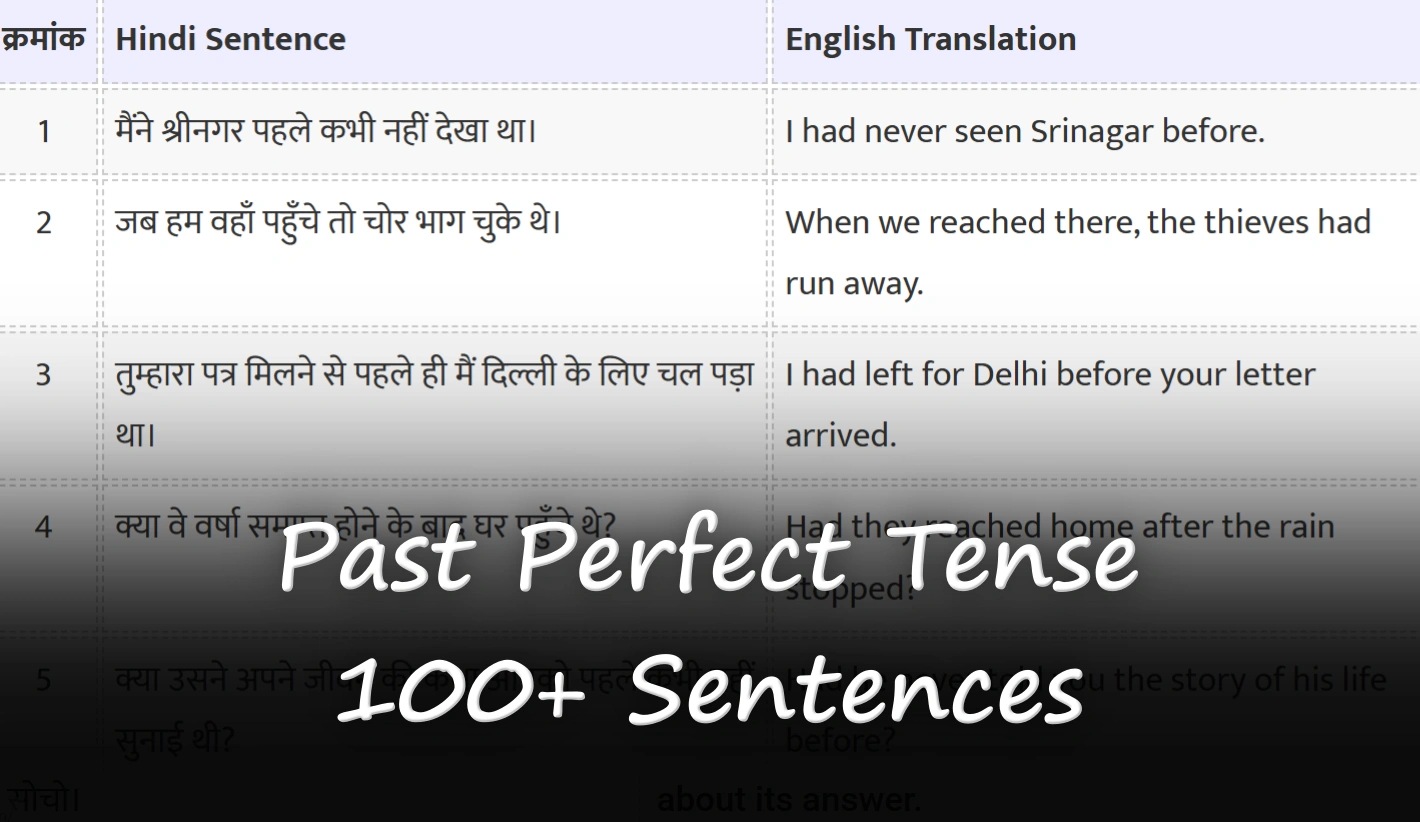
| 1 | मैंने श्रीनगर पहले कभी नहीं देखा था। | I had never seen Srinagar before. |
| 2 | जब हम वहाँ पहुँचे तो चोर भाग चुके थे। | When we reached there, the thieves had run away. |
| 3 | तुम्हारा पत्र मिलने से पहले ही मैं दिल्ली के लिए चल पड़ा था। | I had left for Delhi before your letter arrived. |
| 4 | क्या वे वर्षा समाप्त होने के बाद घर पहुँचे थे? | Had they reached home after the rain stopped? |
| 5 | क्या उसने अपने जीवन की कथा आपको पहले कभी नहीं सुनाई थी? | Had he never told you the story of his life before? |
| 6 | हमने आपके चले जाने के बाद कॉफी पी। | We drank coffee after you had left. |
| 7 | जब मैं स्टेशन पर पहुँचा तो गाड़ी जा चुकी थी। | When I reached the station, the train had left. |
| 8 | इससे पहले हम पटना कभी नहीं गए थे। | We had never been to Patna before this. |
| 9 | वर्षा आने से पहले हम घर पहुँच चुके थे। | We had reached home before it started raining. |
| 10 | क्या लड़कों ने घण्टी बजने के बाद कमरे में प्रवेश किया था? | Had the boys entered the room after the bell rang? |
| 11 | क्या पुलिस के पहुँचने से पहले चोर भाग चुके थे? | Had the thieves escaped before the police arrived? |
| 12 | हमने उस समय तक अपना काम खत्म नहीं किया था। | We had not finished our work by that time. |
| 13 | घण्टी बजने से पहले ही राम स्कूल में आ गया था। | Ram had come to school before the bell rang. |
| 14 | सूर्य छिपने से पहले ही हम स्टेशन पर पहुँच चुके थे। | We had reached the station before the sun set. |
| 15 | क्या आप मेरे आने से पहले ही खाना खा चुके थे? | Had you eaten your meal before I came? |
Difficult words: ख़ोर = thieves; कॉफी = coffee; स्टेशन = station: प्रवेश करना = to entert पुलिस = police; सूर्य छिपने से पहले before the sun set (या before sunset).
Learn other English Grammar in Hindi Translation: