

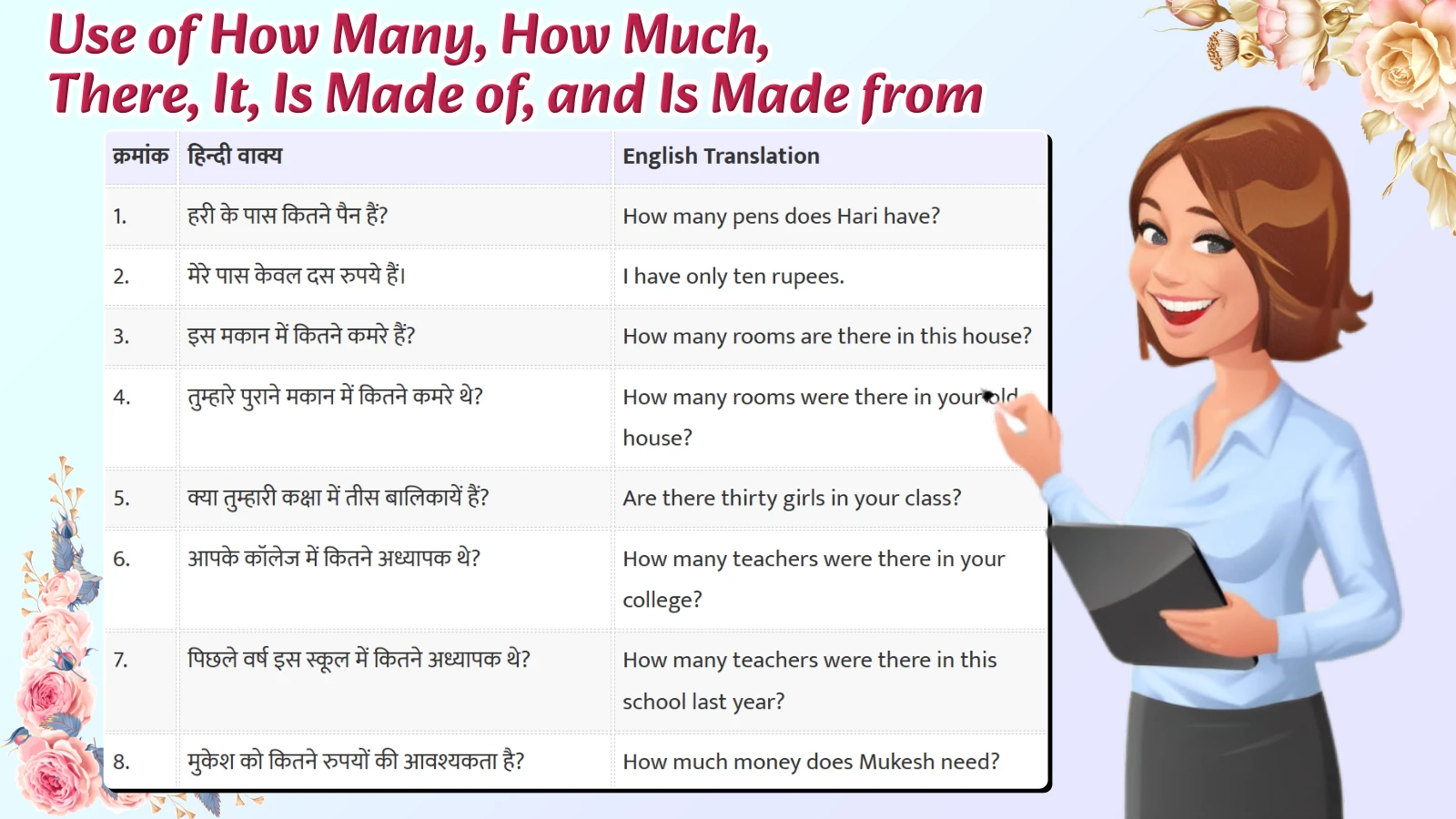
Use of ‘How Many’, ‘How Much’, ‘There’, ‘It’, ‘Is Made of’ and ‘Is Made from’
अंग्रेज़ी में ‘How many’ का प्रयोग गिनने योग्य वस्तुओं के लिए और ‘How much’ का प्रयोग अगणनीय वस्तुओं के लिए किया जाता है। ‘There is / are’ से किसी वस्तु, व्यक्ति या स्थान के अस्तित्व का पता चलता है। ‘It is / It was’ पहचान बताने, समय, दूरी, या मौसम व्यक्त करने के लिए प्रयोग होता है। ‘Is made of’ का प्रयोग तब होता है जब वस्तु का मूल रूप नहीं बदलता (जैसे: The table is made of wood.)। जब मूल पदार्थ का रूप बदल जाए, तो ‘Is made from’ का प्रयोग किया जाता है (जैसे: Paper is made from wood.)। इन सभी संरचनाओं का सही प्रयोग सीखकर आप अंग्रेज़ी वाक्य के अनुवाद अधिक सटीक और सरल बना सकते हैं।
अनुवाद के नियम
1. तुम्हारे पास कितने रुपये है? इस वाक्य की अंग्रेजी दो प्रकार से बनायी जाती है, प्रथम विधि में have को कर्ता (You) से पहले लिखते हैं। द्वितीय विधि में do को कर्ता (You) से पहले लिखा जाता है और You के पश्चात have का प्रयोग किया जाता है।
- How many rupees have you? (तुम्हारे पास कितने रुपये हैं?)
- How many rupees do you have? (तुम कितने रुपये रखते हो?)
नोट– पहली विधि में have मुख्य क्रिया है। दूसरी विधि में do सहायक क्रिया है।
मेरे पास केवल दस रुपये हैं।
I have only ten rupees.
2. How many से संख्या (Number) प्रकट होती है और How much से मात्रा (Quantity) का ज्ञान होता है।
तुम्हारे पास कितने रुपये हैं?
How many rupees have you? (How many rupees do you have?)
इस दुकान में कितने दरवाजे हैं?
How many doors are there in this shop?
अब तुम्हारे भाई को कितने दूध की आवश्यकता है? (अब तुम्हारे भाई को कितना दूध चाहिए?)
How much milk does your brother need now?
3. How many के साथ कभी-कभी There का भी प्रयोग होता है। यह उस समय होता है जब वाक्य में Verb To be के रूप-Is, am, are, was, were का प्रयोग मुख्य क्रिया की तरह हुआ हो।
एक सप्ताह में कितने दिन होते हैं?
How many days are there in a week?
ऐसे प्रश्नों के उत्तर में There का प्रयोग होता है। जैसे-
एक सप्ताह में सात दिन होते हैं।
There are seven days in a week.
4. जब प्रश्न To be-Verb के रूपों से बनाये जाते हैं तो प्रश्न में भी There का प्रयोग होता है। ऐसे प्रश्न और उनके उत्तर में There का अर्थ- ‘बहाँ’ नहीं होता है। सत्य तो यह है कि ऐसे वाक्यों में There का कुछ भी अर्थ नहीं होता है। उत्तर में There-Subject के रूप में प्रयुक्त होता है।
इस दुकान में कितने दरवाजे हैं?
How many doors are there in this shop?
मेरी कक्षा में दस लड़कियाँ हैं।
There are ten girls in my class.
एक सप्ताह में कितने दिन होते हैं?
How many days are there in a week?
एक सप्ताह में सात दिन होते हैं।
There are seven days in a week.
5. सर्दी, गर्मी, वर्षा तथा समय प्रकट करने के लिए It का प्रयोग होता है।
अब बारिश हो रही है।
Now it is raining.
आज बहुत गर्मी है।
It is very hot today.
अब चार बजे हैं।
Now it is four.
नोट– It के ऐसे प्रयोग के लिए वाक्य में To be क्रिया के रूप (Is, am, are, was, were, will be, shall be) होने चाहिए।
कल बहुत ठंड होगी।
It will be very cold tomorrow. (Tomorrow will be very cold.)
6. वाक्य 9 को ध्यानपूर्वक पढ़िए। जोर, प्रभाव (Emphasis) के लिए It was you, It was he, It was I. आदि संरचनाओं का प्रयोग होता है।
यह आप ही थे जिसने मुझे बचाया था।
It was you who saved me.
7. Is made of और Is made from के प्रयोग को ध्यानपूर्वक पढ़िए- Is made of का प्रयोग उस समय होता है जब किसी वस्तु से दूसरी वस्तु बने और बनी हुई वस्तु में उस पदार्थ को देखा जा सके जिससे वह वस्तु बनी है, जैसे कुर्सी लकड़ी से बनी है। कुर्सी बनने के बाद उसमें लकड़ी दिखाई पड़ती है।
यह कुर्सी लकड़ी की बनी हुई है।
This chair is made of wood.
8. Is made from का प्रयोग उस समय होता है जब बनी हुई वस्तु में वह पदार्थ दिखाई न पड़े जिससे वह वस्तु बनाई गयी है; जैसे-पनीर दूध से बनता है किन्तु पनीर में दूध स्पष्ट रूप से दिखाई नहीं पड़ता है।
पनीर दूध से बनाया जाता है।
Cheese is made from milk.
EXERCISE. TRANSLATION EXAMPLES
| क्रमांक | हिन्दी वाक्य | English Translation |
|---|---|---|
| 1. | हरी के पास कितने पैन हैं? | How many pens does Hari have? |
| 2. | मेरे पास केवल दस रुपये हैं। | I have only ten rupees. |
| 3. | इस मकान में कितने कमरे हैं? | How many rooms are there in this house? |
| 4. | तुम्हारे पुराने मकान में कितने कमरे थे? | How many rooms were there in your old house? |
| 5. | क्या तुम्हारी कक्षा में तीस बालिकायें हैं? | Are there thirty girls in your class? |
| 6. | आपके कॉलेज में कितने अध्यापक थे? | How many teachers were there in your college? |
| 7. | पिछले वर्ष इस स्कूल में कितने अध्यापक थे? | How many teachers were there in this school last year? |
| 8. | मुकेश को कितने रुपयों की आवश्यकता है? | How much money does Mukesh need? |
| 9. | कागज किस तरह बनाया जाता है? | How is paper made? |
| 10. | पनीर दूध से बनाया जाता है। | Cheese is made from milk. |
| 11. | यह सन्दूक लकड़ी का बना हुआ है। | This box is made of wood. |
| 12. | यह मैं ही था जो कल तुम्हारे काम आया। | It was I who helped you yesterday. |
| 13. | यह तुम ही थे जिसने कल मास्टर साहब की आज्ञा का उल्लंघन किया था। | It was you who disobeyed the teacher’s order yesterday. |
| 14. | एक साल में कितने दिन होते हैं? | How many days are there in a year? |
| 15. | 2000 ई० में फरवरी में कितने दिन होंगे? | How many days will there be in February, 2000? |
| 16. | इस कॉलेज में अब कितने विद्यार्थी हैं? | How many students are there in this college now? |
| 17. | वही दूध से बनाया जाता है। | It is made from milk. |
| 18. | यह फर्नीचर स्टील का बनाया हुआ प्रतीत होता है। | This furniture seems to be made of steel. |
| 19. | स्याही किस प्रकार बनायी जाती है? | How is ink made? |
| 20. | अब तुम्हें कितना दूध चाहिए? | How much milk do you need now? |
Difficult words: आवश्यकता होना = to need; पनीर = cheese; यह मैं ही था= It was I; यह तुम ही थे = It was you; आज्ञा का उल्लंघन करना to disobey; फरवरी = February; दही = curd: फर्नीचर = furniture; स्याही = ink; कितना दूध = how much milk.
Examples Using “How Many”, “How Much”, “There”, “It”, “Is made of”, and “Is made from”:
| क्रमांक | हिन्दी वाक्य | English Translation |
|---|---|---|
| 1. | इस कमरे में कितनी कुर्सियाँ हैं? | How many chairs are there in this room? |
| 2. | तुम्हारे स्कूल में कितने विद्यार्थी हैं? | How many students are there in your school? |
| 3. | तुम्हारे पास कितनी किताबें हैं? | How many books do you have? |
| 4. | तुम्हारे घर में कितने कमरे हैं? | How many rooms are there in your house? |
| 5. | मेज पर कितने गिलास हैं? | How many glasses are there on the table? |
| 6. | तुम्हारे पास कितने पैन हैं? | How many pens do you have? |
| 7. | तुम्हारे गाँव में कितने घर हैं? | How many houses are there in your village? |
| 8. | कितने लोग मीटिंग में आए? | How many people came to the meeting? |
| 9. | इस स्कूल में कितनी अध्यापिकाएँ हैं? | How many lady teachers are there in this school? |
| 10. | तुम्हारे परिवार में कितने सदस्य हैं? | How many members are there in your family? |
| 11. | तुम्हें कितने पैसे चाहिए? | How much money do you need? |
| 12. | तुम्हारे पास कितना पानी है? | How much water do you have? |
| 13. | दूध में कितनी शक्कर है? | How much sugar is there in the milk? |
| 14. | तुम्हारे पास कितना समय है? | How much time do you have? |
| 15. | बाल्टी में कितना पानी है? | How much water is there in the bucket? |
| 16. | तुम्हारे पास कितनी जानकारी है? | How much information do you have? |
| 17. | अब कितनी दूरी बाकी है? | How much distance is left now? |
| 18. | इस बोतल में कितना तेल है? | How much oil is there in this bottle? |
| 19. | मुझे कितना काम करना है? | How much work do I have to do? |
| 20. | तुम्हारे शहर में कितना प्रदूषण है? | How much pollution is there in your city? |
| 21. | वहाँ एक बड़ा बगीचा है। | There is a big garden there. |
| 22. | मेज पर एक किताब है। | There is a book on the table. |
| 23. | कमरे में दो कुर्सियाँ हैं। | There are two chairs in the room. |
| 24. | इस गाँव में कोई स्कूल नहीं है। | There isn’t any school in this village. |
| 25. | वहाँ बहुत भीड़ थी। | There was a large crowd there. |
| 26. | यहाँ कई होटल हैं। | There are several hotels here. |
| 27. | यहाँ पास में एक नदी है। | There is a river nearby. |
| 28. | इस सड़क पर बहुत ट्रैफिक है। | There is a lot of traffic on this road. |
| 29. | वहाँ पाँच बिल्लियाँ थीं। | There were five cats there. |
| 30. | अब वहाँ एक नई बिल्डिंग होगी। | There will be a new building there now. |
| 31. | यह मेरा घर है। | It is my house. |
| 32. | यह मेरा कुत्ता है। | It is my dog. |
| 33. | यह वही लड़की है जिसने मुझे मदद की थी। | It is the same girl who helped me. |
| 34. | यह मैं हूँ जिसने उसे बुलाया। | It is I who called him. |
| 35. | यह कल का अख़बार है। | It is yesterday’s newspaper. |
| 36. | यह सही समय है। | It is the right time. |
| 37. | यह सुबह के पाँच बजे हैं। | It is five o’clock in the morning. |
| 38. | यह बहुत गर्म दिन है। | It is a very hot day. |
| 39. | यह बारिश हो रही है। | It is raining. |
| 40. | यह ठंडी हवा चल रही है। | It is a cold wind blowing. |
| 41. | यह फर्नीचर लकड़ी का बना है। | This furniture is made of wood. |
| 42. | यह मेज लोहे की बनी है। | This table is made of iron. |
| 43. | यह सन्दूक स्टील का बना है। | This box is made of steel. |
| 44. | यह कुर्सी बाँस की बनी है। | This chair is made of bamboo. |
| 45. | यह पेंसिल लकड़ी की बनी है। | This pencil is made of wood. |
| 46. | यह अंगूठी सोने की बनी है। | This ring is made of gold. |
| 47. | यह घड़ी चाँदी की बनी है। | This watch is made of silver. |
| 48. | यह दीवार ईंटों की बनी है। | This wall is made of bricks. |
| 49. | यह घर पत्थर का बना है। | This house is made of stone. |
| 50. | यह जूते चमड़े के बने हैं। | These shoes are made of leather. |
| 51. | पनीर दूध से बनाया जाता है। | Cheese is made from milk. |
| 52. | कागज लकड़ी से बनाया जाता है। | Paper is made from wood. |
| 53. | चीनी गन्ने से बनाई जाती है। | Sugar is made from sugarcane. |
| 54. | दही दूध से बनाई जाती है। | Curd is made from milk. |
| 55. | मक्खन दूध से बनाया जाता है। | Butter is made from milk. |
| 56. | शराब अंगूर से बनाई जाती है। | Wine is made from grapes. |
| 57. | ब्रेड गेहूं से बनाई जाती है। | Bread is made from wheat. |
| 58. | तेल बीजों से बनाया जाता है। | Oil is made from seeds. |
| 59. | जैम फलों से बनाया जाता है। | Jam is made from fruits. |
| 60. | प्लास्टिक रसायनों से बनाया जाता है। | Plastic is made from chemicals. |
| 61. | यह वही आदमी है जिसने मेरी मदद की। | It is the same man who helped me. |
| 62. | यह वह घर है जिसमें मैं रहता हूँ। | It is the house where I live. |
| 63. | यह वही शहर है जहाँ मेरा जन्म हुआ था। | It is the city where I was born. |
| 64. | यह वही लड़की है जो पहले आई थी। | It is the same girl who came earlier. |
| 65. | यह वही कारण है जिससे समस्या हुई। | It is the reason that caused the problem. |
| 66. | यहाँ बहुत शोर है। | There is a lot of noise here. |
| 67. | कमरे में कोई नहीं है। | There is no one in the room. |
| 68. | अब मेरे पास थोड़ा समय है। | I have a little time now. |
| 69. | इस बोतल में कितना दूध है? | How much milk is there in this bottle? |
| 70. | यह कार स्टील और एल्युमिनियम से बनी है। | This car is made of steel and aluminium. |
Summary
| Structure / Expression | Usage | Example |
|---|---|---|
| How many + plural noun | To ask countable quantity | How many books are there? |
| How much + uncountable noun | To ask amount/quantity | How much water is there? |
| There is / are / was / were | To express existence | There is a park near my house. |
| It is / It was | To identify, describe, show time, weather | It is raining. / It was I who called. |
| Is made of | For material composition (no change in material) | The chair is made of wood. |
| Is made from | For transformation (material changes form) | Paper is made from wood. |