

Future Perfect Tense in Hindi: Rules, Examples and Exercises
इस काल के वाक्यों के अन्त में ‘चुकूँगा’, ‘चुकेंगे’, ‘चुकेगी’, ‘चुकोगे’ आदि शब्द-समूहों का प्रयोग होता है। इन वाक्यों से ज्ञात होता है कि कार्य भविष्य में पूरा हो जायेगा। सामान्यतया इस Tense के वाक्य Complex Sentence होते हैं लेकिन कभी-कभी Simple Sentence के वाक्य भी इस Tense में प्रयुक्त हो जाते हैं।
Complex Sentence में ऐसे दो कार्यों का वर्णन होता है जिनमें से एक कार्य भविष्य में दूसरे कार्य के आरम्भ होने से पहले ही समाप्त हो जाता है।
Example:
मैं इस पुस्तक को सूर्य अस्त होने से पहले पढ़ चुकूँगा।
I shall have read this book before the sun sets. (Complex Sentence)
इस वाक्य में निम्नलिखित Clauses है-
- I shall have read this book. (Principal Clause)
- Before the sun sets. (Adverb Clause)
नीचे दी गई टेबल को ध्यानपूर्वक पढ़िए:
| Person (पुरुष) |
Singular (एकवचन) |
Plural (बहुवचन) |
|---|---|---|
| I Person | I shall have written. मैं लिख चऊँगा। |
We shall have written. हम लिख चुकेंगे। |
| II Person | You will have written. तुम लिख चुकोगे। (एक व्यक्ति) |
You will have written. आप लिख चुकोगे। (एक से अधिक व्यक्ति) |
| III Person | He (She, It) will have written. वह लिख चुकेगा। |
They will have written. वे लिख चुकेंगे। |
Rules (नियम):
- I, We के साथ सहायक क्रिया Shall have के साथ मुख्य क्रिया की Third Form आती है।
- I,We के अतिरिक्त अन्य सब कर्ताओं के साथ सहायक क्रिया Will have के साथ मुख्य क्रिया की Third Form का प्रयोग होता है।
नोट –
- Complex Sentence में Principal Clause में Will have/Shall have तथा Verb की Third Form का प्रयोग होता है और Adverb Clause में Present Indefinite Tense का प्रयोग होता है।
- इस Tense में Yesterday का प्रयोग नहीं होता है।
(A) Affirmative (Positive) Sentences
1. मैं यह कार्य दोपहर से पहले कर लूँगा।
I shall have done this work before noon.
2. तुम कल तक यह कार्य कर चुकोगे।
You will have done this work by tomorrow.
3. वे उस समय तक अपना सारा धन खर्च कर चुकेंगे।
They will have spent all their money by then (by that time).
4. तुम यह समाचार पहले ही सुन चुके होंगे।
You will have already heard this news.
5. यह किसान सूर्यास्त से पहले अपने घर पहुँच चुकेगा।
This farmer will have reached home before the sun sets.
6. वह आठ बजे से पहले स्टेशन पहुँच चुकेगा।
He will have reached the station before eight.
7. पिताजी के सोने से पहले हम अपना कार्य समाप्त कर चुकेंगे।
We shall have finished our work before father sleeps.
8. माताजी के आने से पहले (पूर्व) मेरी बहिन खाना बना चुकेगी।
My sister will have cooked the food before mother comes.
(B) Negative Sentences
9. मेरे आने से पूर्व कैलाश अपना पाठ याद नहीं कर चुकेगा।
Kailash will not have learnt his lesson before I come.
10. सूर्य निकलने से पूर्व वह अन्धा व्यक्ति स्नान नहीं कर चुकेगा।
That blind man will not have bathed before the sun rises.
(C) Interrogative Sentences
First Type (‘क्या’ से आरम्भ होने वाले वाक्य):
11. क्या मेहमानों के आने से पूर्व रसोइया खाना बना चुकेगा?
Will the cook have prepared the food before the guests come?
12. क्या उस समय तक तुम इन प्रश्नों को हल नहीं कर चुकोगे?
Will you not have solved these questions by that time?
Second Type (Wh-Type Questions):
13. परीक्षा आरम्भ होने से पहले तुम कितना कार्य कर चुकोगे?
How much work will you have done before the examination begins?
14. माताजी के सोने से पहले (सोने के पूर्व) शीला अपना पाठ क्यों नहीं याद कर चुकेगी?
Why will Sheela not have learnt her lesson before mother sleeps?
15. तुम्हारे आने से पूर्व इस कार्य को कौन कर चुकेगा ?
Who will have done the work before you come?
पहिचान और अंग्रेजी में अनुवाद के नियम
पहिचान-
- इस Tense के वाक्यों के अन्त में ‘चुकेगा’, ‘चुकूँगा’, ‘चुकेगी’ आदि शब्द-समूहों का प्रयोग होता है।
- इस Tense के वाक्यों से प्रकट होता है कि कार्य भविष्य में पूर्ण हो जायेगा।
- सामान्यतया इस Tense के वाक्य Complex Sentences होते हैं जिनमें एक Principal Clause, और दूसरी Adverb Clause होती है।
- Principal Clause के वाक्य का अनुवाद Future Perfect Tense में किया जाता है और Adverb Clause का वाक्य Present Indefinite में बनाया जाता है।
- कभी-कभी By tomorrow, by then, already, before noon आदि के प्रयोग से केवल Simple Sentence ही बनता है और ऐसे वाक्यों का अनुवाद Future Perfect Tense में ही होता है।
- कुछ वाक्य ऐसे भी होते हैं जिनका अनुवाद Complex Sentence तथा Simple Sentence दोनों में हो जाता है और दोनों ही प्रयोग शुद्ध होते हैं।
अनुवाद के नियम-
(A) Affirmative (Positive) Sentences:
- I, We के साथ Shall have (सहायक क्रिया) (Helping Verb) और फिर मुख्य क्रिया (Main Verb) की Third Form आती है।
- I, We के अतिरिक्त अन्य सब कर्ताओं (Subjects) के साथ सहायक क्रिया (Helping Verb) Will have का प्रयोग होता है।
- यदि वाक्य Complex Sentence है तो Principal Clause का अनुवाद करते समय सहायक क्रिया Shall Have/Will Have (कर्ता के अनुसार) के बाद मुख्य क्रिया (Verb) की Third Form (अर्थात Past Participle Form) आती है। Before या When से आरम्भ होने वाली Adverb Clause का अनुवाद Present Indefinite Tense में होता है।
- यदि वाक्य Simple Sentence है तो Shall have/Will have का प्रयोग कर्ता के अनुसार करके मुख्य क्रिया की Third Form लिखी जाती है। दोपहर से पहले के लिए before noon, कल तक के लिए by tomorrow तथा 8 बजे से पहले के लिए before eight का प्रयोग किया जाता है।
- इस Tense में Will have/Shall have का प्रयोग सहायक क्रिया के रूप में होता है।
(B) Negative Sentences:
- सहायक क्रिया (Helping Verb) Will/Shall के बाद तथा have से पहले ‘नहीं’ के लिए Not लगता है।
(C) Interrogative Sentences:
- यदि प्रश्नवाचक वाक्य के आरम्भ में सबसे पहले ‘क्या’ शब्द आया है (First Type) तो ‘क्या’ शब्द का अनुवाद What से नहीं किया जाता है बल्कि Will/Shall का प्रयोग, वाक्य के कर्ता (Subject) के अनुसार, कर्ता से पहले होता है। यदि ऐसा वाक्य निषेधात्मक भी है तो have से पहले Not लगाया जाता है।
- यदि प्रश्नसूचक शब्द (जैसे कब, क्यों, क्या, कहाँ, कैसे) वाक्य के बीच में हो (Second Type) तो सर्वप्रथम उस प्रश्नवाचक शब्द (Question word) की अंग्रेजी लिखकर, कर्ता से पहले कर्ता के अनुसार सहायक क्रिया Will have/Shall have का प्रयोग किया जाता है। यदि ऐसा वाक्य निषेधात्मक भी है तो सहायक क्रिया have से पहले ‘नहीं’ के लिए Not का प्रयोग किया जाता है।
- How much, How many, Whose के साथ उनसे सम्बन्धित Noun भी सहायक क्रिया Will/Shall के पूर्व ही आते हैं।
- Who (कौन) के तुरन्त बाद Will have तथा मुख्य क्रिया की Third Form का प्रयोग होता है।
- प्रश्नवाचक वाक्यों के अन्त में प्रश्नवाचक चिन्ह (?) लगाया जाता है।
- इस Tense में Will have/Shall have (सहायक क्रिया) का प्रयोग होता है। Will/Shall को वाक्य के कर्ता (Subject) से पहले लिखकर वाक्य को प्रश्नवाचक रूप दे देते हैं और have को कर्ता के बाद लिखते हैं।
EXERCISE 1. (Positive Sentences) Translate the following sentences into English:
(A) First Type:
| हिंदी वाक्य | English Translation |
|---|---|
| 1. मैं अपना कार्य पूरा कर लूँगा। | I shall have finished my work. |
| 2. तुम दस बजे से पूर्व अपना पाठ याद कर चुके होगे। | You will have memorized your lesson before ten o’clock. |
| 3. हम यह समाचार कल तक सुन चुके होंगे। | We shall have heard this news by tomorrow. |
| 4. किसान अपने खेतों को जोत चुके होंगे। | The farmers will have ploughed their fields. |
| 5. शिकारी हिरन को पकड़ चुका होगा। | The hunter will have caught the deer. |
| 6. पुलिस को देखकर चोर भाग चुका होगा। | The thief will have run away after seeing the police. |
| 7. मेरे भाई स्टेशन पर आम खरीद चुके होंगे। | My brothers will have bought mangoes at the station. |
(B) Second Type:
| हिंदी वाक्य | English Translation |
|---|---|
| 8. तुम्हारे निबन्ध लिखने से पूर्व घंटी बज चुकेगी। | The bell will have rung before you write your essay. |
| 9. समय समाप्त होने से पहले मैं सब प्रश्नों को हल कर लूँगा। | I shall have solved all the questions before the time is over. |
| 10. तुम्हारे मित्र शनिवार तक कार्य समाप्त कर लेंगे। | Your friends will have completed the work by Saturday. |
| 11. बारिश के आरम्भ होने से पहले हम अपने घर पहुँच चुके होंगे। | We shall have reached home before the rain begins. |
| 12. जब तुम स्टेशन पहुँचोगे, तब रेलगाड़ी जा चुकेगी। | The train will have left when you reach the station. |
| 13. माली दोपहर तक बाग में फूल तोड़ चुका होगा। | The gardener will have plucked the flowers in the garden by noon. |
| 14. महेश 28 तारीख से पहले अपना सम्पूर्ण वेतन खर्च कर चुका होगा। | Mahesh will have spent all his salary before the 28th. |
| 15. पिताजी के सोने से पहले माताजी कॉफी बना चुकी होंगी। | Mother will have prepared coffee before father goes to bed. |
Difficult words:निबन्ध = essay; हल करना = to solve: शनिवार तक = by Saturday; सम्पूर्ण = whole; वेतन = pay; खर्च करना = to spend.
EXERCISE 2. (Negative Sentences) Translate the following sentences into English:
| हिंदी वाक्य | English Translation |
|---|---|
| 1. रमेश टोटल लगाने का कार्य शाम से पहले नहीं कर चुकेगा। | Ramesh will not have completed the total work before evening. |
| 2. रहीम कल तक यह कार्य नहीं कर चुकेगा। | Rahim will not have finished this work by tomorrow. |
| 3. वे कल तक सौ रुपये की रकम खर्च नहीं कर चुकेंगे। | They will not have spent one hundred rupees by tomorrow. |
| 4. तुम मेरी सफलता का समाचार कल तक नहीं सुन चुकेगे। | You will not have heard the news of my success by tomorrow. |
| 5. यह विद्यार्थी चार बजे से पहले अपने घर नहीं पहुँच चुकेगा। | This student will not have reached home before four o’clock. |
| 6. हिमानी 9 बजे तक स्टेशन नहीं पहुँच चुकी होगी। | Himani will not have reached the station by nine o’clock. |
| 7. हम माताजी के आने से पहले चाय नहीं पी चुके होंगे। | We shall not have taken tea before mother comes. |
| 8. माताजी के जागने से पहले हम चाय नहीं पी चुके होंगे। | We shall not have drunk tea before mother wakes up. |
| 9. माताजी के जागने से पहले पिताजी स्नान नहीं कर चुके होंगे। | Father will not have taken a bath before mother wakes up. |
| 10. मेरे सोने से पहले मेरा मित्र दूध नहीं पी चुका होगा। | My friend will not have drunk milk before I go to bed. |
| 11. मेहमानों के जाने से पहले रसोइया खाना नहीं बना चुका होगा। | The cook will not have prepared the food before the guests leave. |
| 12. हम उस समय तक इन प्रश्नों को हल नहीं कर चुके होंगे। | We shall not have solved these questions by that time. |
| 13. तुम इस कार्य को पूरा नहीं कर चुकेगे। | You will not have completed this work. |
| 14. मास्टर साहब के आने के पूर्व विद्यार्थी शान्तिपूर्वक कक्षा में नहीं बैठ चुके होंगे। | The students will not have sat quietly in the class before the teacher arrives. |
| 15. मास्टर साहब के जाने के बाद तुम समानार्थी शब्दों को याद नहीं कर चुकेगे। | You will not have memorized the synonyms after the teacher leaves. |
| 16. सूर्य अस्त होने से पहले आकाश में तारे नहीं चमक चुके होंगे। | The stars will not have twinkled in the sky before the sun sets. |
Difficult words:टोटल = total; सौ रुपये की रकम = an amount of hundred rupees; सफलता = success; समाचार = news; रसोइया cook; उस समय तक = by that time; शान्तिपूर्वक = quietly, peacefully; समानार्थी शब्दों = synonyms.
EXERCISE 3. (Interrogative Sentences) Translate the following sentences into English:
(A) First Type:
| हिंदी वाक्य | English Translation |
|---|---|
| 1. क्या हमारे सोने से पहले मेहमान आ चुकेंगे? | Will the guests have arrived before we go to sleep? |
| 2. क्या माताजी के बाहर जाने से पहले मेहमान घर से बाहर जा चुकेंगे? | Will the guests have left the house before mother goes out? |
| 3. क्या तुम्हारे कॉलेज पहुँचने से पहले बारिश आरम्भ हो चुकी होगी? | Will the rain have started before you reach college? |
| 4. क्या भाई साहब के आने से पहले डॉक्टर साहब ममता को दवाई दे चुके होंगे? | Will the doctor have given medicine to Mamta before brother arrives? |
| 5. क्या बारिश समाप्त होने से पहले सतीश घर वापस आ चुका होगा? | Will Satish have returned home before the rain stops? |
| 6. क्या सूर्य अस्त होने से पहले बारिश समाप्त हो चुकी होगी? | Will the rain have stopped before the sun sets? |
(B) Second Type:
| हिंदी वाक्य | English Translation |
|---|---|
| 7. तुम वहाँ क्या खा चुकेगे? | What will you have eaten there? |
| 8. तुम होटल क्यों नहीं पहुँच चुकेगे? | Why will you not have reached the hotel? |
| 9. सूर्य अस्त होने से पहले मजदूर काम समाप्त कर चुकेगे? | Will the workers have finished the work before sunset? |
| 10. तुम्हें व्याकरण पढ़ाने से पहले माताजी किससे बातें कर चुकी होंगी? | With whom will mother have talked before teaching you grammar? |
| 11. प्रधानाचार्य के आदेश के पश्चात चपरासी कहाँ सो चुका होगा? | Where will the peon have slept after the principal’s order? |
| 12. वह यहाँ कब तक ठहर चुका होगा? | How long will he have stayed here? |
| 13. आँधी होने से पहले तुम कहाँ लौट चुकेगे? | Where will you have returned before the storm? |
| 14. मीरा के आने से पहले शीला किसकी पुस्तक पढ़ चुकी होगी? | Whose book will Sheela have read before Meera arrives? |
| 15. कॉलेज समाप्त होने से पहले कितने विद्यार्थी पुस्तकालय से पुस्तकें प्राप्त कर चुकेगे? | How many students will have received books from the library before the college closes? |
Difficult words :मेहमान = guests; दवाई = medicine; वापिस आना = to return; अस्त होना = to set: मजदूर = labourer, labour; होटल = hotel; व्याकरण = grammar; किससे = with whom; आदेश = order, कब तक = how long; ठहरना = to stay; आँधी = storm, tempest; किसकी पुस्तक = whose book; कितने विद्यार्थी = how many students; पुस्तकालय – library.
EXERCISE 4. (Miscellaneous) Translate the following sentences into English:
| हिंदी वाक्य | English Translation |
|---|---|
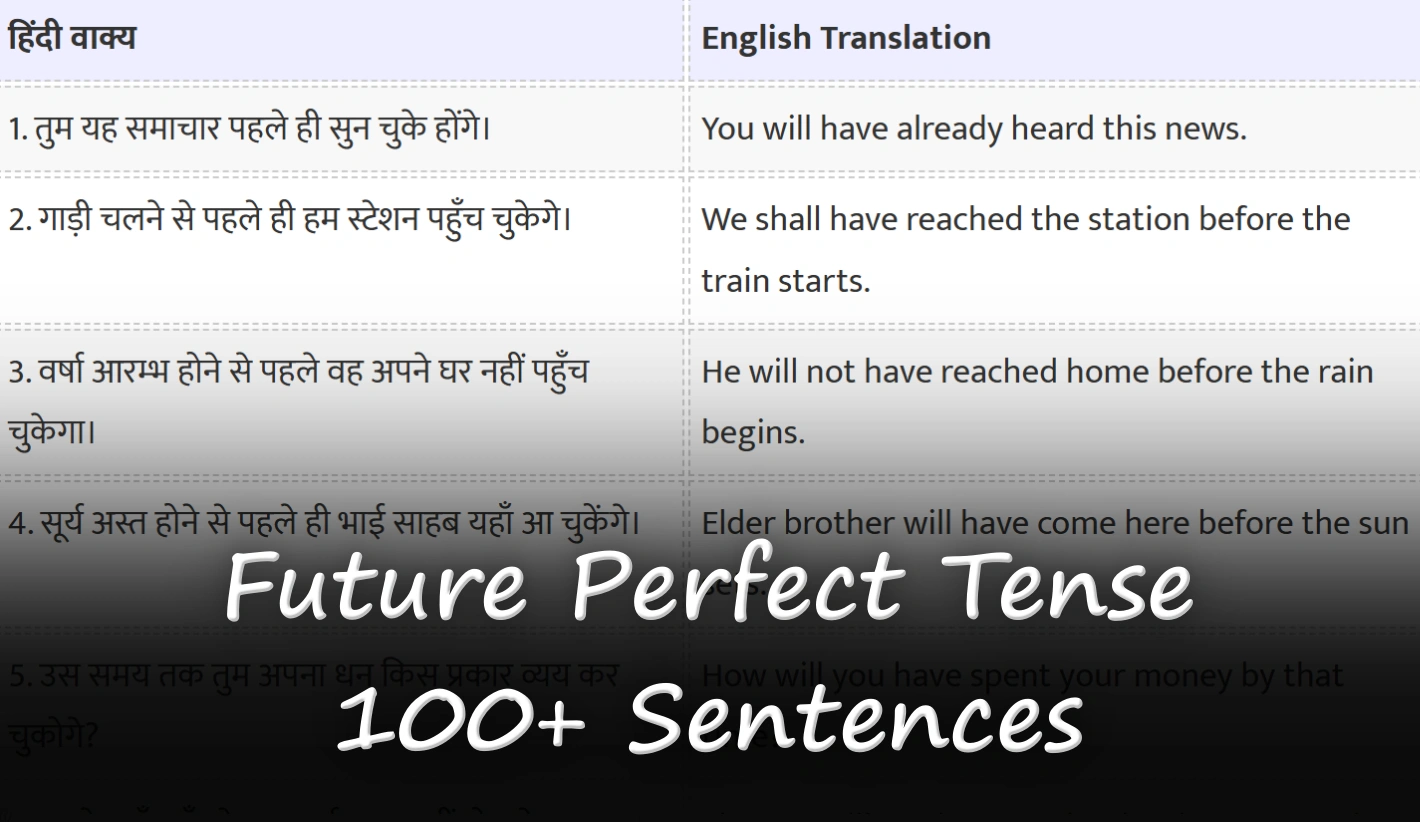
| 1. तुम यह समाचार पहले ही सुन चुके होंगे। | You will have already heard this news. |
| 2. गाड़ी चलने से पहले ही हम स्टेशन पहुँच चुकेगे। | We shall have reached the station before the train starts. |
| 3. वर्षा आरम्भ होने से पहले वह अपने घर नहीं पहुँच चुकेगा। | He will not have reached home before the rain begins. |
| 4. सूर्य अस्त होने से पहले ही भाई साहब यहाँ आ चुकेंगे। | Elder brother will have come here before the sun sets. |
| 5. उस समय तक तुम अपना धन किस प्रकार व्यय कर चुकोगे? | How will you have spent your money by that time? |
| 6. हमारे वहाँ पहुँचने तक सूर्य अस्त नहीं हो चुकेगा। | The sun will not have set by the time we reach there. |
| 7. क्या घण्टी बजने से पहले हम भोजन कर चुकेंगे? | Will we have taken our meal before the bell rings? |
| 8. क्या सोमवार तक तुम्हारी परीक्षा समाप्त हो चुकेगी? | Will your examination have finished by Monday? |
| 9. इस छात्रावास के समस्त बच्चे मंगलवार तक अपनी परीक्षा दे चुकेंगे। | All the hostel boys will have taken their exams by Tuesday. |
| 10. जब हम अलीगढ़ पहुंचेंगे तो सूर्य अस्त हो चुकेगा। | The sun will have set when we reach Aligarh. |
Difficult words:धन = money; किस प्रकार = how; व्यय करना = to spend: सोमवार तक by = Monday; परीक्षा examination; छात्रावास hostel; समस्त बच्चे all the children; मंगलवार तक = by Tuesday.
Learn other English Grammar in Hindi Translation: