

यूपी बोर्ड कक्षा 10 और 12 की अंग्रेजी परीक्षा में, Section C (Grammar) के अंतर्गत हिन्दी से अंग्रेजी में अनुवाद (Translation) का प्रश्न आता है। यह आपकी व्याकरण की समझ को परखने का एक महत्वपूर्ण हिस्सा है। कक्षा 10 की तुलना में कक्षा 12 में वाक्यों की संरचना जटिल (Complex) और संयुक्त (Compound) होती है।
यहाँ इस प्रश्न से जुड़ी मुख्य बातें दी गई हैं:
1. प्रश्न का प्रारूप (Format):
- अनुवाद का प्रकार: आपको एक छोटा हिन्दी गद्यांश (Passage) दिया जाएगा, जिसमें कक्षा 10 में लगभग 4 वाक्य और कक्षा 12 में लगभग 8 वाक्य होते हैं।
- अंक: यह प्रश्न कक्षा 10 के लिए कुल 4 नंबर का होता है, जबकि कक्षा 12 के लिए 5 नंबर का होता है।
2. किस तरह के वाक्य पूछे जाते हैं?
- ऐतिहासिक या महापुरुषों की कहानियाँ: जैसे महात्मा गांधी, सुभाष चंद्र बोस या किसी राजा की कहानी। इनमें Past Tense का अधिक प्रयोग होता है।
- नैतिक शिक्षा (Moral Stories): जैसे “ईमानदारी एक अच्छी नीति है” या परिश्रम का महत्व।
- वर्तमान घटनाएँ या सामाजिक नियम: जैसे अनुशासन, स्वास्थ्य या पर्यावरण से संबंधित वाक्य।
- दार्शनिक और विचारप्रधान (Philosophical): जीवन के अर्थ, धर्म, नैतिकता या भारतीय संस्कृति पर आधारित। (जैसे: “भारत एक महान देश है, इसकी संस्कृति प्राचीन है।”)
- ऐतिहासिक महापुरुष: स्वामी विवेकानंद, महात्मा गांधी या महान राजाओं के जीवन की प्रेरक घटनाएं।
- सामाजिक और आधुनिक मुद्दे: जनसंख्या वृद्धि, प्रदूषण, बेरोजगारी या शिक्षा का महत्व।
- काल्पनिक या वर्णनात्मक: किसी गाँव, मेले या यात्रा का वर्णन।
3. तैयारी के लिए जरूरी व्याकरण (Grammar Skills)
सफल अनुवाद के लिए आपको इन पर पकड़ बनानी होगी:
- Tenses: विशेषकर Present Indefinite, Past Indefinite और Future Indefinite।
- Use of Articles: ‘A’, ‘An’, और ‘The’ का सही उपयोग।
- Modals: Can, Should, Must और May का प्रयोग।
- Sentence Structure: ‘Subject + Verb + Object’ के नियम का पालन करना।
- Participles और Gerunds: वाक्यों को जोड़ने के लिए इनका सही प्रयोग।
- Conditionals (शर्त वाले वाक्य): जैसे “यदि वह कठिन परिश्रम करता, तो सफल हो जाता।” (If he had worked hard, he would have succeeded).
- इनमें Simple और Complex और Compound Sentence होंगे।
- Passive Voice: कई बार पैसेज में ऐसे वाक्य होते हैं जहाँ कर्म (Object) प्रधान होता है।
- कठिन शब्दावली (Vocabulary): साहित्यिक और औपचारिक हिन्दी शब्दों का सही अंग्रेजी अनुवाद सीखना आवश्यक है।
4. तैयारी के लिए सुझाव
- पिछले वर्ष के प्रश्न: पिछले 5 वर्षों के बोर्ड पेपर्स को हल करें, क्योंकि कई बार टॉपिक्स मिलते-जुलते आते हैं। आप UPMSP Model Papers का संदर्भ ले सकते हैं।
- अभ्यास: प्रतिदिन कम से कम एक पैसेज का अनुवाद करें। आप Vidya Question Bank या Avatar जैसी किताबों का उपयोग कर सकते हैं।
HOW TO TRANSLATE INTO ENGLISH?
सर्वप्रथम दिये हुए Passage को ध्यानपूर्वक पढ़िए। Present Indefinite, Past Indefinite तथा Present Perfect Tense के वाक्यों की अंग्रेजी बनाने में विद्यार्थी प्रायः गलतियाँ कर जाते हैं। इनके लिए निम्नलिखित सुझावों पर ध्यान दीजिए-
- Present Tense में ‘कल’ का प्रयोग नहीं होता है।
- Past Tense में ‘कल’ के लिए Yesterday का प्रयोग किया जाता है।
- Future Tense में ‘कल’ के लिए Tomorrow का प्रयोग किया जाता है।
- Present Perfect Tense में Yesterday का प्रयोग नहीं होता है।
- Present Indefinite Tense तथा Past Indefinite Tense के Negative तथा Interrogative Sentences की अंग्रेजी बनाते समय विशेष ध्यान दीजिए। प्रायः विद्यार्थी इन्हीं में भूल कर जाते हैं।
- Complex Sentences में When के पश्चात then नहीं आता है। Then के स्थान पर केवल कौमा (,) का प्रयोग किया जाता है।
- Then और Than के अन्तर को समझिये। Then का अर्थ हैःतब। Than का अर्थ अपेक्षा से। इसका प्रयोग Comparative Degree के Adjective या Adverb के साथ होता है।
- Although/Though के साथ ‘किन्तु’ या ‘फिर भी’ के लिए But का प्रयोग नहीं किया जाता है। Yet का प्रयोग किया जा सकता है। Modern English में Yet का प्रयोग अच्छा नहीं माना जाता है, अतः ‘किन्तु’ या ‘फिर भी’ के लिए केवल Comma (,) का प्रयोग करना ही अधिक अच्छा है।
- Present Perfect Continuous, Past Perfect Continuous तथा Future Perfect Continuous में अनिश्चित समय (Period of Time) के लिए For का प्रयोग होता है।
- Present Perfect Continuous, Past Perfect Continuous में निश्चित समय (Point of Time) के लिए Since का प्रयोग किया जाता है।
- Modern English के वैयाकरणों की राय में Since का प्रयोग Future Perfect Continuous में नहीं, by का प्रयोग करना चाहिए।
- Neither… nor और Either… or के प्रयोग पर विशेष ध्यान दीजिए।
- As well as के प्रयोग में As well as के पूर्व प्रयुक्त कर्ता के अनुसार ही Verb आती है।
- ट्रांसलेशन बनाने के पश्चात लिखे हुए को फिर से मिलान कर लेना चाहिए।
- प्रश्नवाचक वाक्यों के अन्त में प्रश्नवाचक चिन्ह (?) लगाना मत भूलिए।
उपर्युक्त सुझावों को ध्यान में रखते हुए नीचे दिये हुए अनुवादित अभ्यासों (Translated Exercises) को ध्यानपूर्वक पढ़िए।
Hindi to English Translation Exercises
Hindi to English Translation Exercise Example 1:
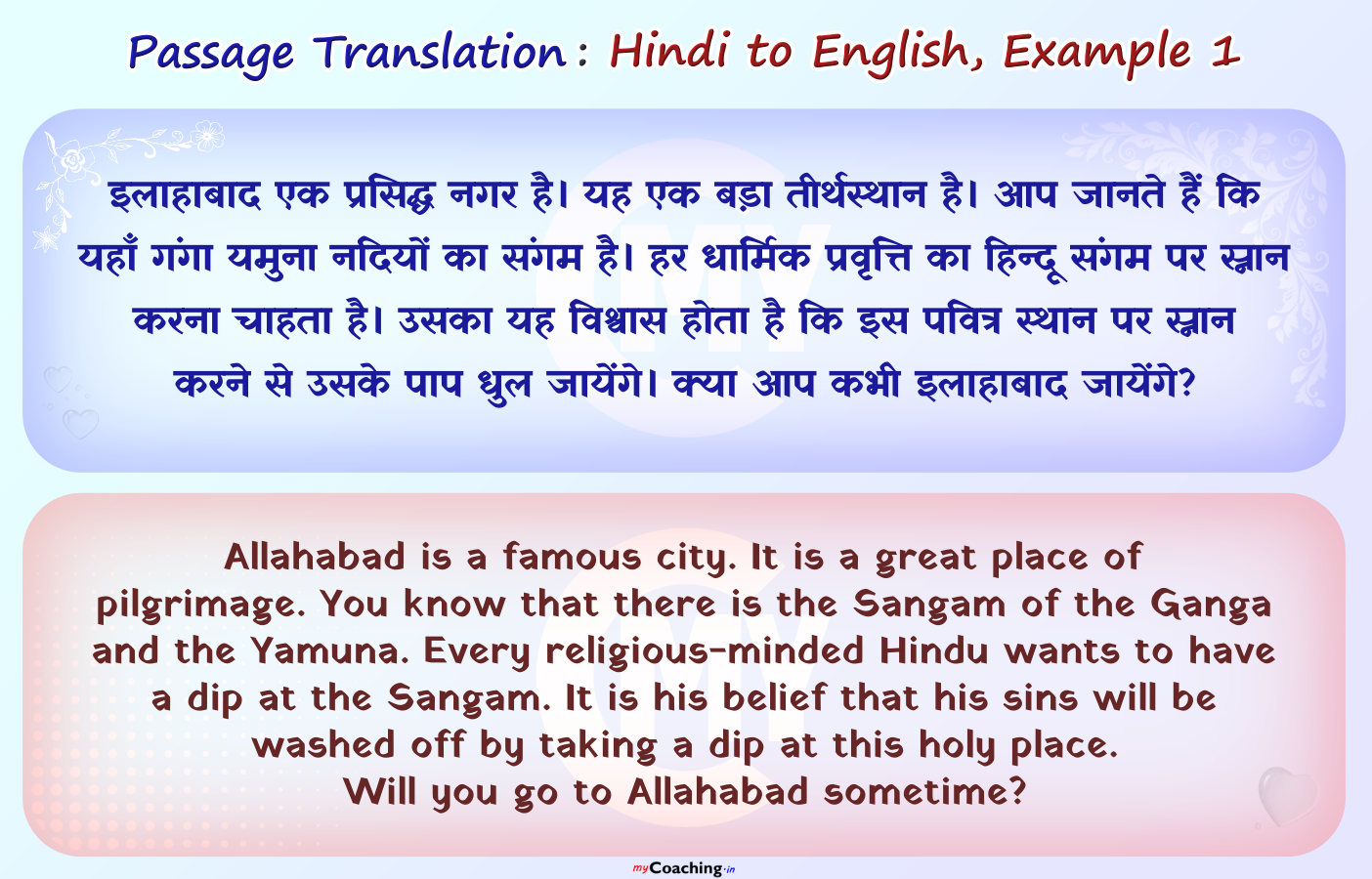
Hindi Passage: इलाहाबाद एक प्रसिद्ध नगर है। यह एक बड़ा तीर्थस्थान है। आप जानते हैं कि यहाँ गंगा यमुना नदियों का संगम है। हर धार्मिक प्रवृत्ति का हिन्दू संगम पर स्नान करना चाहता है। उसका यह विश्वास होता है कि इस पवित्र स्थान पर स्नान करने से उसके पाप धुल जायेंगे। क्या आप कभी इलाहाबाद जायेंगे?
अनुवाद करने की विधि
- इलाहाबाद एक प्रसिद्ध नगर है। (वाक्य-Present tense में है)
इलाहाबाद है एक प्रसिद्ध नगर = Allahabad is a famous city. - यह एक बड़ा तीर्थस्थान है। (वाक्य-Present tense में है)
यह है एक बड़ा स्थान तीर्थ का = It is a great place of pilgrimage. - आप जानते हैं कि यहाँ गंगा यमुना नदियों का संगम है। (वाक्य-Present tense में है)
आप जानते हैं कि यहाँ है संगम गंगा और यमुना का = You know that there is the Sangam of the Ganga and the Yamuna. - हर धार्मिक प्रवृत्ति का हिन्दू संगम पर स्नान करना चाहता है। (वाक्य-Present Indefinite में है)
हर धार्मिक प्रवृत्ति का हिन्दू चाहता है स्नान करना संगम पर = Every religious-minded Hindu wants to have a dip at the Sangam. - उसका यह विश्वास होता है कि इस पवित्र स्थान पर स्नान करने से उसके पाप घुल जायेंगे। (वाक्य के दो भाग-Present और Future Indefinite में हैं)
यह उसका विश्वास है कि उसके पाप धुल जायेंगे स्नान करने से इस पवित्र स्थान पर = It is his belief that his sins will be washed off by taking a dip at this holy place.fr - क्या आप कभी इलाहाबाद जायेंगे? (वाक्य- Future Indefinite Interrogative में है)
क्या आप जायेंगे इलाहाबाद कभी? = Will you go to Allahabad sometime?
अब सम्पूर्ण अनुवाद को इस प्रकार लिखना चाहिए-
English Translation: Allahabad is a famous city. It is a great place of pilgrimage. You know that there is the Sangam of the Ganga and the Yamuna. Every religious-minded Hindu wants to have a dip at the Sangam. It is his belief that his sins will be washed off by taking a dip at this holy place. Will you go to Allahabad sometime?
Hindi to English Translation Exercise Example 2:
Hindi Passage: एक बार एक गधे को शेर की खाल मिल गयी। गधे ने उसको पहन लिया। जब जंगल के जानवरों ने उसे देखा तो वे भयभीत हो गये। लेकिन गधा इतना प्रसन्न हुआ कि वह जोर से रैंकने लगा। एक लोमड़ी ने गधे को रेंकते सुना। उसने हर एक से कहा कि वह एक गधा है, शेर नहीं है। फिर उसने गधे से कहा, “गधे भाई, आपके क्या हालचाल है?” यह सुनकर गधा वहाँ से तेजी से भाग गया।
English Translation: Once upon a time a donkey found the skin of a lion. The donkey put it on. When the animals of the forest saw him, they were very much frightened. But the donkey was so much pleased that he began to bray loudly. A fox heard the donkey braying and told everyone that it was a donkey and not a lion. Then she said to the donkey, “Brother Donkey! How are you?” Hearing this the donkey ran away quickly.
Hindi to English Translation Exercise Example 3:
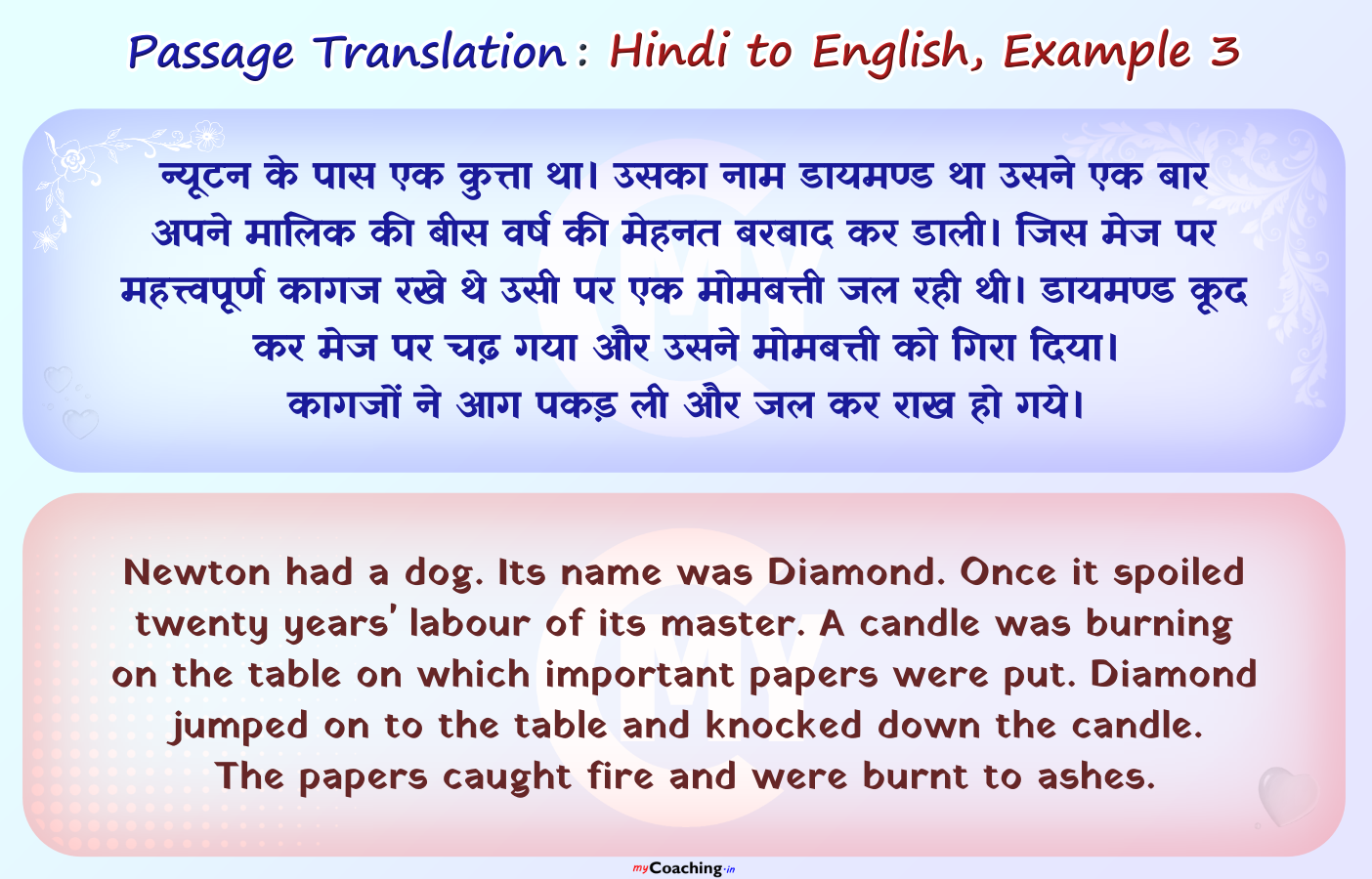
Hindi Passage: न्यूटन के पास एक कुत्ता था। उसका नाम डायमण्ड था उसने एक बार अपने मालिक की बीस वर्ष की मेहनत बरबाद कर डाली। जिस मेज पर महत्त्वपूर्ण कागज रखे थे उसी पर एक मोमबत्ती जल रही थी। डायमण्ड कूद कर मेज पर चढ़ गया और उसने मोमबत्ती को गिरा दिया। कागजों ने आग पकड़ ली और जल कर राख हो गये।
English Translation : Newton had a dog. Its name was Diamond. Once it spoiled twenty years’ labour of its master. A candle was burning on the table on which important papers were put. Diamond jumped on to the table and knocked down the candle. The papers caught fire and were burnt to ashes.
Exercise Example 4:
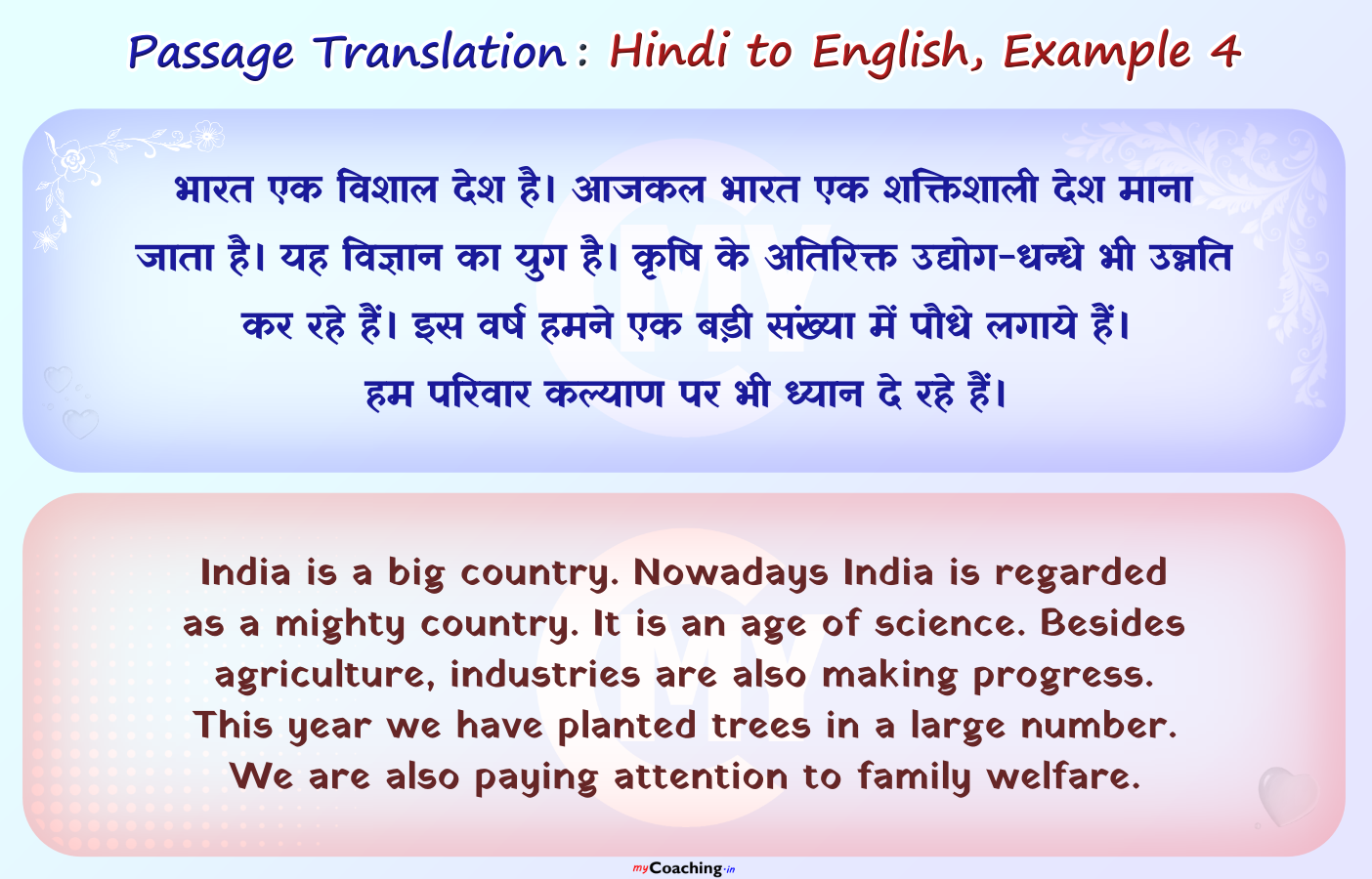
Hindi Passage: भारत एक विशाल देश है। आजकल भारत एक शक्तिशाली देश माना जाता है। यह विज्ञान का युग है। कृषि के अतिरिक्त उद्योग-धन्धे भी उन्नति कर रहे हैं। इस वर्ष हमने एक बड़ी संख्या में पौधे लगाये हैं। हम परिवार कल्याण पर भी ध्यान दे रहे हैं।
English Translation: India is a big country. Nowadays India is regarded as a mighty country. It is an age of science. Besides agriculture, industries are also making progress. This year we have planted trees in a large number. We are also paying attention to family welfare.
Class 10 Hindi to English Translation Exercises
Below are curated passages and translations based on themes and sentences frequently seen in previous year papers (PYQs).
Class 10 Translation Passages (PYQs & Important):
- Trees (2025 Model Paper/2024 Theme):
- Hindi: वृक्ष हमारे देश की अमूल्य निधि हैं। वृक्ष हमें केवल ईंधन व फल ही नहीं देते बल्कि वे हमें इमारती लकड़ी भी देते हैं। वृक्ष वायु प्रदूषण को रोकते हैं। हमें अनावश्यक रूप से वृक्षों को नहीं काटना चाहिए।
- English: Trees are the invaluable wealth of our country. They give us not only fuel and fruits but also timber. Trees prevent air pollution. We should not cut trees unnecessarily.
- Health (Board Theme):
- Hindi: स्वास्थ्य ही सबसे बड़ा धन है। यदि हम स्वस्थ नहीं हैं, तो हम जीवन का आनंद नहीं ले सकते। एक स्वस्थ मस्तिष्क एक स्वस्थ शरीर में रहता है। हमें रोज़ाना व्यायाम करना चाहिए।
- English: Health is the greatest wealth. If we are not healthy, we cannot enjoy life. A healthy mind resides in a healthy body. We should exercise daily.
- Nature & Rivers (2024 Theme):
- Hindi: गंगा भारत की एक पवित्र नदी है। यह हिमालय से निकलती है। करोड़ों लोग गंगा को माता मानते हैं। हमें इसे गंदा नहीं करना चाहिए।
- English: The Ganga is a sacred river of India. It originates from the Himalayas. Crores of people consider Ganga as their mother. We should not make it dirty.
- Patriotism (Subhash Chandra Bose Theme):
- Hindi: सुभाष चंद्र बोस भारत के एक महान नेता थे। उन्होंने आजाद हिन्द फौज का गठन किया। वे अंग्रेजों के खिलाफ लड़े। देश उन्हें ‘नेताजी’ के नाम से याद करता है।
- English: Subhash Chandra Bose was a great leader of India. He organized the Indian National Army. He fought against the British. The country remembers him as ‘Netaji’.
- Character & Honesty:
- Hindi: ईमानदारी सबसे अच्छी नीति है। एक ईमानदार व्यक्ति हमेशा सुखी रहता है। उसे किसी का डर नहीं होता। समाज में उसका सम्मान होता है।
- English: Honesty is the best policy. An honest person is always happy. He is not afraid of anyone. He is respected in society.
- Education:
- Hindi: विद्या मनुष्य का सबसे अच्छा मित्र है। यह हमें सही और गलत का ज्ञान देती है। शिक्षित व्यक्ति देश की सेवा कर सकता है। हमें कड़ी मेहनत से पढ़ाई करनी चाहिए।
- English: Knowledge is the best friend of man. It gives us the knowledge of right and wrong. An educated person can serve the country. We should study with hard work.
- Environmental Protection:
- Hindi: प्रदूषण एक बड़ी समस्या है। यह हमारे स्वास्थ्य के लिए हानिकारक है। हमें अधिक पेड़ लगाने चाहिए। हमें प्लास्टिक का प्रयोग कम करना चाहिए।
- English: Pollution is a big problem. It is harmful to our health. We should plant more trees. We should reduce the use of plastic.
- Discipline:
- Hindi: अनुशासन जीवन के लिए बहुत आवश्यक है। एक अनुशासित छात्र हमेशा सफल होता है। हमें अपने बड़ों का सम्मान करना चाहिए।
- English: Discipline is very essential for life. A disciplined student is always successful. We should respect our elders.
- Early Rising:
- Hindi: सुबह जल्दी उठना स्वास्थ्य के लिए अच्छा है। सुबह की ताजी हवा हमें ऊर्जा देती है। हमें सूर्योदय से पहले उठना चाहिए।
- English: Rising early in the morning is good for health. The fresh morning air gives us energy. We should get up before sunrise.
- Book Reading:
- Hindi: पुस्तकें हमारी सच्ची मित्र हैं। वे हमें ज्ञान और आनंद देती हैं। हमें अच्छी पुस्तकें पढ़नी चाहिए। पुस्तकालय ज्ञान का भंडार है।
- English: Books are our true friends. They give us knowledge and joy. We should read good books. A library is a storehouse of knowledge.
- Lal Bahadur Shastri:
- Hindi: लाल बहादुर शास्त्री भारत के द्वितीय प्रधानमंत्री थे। वे सादा जीवन और उच्च विचार में विश्वास करते थे। उन्होंने ‘जय जवान, जय किसान’ का नारा दिया। उनका व्यक्तित्व बहुत प्रभावशाली था।
- English: Lal Bahadur Shastri was the second Prime Minister of India. He believed in simple living and high thinking. He gave the slogan ‘Jai Jawan, Jai Kisan’. His personality was very impressive.
- The Taj Mahal:
- Hindi: ताजमहल विश्व के सात आश्चर्यों में से एक है। इसे मुगल सम्राट शाहजहाँ ने अपनी पत्नी मुमताज महल की याद में बनवाया था। यह सफेद संगमरमर से बना है। यह आगरा में यमुना नदी के किनारे स्थित है।
- English: The Taj Mahal is one of the seven wonders of the world. It was built by Mughal Emperor Shah Jahan in memory of his wife Mumtaz Mahal. It is made of white marble. It is situated on the bank of river Yamuna in Agra.
- Mahatma Gandhi:
- Hindi: महात्मा गांधी को हम ‘राष्ट्रपिता’ के नाम से जानते हैं। वे सत्य और अहिंसा के पुजारी थे। उन्होंने देश को आजाद कराने के लिए अपना पूरा जीवन समर्पित कर दिया। वे आज भी हमारे लिए प्रेरणा स्रोत हैं।
- English: We know Mahatma Gandhi by the name of ‘Father of the Nation’. He was a priest of truth and non-violence. He dedicated his whole life to making the country free. He is a source of inspiration for us even today.
- Swami Vivekananda:
- Hindi: स्वामी विवेकानन्द भारत के एक महान संत थे। उन्होंने शिकागो में विश्व धर्म सम्मेलन को संबोधित किया। उन्होंने युवाओं को उठने और जागने का संदेश दिया। वे अध्यात्म के महान दूत थे।
- English: Swami Vivekananda was a great saint of India. He addressed the World Parliament of Religions in Chicago. He gave the message to the youth to arise and awake. He was a great messenger of spirituality.
- Hard Work (Success):
- Hindi: परिश्रम सफलता की कुंजी है। जो व्यक्ति कठिन परिश्रम करता है, वह कभी असफल नहीं होता। आलस्य मनुष्य का सबसे बड़ा शत्रु है। हमें अपना कार्य समय पर पूरा करना चाहिए।
- English: Hard work is the key to success. A person who works hard never fails. Laziness is the biggest enemy of man. We should complete our work on time.
- Dr. B.R. Ambedkar:
- Hindi: डॉ. बी.आर. अंबेडकर भारतीय संविधान के निर्माता थे। उन्होंने अपना जीवन दलितों के उत्थान के लिए समर्पित किया। वे एक महान विद्वान थे। सारा देश उनके योगदान के लिए उनका ऋणी है।
- English: Dr. B.R. Ambedkar was the architect of the Indian Constitution. He dedicated his life to the upliftment of Dalits. He was a great scholar. The whole country is indebted to him for his contribution.
- The Value of Time:
- Hindi: समय बहुत कीमती है। बीता हुआ समय कभी वापस नहीं आता। बुद्धिमान लोग समय का सदुपयोग करते हैं। हमें अपना समय व्यर्थ की बातों में नष्ट नहीं करना चाहिए।
- English: Time is very precious. The time once passed never returns. Wise people make good use of time. We should not waste our time in useless things.
- Friendship:
- Hindi: सच्चा मित्र वही है जो मुसीबत में काम आए। अच्छे मित्र मिलना बहुत कठिन है। हमें अपने मित्रों के प्रति वफादार रहना चाहिए। स्वार्थी मित्रों से सावधान रहना चाहिए।
- English: A true friend is one who helps in trouble. Finding good friends is very difficult. We should remain loyal to our friends. We should be careful of selfish friends.
- Rabindranath Tagore:
- Hindi: रवींद्रनाथ टैगोर एक महान कवि और लेखक थे। उन्होंने ‘गीतांजलि’ लिखी, जिसके लिए उन्हें नोबेल पुरस्कार मिला। उन्होंने हमारे राष्ट्रगान की रचना की। वे प्रकृति प्रेमी थे।
- English: Rabindranath Tagore was a great poet and writer. He wrote ‘Gitanjali’, for which he received the Nobel Prize. He composed our national anthem. He was a nature lover.
- City vs. Village Life:
- Hindi: भारत गाँवों का देश है। यहाँ की अधिकांश जनसंख्या गाँवों में रहती है। गाँव का जीवन शांत और प्रदूषण मुक्त होता है। शहरों में बहुत शोर और भीड़ होती है।
- English: India is a country of villages. Most of the population here lives in villages. Village life is peaceful and pollution-free. There is a lot of noise and crowd in cities.
Class 12 Hindi to English Translation Exercises
Translation passages for UP Board Class 12 English are more complex than Class 10, typically focusing on philosophy, history, or social issues and carrying 5 marks. Below are curated passages based on previous years’ themes and UPMSP model papers.
UP Board Class 12 Translation Passages (PYQs & Important):
- On Character and Deeds (Theme: Meaning of Life):
- Hindi: मनुष्य का जीवन दिनों, महीनों और वर्षों में नहीं मापा जाता, बल्कि उसके द्वारा किए गए कार्यों और उपलब्धियों से मापा जाता है। जीवन का वास्तविक महत्व अनुभव की गुणवत्ता में है, मात्रा में नहीं। एक लंबा जीवन, जो व्यर्थ के कार्यों में बिताया गया हो, उसकी तुलना में अच्छे कार्यों के लिए समर्पित एक छोटा जीवन कहीं अधिक मूल्यवान है।
- English: Man’s life is not measured by days, months, and years, but by the deeds he has done and the achievements he has made. The real significance of life lies in the quality of experience, not the quantity. A short life devoted to noble endeavors is far more valuable than a long life spent in trivial pursuits.
- On Health and Value (Theme: Health is Wealth):
- Hindi: स्वास्थ्य एक बड़ा वरदान है लेकिन मनुष्य जब तक स्वस्थ रहता है, इसका मूल्य नहीं समझता। जब वह किसी बीमारी की चपेट में आता है, तब उसे इसकी कीमत का एहसास होता है। यदि शरीर के किसी भी हिस्से में दर्द हो, तो पूरा शरीर उसकी उपस्थिति महसूस करता है। यदि मनुष्य स्वस्थ है, तो वह खाने, पीने, घूमने और काम करने का आनंद लेता है।
- English: Health is a great blessing, but man does not value it as long as he is healthy. When he catches a disease, he realizes its worth. If there is pain in any part of the body, the whole body feels its presence. If a man is healthy, he enjoys eating, drinking, walking, and working.
- On Early Rising (Theme: Discipline):
- Hindi: सुबह जल्दी उठना स्वास्थ्य और खुशी का मार्ग है। जो व्यक्ति देर से उठता है, उसे दिन भर में थोड़ा ही विश्राम मिल पाता है। जो व्यक्ति बिस्तर पर देर तक पड़ा रहता है, उसे शाम को देर तक काम करने के लिए मजबूर होना पड़ता है। वह शाम के व्यायाम से वंचित रह जाता है जो उसके स्वास्थ्य के लिए बहुत आवश्यक है।
- English: Early rising leads to health and happiness. The man who rises late can have little rest in the course of the day. Anyone who lies in bed late is compelled to work until a late hour in the evening. He has to go without evening exercise, which is so necessary for his health.
- On Knowledge and Education (Theme: Value of Knowledge):
- Hindi: पुराने समय के लोग ज्ञान की आवश्यकता और महत्व से अच्छी तरह परिचित थे। यह एक ऐसा धन है जिसे कोई चुरा नहीं सकता। यह सिखाने से बढ़ता है। एक शिक्षित व्यक्ति जहाँ भी जाता है, उसका सम्मान होता है। ज्ञान प्राप्त करके मनुष्य अपने, अपने समाज और राष्ट्र का भला कर सकता है।
- English: People of the olden times were well aware of the need and importance of knowledge. It is such a wealth that no one can steal. It increases by teaching. Wherever an educated person goes, he is honoured. By gaining knowledge, a man can bring about betterment for himself, his society, and his nation.
- On Indian Culture (Theme: National Pride):
- Hindi: यदि आप किसी बुजुर्ग भारतीय से पूछें, “आप कैसे हैं?” तो संभावना है कि उत्तर मिलेगा, “ईश्वर की कृपा से सब ठीक है।” यह हमारी संस्कृति का फल है। हजारों वर्षों के आक्रमणों के बावजूद भारत के मूल्यों ने इसे मजबूत और एकजुट रखा है। आज के युवाओं को अलग तरीके से समझाया जाना चाहिए क्योंकि उनके पास जानकारी उनकी उंगलियों पर है।
- English: If you ask an elderly Indian, “How are you?”, chances are you will be answered, “By God’s grace everything is fine”. This is the fruit of culture. India’s values have kept it strong and united despite thousands of years of invasions. Information is at the fingertips of today’s youth.
- Human Progress & Transportation (2024-25 Theme):
- Hindi: प्राचीन काल में लोग पैदल चलते थे। बाद में वे बैलगाड़ी में यात्रा करने लगे। विज्ञान ने हमें परिवहन के तेज़ साधन दिए हैं। आज हम कुछ ही घंटों में मीलों की दूरी तय कर सकते हैं.
- English: In ancient times, people used to walk on foot. Later, they began traveling in bullock carts. Science has given us fast means of transportation. Today, we can cover distances of miles in just a few hours.
- Spiritual Wisdom (Common Board Theme):
- Hindi: हमें अपने कर्मों पर ध्यान देना चाहिए। यदि हमारे कर्म सच्चे हैं, तो वे कभी निष्फल नहीं होंगे। हर संकट का समाधान होता है, चाहे वह आज मिले या कल.
- English: We should focus on our deeds. If our actions are truthful, they will never be fruitless. Every crisis has a solution, whether it is found today or tomorrow.
- Historical Legacy (Indian Freedom Struggle):
- Hindi: भारत का इतिहास संघर्ष और बलिदान की कहानी है। हमारे पूर्वजों ने देश की आजादी के लिए बहुत कष्ट सहे। आज हमारा कर्तव्य है कि हम इस स्वतंत्रता की रक्षा करें और देश को उन्नति के मार्ग पर ले जाएं.
- English: The history of India is a story of struggle and sacrifice. Our ancestors endured great hardships for the freedom of the country. Today, it is our duty to protect this independence and lead the nation on the path of progress.
- The Power of Youth:
- Hindi: युवा पीढ़ी किसी भी राष्ट्र की रीढ़ होती है। यदि युवा अनुशासित और शिक्षित हों, तो देश तेजी से प्रगति कर सकता है। युवाओं को अपने समय का सदुपयोग करना चाहिए और बुरी आदतों से दूर रहना चाहिए.
- English: The younger generation is the backbone of any nation. If the youth are disciplined and educated, the country can progress rapidly. Young people should make good use of their time and stay away from bad habits.
- Nature and Humanity:
- Hindi: प्रकृति मनुष्य की सबसे बड़ी शिक्षिका है। यह हमें धैर्य और उदारता सिखाती है। लेकिन आज मनुष्य अपने स्वार्थ के लिए प्रकृति का विनाश कर रहा है। यदि हमने समय रहते इसे नहीं रोका, तो मानवता के लिए गंभीर संकट पैदा हो जाएगा.
- English: Nature is the greatest teacher of man. It teaches us patience and generosity. However, today man is destroying nature for his own selfishness. If we do not stop this in time, a serious crisis will arise for humanity.
- The Nature of Life (Board Favorite):
- Hindi: मनुष्य का जीवन केवल सांस लेने या खाने-पीने का नाम नहीं है। वास्तविक जीवन वह है जो दूसरों के काम आए। स्वार्थ की भावना मनुष्य को छोटा बनाती है, जबकि परोपकार उसे महानता की ओर ले जाता है। हमें अपने जीवन का प्रत्येक क्षण सार्थक कार्यों में लगाना चाहिए।
- English: Human life is not merely the name for breathing, eating, or drinking. Real life is that which is useful to others. The feeling of selfishness makes a man small, whereas benevolence leads him toward greatness. We should devote every moment of our life to meaningful deeds.
- The Power of Childhood (2024 Theme):
- Hindi: बचपन जीवन की सबसे सुंदर अवस्था है। बच्चों को भविष्य की चिंता नहीं होती। वे हर छोटी चीज़ में खुशी ढूंढ लेते हैं। जैसे-जैसे हम बड़े होते हैं, जिम्मेदारियों का बोझ हमारी मासूमियत को छीन लेता है। काश, हम फिर से बच्चे बन पाते!
- English: Childhood is the most beautiful stage of life. Children have no worry about the future. They find joy in every small thing. As we grow older, the burden of responsibilities snatches away our innocence. I wish we could become children again!
- Technology and Modern Life:
- Hindi: आज का युग विज्ञान का युग है। मोबाइल फोन और इंटरनेट ने दुनिया को एक छोटा गाँव बना दिया है। सूचनाएँ हमारी उंगलियों पर उपलब्ध हैं. लेकिन हमें तकनीक का दास नहीं बनना चाहिए। इसका उपयोग केवल मानव कल्याण के लिए होना चाहिए।
- English: Today’s era is the era of science. Mobile phones and the internet have turned the world into a small village. Information is available at our fingertips. However, we should not become slaves to technology. It should be used only for human welfare.
- The Importance of Forests:
- Hindi: वन हमारे पर्यावरण के रक्षक हैं। वे वर्षा लाने में सहायक होते हैं और मिट्टी के कटाव को रोकते हैं। वनों की अंधाधुंध कटाई से ग्लोबल वार्मिंग की समस्या पैदा हो गई है। यदि हम जीवित रहना चाहते हैं, तो हमें अपने वनों को बचाना होगा।
- English: Forests are the protectors of our environment. They help in bringing rain and prevent soil erosion. Indiscriminate felling of forests has created the problem of global warming. If we want to survive, we must save our forests.
- Integrity and Corruption:
- Hindi: भ्रष्टाचार हमारे देश की प्रगति में सबसे बड़ी बाधा है। यह समाज को खोखला कर रहा है। केवल कड़े कानून इसे नहीं रोक सकते; इसके लिए नागरिकों का ईमानदार होना आवश्यक है। जब तक हम अपने कर्तव्यों के प्रति जागरूक नहीं होंगे, सुधार संभव नहीं है।
- English: Corruption is the biggest hurdle in the progress of our country. It is hollowing out the society. Mere strict laws cannot stop it; for this, it is necessary for citizens to be honest. Improvement is not possible until we are aware of our duties.
Exercises For Practice
- एडीसन एक महान ‘वैज्ञानिक था। उसने जीवन भर कठोर परिश्रम किया। आज भी संसार उसे याद करता है। उसके आविष्कारों से संसार को लाभ पहुँचा है। 1931 ई० में उसकी मृत्यु हो गयी। उसकी मृत्यु पर अमरीका में बिजली की बत्तियाँ बुझा दी गयी थीं। एडीसन की सफलता का रहस्य अच्छा स्वास्थ्य तया निरन्तर परिश्रम था। क्या तुम भी एडीसन की तरह कठिन परिश्रम द्वारा सफल होने का प्रयास नहीं करोगे?
- Difficult words: वैज्ञानिक scientist; जीवन भर = throughout his whole life; कठोर परिश्रम किया = worked hard; आविष्कारों = inventions: लाभ पहुँचा है = has benefitted; बिजली की बत्तियाँ बुझा दी गयी थी = electric lights were put out.
- अच्छे बालक अपने बड़ों का कहना मानते हैं। वे झूठ न झूठ नहीं बोलते हैं और न ही चोरी करते हैं। चोरी करना बुरी बात है। बुरे कार्यों का फल भी बुरा होता है। इसलिए हमें बुरे कार्यों से घृणा करनी चाहिए। क्या तुम अपने से बड़ों का आदर करते हो? यदि तुम अपने बुजुर्गों का सम्मान नहीं करोगे, तो लोग तुमसे घृणा करने लगेंगे।
- Difficult words: बड़ों का the elders; कहना मानते हैं obey; चोरी करते हैं = steal; बुरी बात = bad thing; फल = result; बुरे कार्य bad deeds; घृणा करनी चाहिए must hate; आदर करते हो = respect.
- कल मैंने अपने छोटे बेटे से कहा, “बेटे अपनी पुस्तक ले आओ।” उसने कहा, “मैं स्कूल में भी तो पढ़ता हूँ। मैं छुट्टी के दिन नहीं पढ़ना चाहता, कृपया आज मुझे खेलने दें। कल मेरी अध्यापिका जी स्वयं पढ़ायेंगी। आप चिन्ता क्यों करते हैं?” यह सुनकर मैं चुप हो गया और मैंने उसे खेलने दिया। अ
- Difficult words: छोटा बेटा = younger son; स्कूल में भी तो पढ़ता हैं = study at school; छुट्टी के दिन = on holiday; खेलने दो = let me play; स्वयं = herself; सुनकर = hearing; उसे खेलने दिया = let him play.
- आकाश में असंख्य तारे हैं। हम पृथ्वी से बहुतों को देख भी नहीं सकते। ये संख्या में इतने अधिक हैं कि हम उन्हें गिन नहीं सकते। इनकी संख्या की कल्पना करना भी कठिन है। हमारा सूर्य भी एक साधारण सितारा है। पृथ्वी सूर्य के चारों ओर घूमती है और चाँद पृथ्वी के चारों ओर घूमता है। यह प्रकृति का अटल सिद्धान्त है।
- Difficult words: असंख्य = numberless; इतने अधिक = so many; गिन नहीं सकते = cannot count; कल्पना करना = to imagine; इनकी संख्या = their numbers; साधारण = ordinary: चारों ओर = round; घूमती है = moves,
- आप सफलता प्राप्त कर सकते हैं यदि आप कठोर परिश्रम करें। आप जो चाहते है उसे प्राप्त नहीं कर सकते जब तक कि आप उसके लिए परिश्रम नहीं करते। आपने राजा ब्रूस की कहानी अवश्य सुनी होगी। कितना बहादुर था वह !
- Difficult words: सफलता success; प्राप्त कर सकते हैं can achieve; जब तक कि नहीं = unless; अवश्य सुनी होगी must have heard; कितना बहादुर था वह != how brave he was !
- जब तक मैं अपना कार्य समाप्त नहीं कर लेता, मैं बाहर नहीं जाता हैं। मुझे पढ़ने में रुचि है। कल मेरे भाई साहब यहाँ आयेंगे। मुझे आशा है कि वह मेरे लिए अच्छी-अच्छी कहानी की किताबें लायेंगे। क्या तुम्हें भी पढ़ने का शौक हैं? यदि तुम चाहो तो मुझसे पुस्तकें ले सकते हो किन्तु पढ़ने के बाद मेरी पुस्तक तुम्हें * लौटानी होंगी।
- Difficult words: जब तक मैं अपना कार्य समाप्त नहीं कर लेता = until I finish my work; रुचि है = have interest; शौक = fond; चाहो = like.
- एक बार किसी गांव में एक ईमानदार लड़का रहता था। एक दिन वह अपने पड़ोसी के घर गया और वहाँ पर उसने टोकरी में कुछ आम देखे। उस लड़के ने आमों को नहीं छुआ और खेलने लगा। घर का मालिक लड़के की ईमानदारी पर बहुत प्रसन्न हुआ। उसने लड़के को कुछ आम दे दिये। ईमानदारी सर्वश्रेष्ठ नीति है। ईमानदारी का अनुसरण करके हम अपने जीवन को सुखी बना सकते हैं।
- Difficult words: नहीं छुआ did not touch; खेलने लगा began to play; मालिक = owner; बहुत प्रसन्न हुआ was very pleased; सर्वश्रेष्ठ = the best; नीति = policy.
- रवीन्द्रनाथ टैगोर एक महान लेखक, कवि एवं देशभक्त थे। इनका जन्म कलकत्ता में हुआ था। उनके पिता का नाम देवेन्द्रनाथे था। रवीन्द्रनाथ बहुत मेधावी थे। उन्होंने घर पर ही अध्ययन किया। उन्हें स्कूलों का वातावरण पसन्द न था। उन्होंने बोलपुर में शान्तिनिकेतन की स्थापना की। आज यह स्कूल भारत का एक प्रसिद्ध विश्वविद्यालय है। टैगोर को गीतांजलि नामक पुस्तक पर 1913 में नोबल पुरस्कार मिला था।
- Difficult words: महान लेखक great writer; कवि poet; देशभक्त = patriot; मेधावी = brilliant; अध्ययन किया = studied; वातावरण = atmosphere; स्थापना की = founded; शान्ति निकेतन = Shanti Niketan: विश्वविद्यालय = University; गीतांजलि Gitanjali: नोबल पुरस्कार = Nobel Prize.
- शान्तनु एक महान राजा था। एक बार उसने एक सुन्दरी को देखा। उससे वह प्रेम करने लगा। वह उस सुन्दरी से विवाह करना चाहता था। वह सुन्दरी वास्तव में देवी गंगा थी। गंगा ने कहा, “मैं तुमसे शादी तब करूँगी जब तुम एक प्रतिज्ञा करोगे। तुम प्रतिज्ञा करो कि मुझे कभी भी कुछ करने से नहीं रोकोगे।” कुछ समय पश्चात राजा ने शर्त मान ली और उनका विवाह उस सुन्दरी से हो गया।
- Difficult words: सुन्दरी = beautiful lady; प्रेम करने लगा = fell in love; वास्तव में = in fact; देवी गंगा = the goddess Ganga; एक प्रतिज्ञा करोगे = make a promise: कुछ भी करने से = from doing anything.
- महाराणा प्रताप मेवाड़ के राजा थे। उनके पिता का नाम उदयसिंह था जो राणा सांगा के कायर पुत्र थे। प्रताप बचपन से ही शक्तिशाली तथा साहसी थे। मुगल सम्राट अकबर महान उनका प्रबल शत्रु था। हल्दीघाटी के युद्ध में मुगलों ने राजपूतों को हरा दिया। इस पराजय के पश्चात राणा प्रताप को बहुत-से कष्टो का सामना करना पड़ा। उनके बच्चों को भूखा रहना पड़ा। फिर भी प्रताप ने मुगलों के समक्ष आत्म समर्पण नाहीं किया।
- Difficult wards: कायर = coward; साहसी = courageous; हरा दिया = defeated; पराजय = defeat; बहुत-से कष्टों का सामना करना पड़ा = had to suffer much; भूखों रहना पड़ा = had to remain hungry; आत्मसमर्पण नहीं किया did not yield.
- सावित्री राजा अश्वपति की इकलौती पुत्री थी। वह महान गुणवती थीं। उसने सत्यवान को अपने वर के रूप में चुना जो जंगल में अपने माता-पिता के साथ रहता था। उसके माता-पिता और नारद जी ने विवाह करने का विरोध किया। अन्त में उसका विवाह सत्यवान के साथ सम्पन्न हुआ। उन्होंने कुछ समय तक सुनामय जीवन व्यतीत किया। एक वर्ष पश्चात सत्यवान के सिर में पीड़ा हुई। तब सावित्री ने बुद्धिमानी से अपने पति के प्राण बचाये।
- Difficult words: इकलौती = the only; गुणवती virtuous; वर के रूप में as her husband; चुना = chose; विरोध किया = opposed; विवाह सम्पन्न हुजा = was married; सुखमय = happy; व्यतीत किया = passed.
- राजा विक्रमादित्य का नाम संसार में प्रसिद्ध है। वे मालवा के राजा थे। उनकी राजधानी उज्जैन थी। वे अपनी प्रजा से बहुत प्रेम करते थे और उनकी प्रजा उनसे प्रेम करती थी। वे अपने न्याय के लिए प्रसिद्ध थे। अपराधी उनके सामने कांपते थे क्योंकि वे जानते थे कि राजा उनके अपराध को तुरन्त जान लेगा। कभी-कभी अपनी जनता की स्थिति जानने के लिए वे अपने राज्य में भेष बदलकर घूमा करते थे। ऐसे प्रजावत्सल राजा थे विक्रमादित्य !
- Difficult words: प्रसिद्ध = famous; राजधानी capital; प्रजा = subjects (people); न्याय के लिए = for justice; अपराधी = the guilty; काँपना to tremble; अपराध guilt; स्थिति position; भेष बदलकर = in disguise; घूमा करते थे used to roam (used to wander).
- गोस्वामी तुलसीदास हिन्दी के लोकप्रिय कवि थे। उनका सबसे प्रसिद्ध ग्रन्थ रामचरित मानस है। यह ग्रन्थ बड़ी श्रद्धा के साथ पढ़ा जाता है। उनके पिता का नाम आत्माराम दुबे तथा माता का नाम हुलसी था। बाबा नरहरिदास उन्हें राम की कथायें सुनाया करते थे। तुलसीदास को भक्त एवं कवि के रूप में सारे देश में एक उच्च स्थान प्राप्त है। उनकी लिखी हुई पुस्तकें भारतीय संस्कृति की अमूल्य निधियाँ है। इनका अध्ययन करना मानव को श्रेष्ठ बनाता है।
- Difficult words: लोकप्रिय = popular; पवित्र holy; बड़ी श्रद्धा के साथ = with great devotion; कथायें = stories; भक्त = devotee; कवि के रूप में = as a poet.
- रेखा मेरी सहेली है। वह मेरी कक्षा में पढ़ती है। वह कक्षा में सदा प्रथम आती है। वह समय से प्रातः उठकर अपना काम करती है। वह अपने गुरु और बड़ों की आज्ञा का पालन करती है। वह निर्धनों की सहायता करती है। वह सदा प्रसन्नचित्त रहती है। उससे सभी लोग प्रसन्न रहते हैं।
- Difficult words: सहेली friend; प्रथम आती है stands first; सदा प्रसन्नचित्त रहती है = is always cheerful; उससे प्रसन्न रहते हैं are pleased with her.
- श्री लालबहादुर शास्त्री का जन्म एक निर्धन परिवार में हुआ था। उनकी पढ़ाई-लिखाई साधारण ढंग से हुई थी। कभी-कभी उन्हें नदी को तैर कर विद्यालय जाना पड़ता था। परन्तु इन कठिनाइयों के बावजूद उन्होंने ईमानदारी तथा कठिन परिश्रम द्वारा अपने को ऊँचा उठाया। जवाहर लाल नेहरू की मृत्यु के पश्चात वे भारत के प्रधानमन्त्री बने। घोड़े समय तक ही वे प्रधानमंत्री रहे। किन्तु इस अल्प अवधि में ही संसार को चकित कर दिया। ताशकन्द समझौते के उपरान्त उनकी मृत्यु ताशकन्द में हो गयी।
- Difficult words: निर्धन परिवार = poor family; तैरकर swimming; जाना पड़ता था = had to go; बावजूद = in spite of; अल्प अवधि short period; चकित कर दिया surprised.
- हर एक व्यक्ति को परिश्रम करना चाहिए। सभी सफल होने की इच्छा रखते हैं। सफल होने वाले लोगों की संख्या ज्यादा नहीं है। असफल होने पर दुःख होना स्वाभाविक है। फिर भी हमें निराश नहीं होना चाहिए। अगर आप हिम्मत नहीं हारेगे तो अवश्य सफल होंगे। स्काटलैण्ड के राजा ब्रूस ने मकड़ी को देखकर पुनः प्रयास किया और अपना खोया राज्य पुनः प्राप्त कर लिया। अतः हमें जीवन में निराश नहीं होना चाहिए।
- Difficult words : परिश्रम करना hard work; सफल होना = to succeed; स्वाभाविक = natural; फिर भी = even then (nevertheless); निराश = disappointed; हिम्मत हारना = to lose courage (to be disappointed); मकड़ी = spider; राज्य = kingdom.
- भगवान राम के पूर्वजों में दलीप नाम के राजा थे। वह बड़े धर्मात्मा थे, लेकिन उन्हें एक दुःख था। उनके कोई पुत्र नहीं था। गुरु वशिष्ठ की सलाह पर वे और उनकी रानी, नन्दिनी नाम की गाय की प्रेमपूर्वक सेवा करने लगे। एक दिन जंगल में गाय पर एक शेर झपटा। गाय को संकट में देखकर राजा ने तुरन्त धनुष बाण चढ़ाया, लेकिन उनका हाथ रुक गया। शेर ने कहा, “गाय मेरा शिकार है, मैं उसे खाऊँगा।” राजा ने कहा, “गाय की जगह मुझे खा लो।”
- Difficult words : पूर्वजों ancestors; धर्मात्मा religious; सलाह पर at the advice; प्रेमपूर्वक = lovingly; शिकार = prey.
- एक दिन एक कौआ एक पेड़ पर बैठा था। उसकी चोंच में रोटी का एक टुकड़ा था। एक चालाक लोमड़ी ने उसे देखा। उसके मुँह में पानी आ गया। उसने कौए के गाने की प्रशंसा की और उससे गाने का आग्रह किया। जैसे ही कौए ने गाने के लिए अपनी चोंच खोली, रोटी का टुकड़ा जमीन पर गिर पड़ा। लोमड़ी रोटी का टुकड़ा उठाकर भागी और कौआ पछताता रह गया।
- Difficult words: रोटी का टुकड़ा = piece of bread; चालाक लोमड़ी = cunning fox; प्रशंसा की = praised; आग्रह किया urged; चोंच beak; पछताना = repentance.
- एक दिन बादशाह हुमायूँ शिकार खेलने जंगल में गया। उसने एक हिरन देखा। वह उसका पीछा करते हुए बहुत दूर चला गया और रास्ता भूल गया। वह चारों तरफ देखने लगा कि उसे एक ओर कुछ प्रकाश दिखाई दिया। वह उसी ओर चल दिया। कुछ दूर चलने के बाद वह उस कुटिया के पास पहुँचा। वहाँ पर उसने एक बूढ़ी स्त्री को किसी की प्रतीक्षा करते पाया। उस बूढ़ी स्त्री ने आदरपूर्वक कहा, “भारत के दयावान सम्राट हुमायूँ का. इस दरिद्र विधवा की कुटी में स्वागत है।”
- Difficult words: शिकार खेलने to hunt; भूल गया forgot; पीछा करते हुए = chasing: दिखाई दिया = happened to see; प्रकाश = light; दयावान = kind.
Preparation Strategy for 2026
- Practice from Solved Papers: Refer to resources like Arihant Complete Course or Rajeev Question Bank for the latest NEP 2020 patterns.
- Target Marks: Remember that translation is a high-scoring section where precision in tenses and vocabulary can easily secure full marks.
Learn other English Grammar in Hindi Translation: