

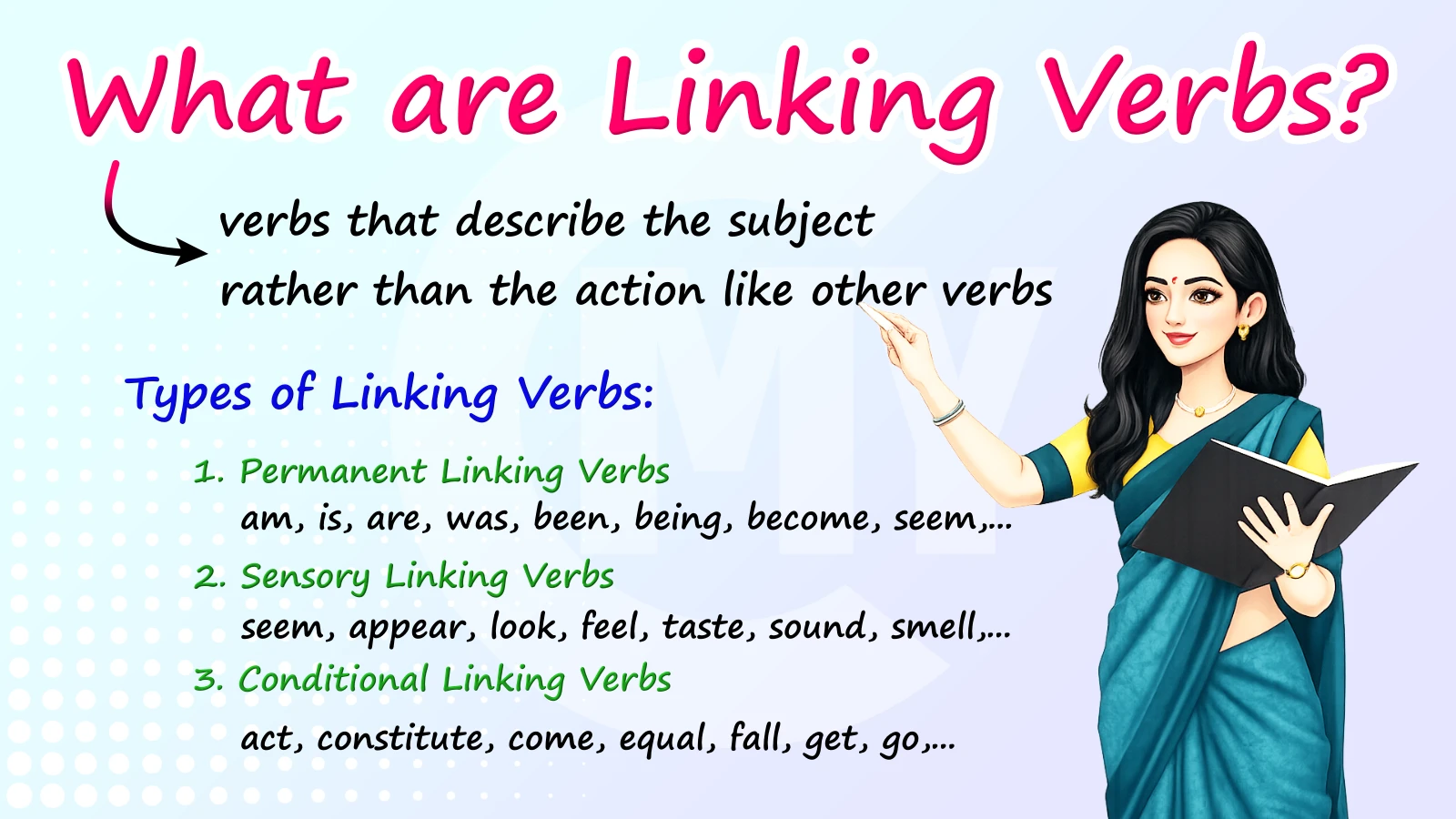
What are Linking Verbs?
Linking verbs are verbs that do not show action. They link (connect) the subject to more information about the subject, such as a noun or adjective.
A linking verb connects the subject with a subject complement (noun/adjective). (Linking verb वह क्रिया है जो कर्ता को उसके बारे में अतिरिक्त जानकारी से जोड़ती है।)
Common Linking Verbs:
- Be verbs: am, is, are, was, were, be, been, being
- Sense verbs: seem, appear, look, feel, taste, sound, smell
- Condition verbs: become, grow, remain, stay, turn
Examples with Hindi meaning
- She is happy. (वह खुश है।)
- The sky looks blue. (आसमान नीला लगता है।)
- He became a doctor. (वह डॉक्टर बन गया।)
- The food tastes good. (खाना अच्छा स्वाद देता है।)
Linking Verbs का प्रयोग कैसे करते हैं?
Sentence के दो भाग होते हैं: Subject (कर्ता) और Predicate (विधेय); Subject वह noun होता है जो क्रिया (काम) करता है और आमतौर पर वाक्य की शुरुआत में आता है। Action Verb वाला भाग Predicate होता है, जो सामान्य verbs के साथ, predicate कर्ता द्वारा किए गए कार्य को बताता है। जैसे-
- Priya went to the store. (Tamara दुकान गई।)
उपर्युक्त वाक्य में-
- Priya = subject
- went to the store = predicate
- went = action verb
- to the store = prepositional phrase (कहाँ गई, यह बताता है)
Linking Verb वाला भाग भी Predicate होता है, लेकिन linking verbs में predicate action नहीं बताता, बल्कि Linking verbs कर्ता को उसके गुण, अवस्था या पहचान से जोड़ते हैं। इस जानकारी को Subject Complement कहा जाता है।
Subject Complement के प्रकार
1. Predicate Nominative (Predicate Noun): जब subject को बताने वाले शब्द noun या noun phrase हों। जैसे-
- She became an athlete and a scholar at college. (कॉलेज में वह एक खिलाड़ी और विद्वान बनी।)
इस वाक्य में- athlete और scholar = predicate nominatives
2. Predicate Adjective: जब subject को बताने वाले शब्द adjective या adjective phrase हों। जैसे-
- I was awake but still sleepy when the sun came up. (सूरज निकलने पर मैं जाग रहा था लेकिन फिर भी नींद में था।)
Phrase के साथ Subject Complement
Subject complement में phrases भी शामिल हो सकती हैं। जैसे-
- They were hungry after a long workout. (लंबे व्यायाम के बाद वे भूखे थे।)
इस वाक्य में-
- were = linking verb
- hungry = predicate adjective
- after a long workout = phrase (क्यों/कब भूखे थे)
Rules for Linking Verbs
Rule 1. Subject complement में Adverb का प्रयोग न करें, Subject complement subject (noun) को बताता है, इसलिए adjective का प्रयोग होता है, adverb का नहीं।
- The runner is quickly. (Wrong Sentence)
→ The runner is quick. (धावक तेज़ है।)
लेकिन अगर adverb verb को describe करे, तो सही है:
- He gradually became kinder. (वह धीरे-धीरे दयालु बन गया।)
- She hardly seems shy. (वह शायद ही शर्मीली लगती है।)
Rule 2. Linking verb हमेशा Subject से agree करता है, Linking verb का रूप subject के अनुसार होता है, न कि predicate के अनुसार। जैसे-
- The weirdest animal is giraffes. (सबसे अजीब जानवर जिराफ़ है।)
- Giraffes are the weirdest animal.
Difference Between Linking Verb and Action Verb
| Linking Verb | Action Verb |
|---|---|
| कर्ता की स्थिति, अवस्था या गुण बताता है | कर्ता की क्रिया (काम) बताता है |
| कोई कार्य नहीं दिखाता | कार्य या गतिविधि दिखाता है |
| कर्ता को adjective / noun से जोड़ता है | कर्ता के कार्य को दर्शाता है |
| be, seem, become, look, feel आदि | run, eat, write, play आदि |
Examples:
|
Examples:
|
How to Identify Linking Verbs?
Replace the verb with “is/are”. If the sentence still makes sense, it is a linking verb. ( Verb को “is / are” से बदलकर देखें, अगर वाक्य सही लगे तो Linking Verb, अगर वाक्य गलत लगे तो Action Verb.
- The flower smells sweet.
→ The flower is sweet. (Linking Verb) - The food tastes good.
→ The food is good. (Linking Verb) - He kicks the ball.
→ He is the ball. (Wrong meaning- Action Verb)
Types of Linking Verbs
| Type of Linking Verb | Linking Verbs |
|---|---|
| 1. Permanent Linking Verbs | be, become, seem |
| 2. Sensory Linking Verbs | appear, feel, look, smell, sound, taste |
| 3. Conditional Linking Verbs | act, constitute, come, equal, fall, get, go, grow, keep, prove, remain, stay, turn |
Some other Examples of Linking Verb:
| Linking Verb | Example (English) | Hindi Meaning |
|---|---|---|
| am | I am happy. | मैं खुश हूँ। |
| is | She is tired. | वह थकी हुई है। |
| are | They are ready. | वे तैयार हैं। |
| was | He was angry. | वह गुस्से में था। |
| were | We were late. | हम देर से थे। |
| be | Try to be calm. | शांत रहने की कोशिश करो। |
| been | She has been ill. | वह बीमार रही है। |
| being | He is being rude. | वह बदतमीज़ी कर रहा है। |
| seem | She seems happy. | वह खुश लगती है। |
| appear | He appears nervous. | वह घबराया हुआ लगता है। |
| look | You look tired. | तुम थके हुए लगते हो। |
| feel | I feel sad. | मैं उदास महसूस करता हूँ। |
| sound | The idea sounds good. | विचार अच्छा लगता है। |
| smell | The flower smells sweet. | फूल मीठी खुशबू देता है। |
| taste | The food tastes delicious. | खाना स्वादिष्ट लगता है। |
| become | She became a teacher. | वह अध्यापिका बन गई। |
| get | He got angry. | वह गुस्सा हो गया। |
| grow | The child grew quiet. | बच्चा शांत हो गया। |
| turn | The sky turned dark. | आकाश अंधेरा हो गया। |
| remain | He remained silent. | वह चुप रहा। |
| stay | Please stay calm. | कृपया शांत रहो। |
| prove | He proved innocent. | वह निर्दोष साबित हुआ। |
| keep | Keep the door closed. | दरवाज़ा बंद रखो। |
| continue | The weather continued cold. | मौसम ठंडा बना रहा। |
FAQs
What are Linking Verbs?
Linking verbs जैसे be, become, seem वाले वाक्यों में कोई वास्तविक क्रिया नहीं होती, बल्कि केवल अस्तित्व या स्थिति बताई जाती है। अर्थात ऐसे वाक्यों में action नहीं, केवल “होना” या “बनना” व्यक्त होता है।
How do you use Linking Verbs?
Subject complement दो प्रकार का हो सकता है:
Predicate Adjective – जब subject को बताने वाला शब्द adjective हो। जैसे: She is happy.
Predicate Nominative / Predicate Noun – जब subject को बताने वाला शब्द noun हो। जैसे: He became a teacher.