

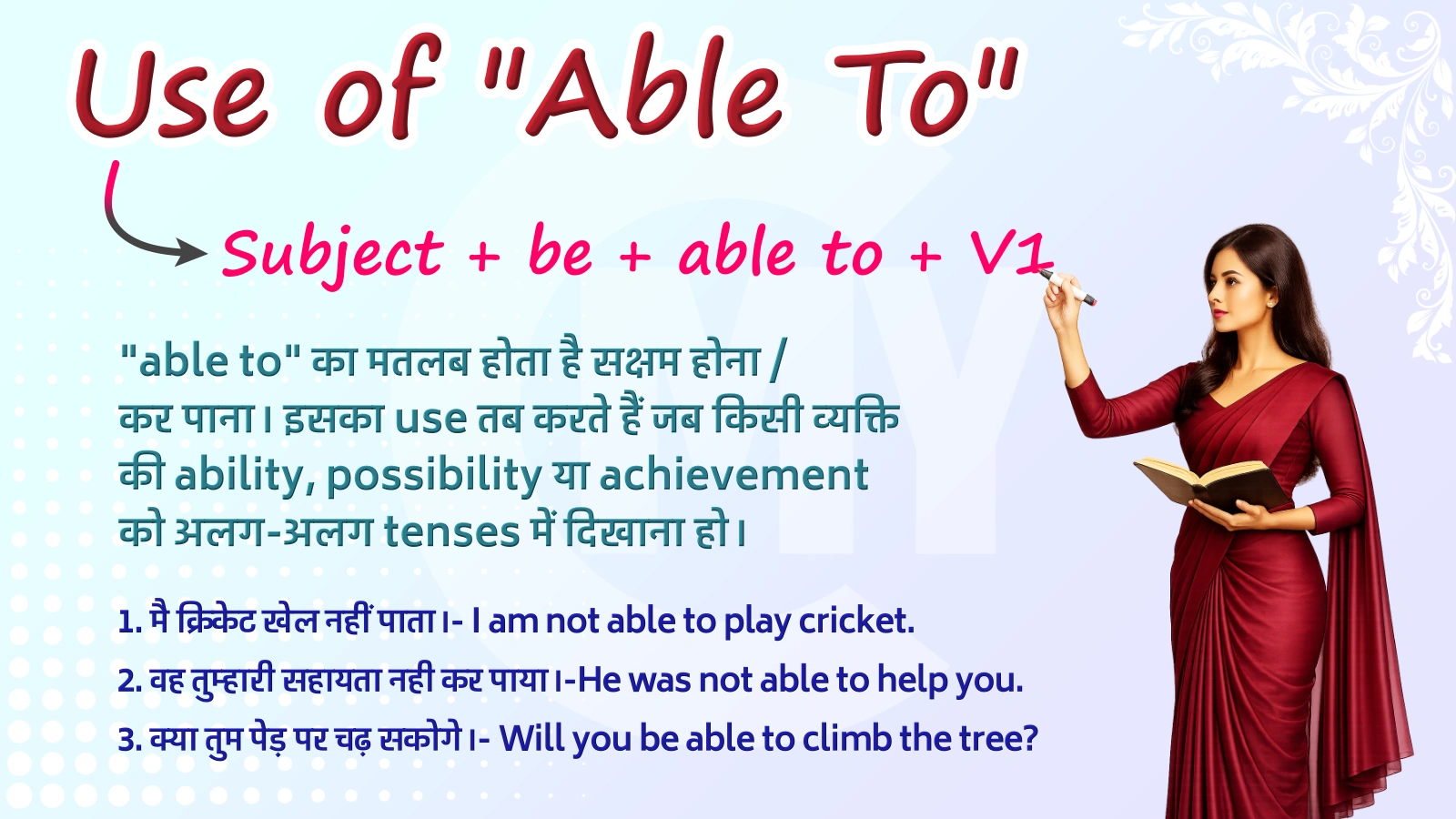
Use of Able To
Able का मतलब होता है सक्षम / योग्य / कर पाने वाला। इसे अक्सर be able to + verb (V1) के साथ use करते हैं। “Be able to” का मतलब होता है सक्षम होना / कर पाना। इसका use तब करते हैं जब किसी व्यक्ति की ability, possibility या achievement को अलग-अलग tenses (present, past, future) में दिखाना हो। जहाँ can / could हर tense में fit नहीं होते, वहाँ be able to सही और flexible structure देता है।
Ability से तात्पर्य “किसी काम को करने की क्षमता” होती है। जब किसी की ability या capability बतानी हो, तब Able To का प्रयोग किया जाता है।
उदाहरण के लिए (Examples):
1. He is able to speak English.
वह अंग्रेज़ी बोलने में सक्षम है।
2. I am able to do this work.
मैं यह काम कर सकता हूँ।
“can” सिर्फ present/past tense तक limited है, लेकिन be able to हर tense में आ सकता है।
- Structure: Subject + be (am/is/are/was/were/will be) + able to + V1
उदाहरण के लिए-
| Tense | Examples |
| Present | I am able to do this work. मैं यह काम कर पाता हूँ। |
| Past | He was able to finish the task. वह काम पूरा कर सका। |
| Future | We will be able to come tomorrow. हम कल आ पाएंगे। |
Use of Able To in Present Tense
यदि वाक्य के अंत में “पाता, पाती, पाते या आ+जाता, ई+जाती, ऐ+जाते” आए तो Present Tense में is / am / are के साथ able to का प्रयोग करके क्रिया की first form लगाते हैं।
For example:
1. मै क्रिकेट खेल नहीं पाता ।
I am not able to play cricket.
2. मुझसे कार्य किया नहीं जाता।
I am not able to do the work.
3. उससे वैठा नहीं जाता।
He is not able to sit.
4. उससे चलाफिरा नहीं जाता।
He is not able to move.
Use of Able To in Past Tense
यदि वाक्य के अंत में “पाया, पायी या पाये” लगा हो तो ऐसे वाक्य में was/were के साथ able to का प्रयोग करके क्रिया की first form लगाते हैं।
For example:
1. मैं तुम्हें सबक नही सिखा पाया।
I was not able to tease you lesson.
2. वह तुम्हारी सहायता नही कर पाया ।
He was not able to help you.
3. वे यह कार्यनहीं कर पाये ।
They were not able to do this work.
Use of Able To in Future Tense
यदि वाक्य के अंत में “सकेगा, सकेगी, सकेंगे, पायेगा, पायेगी या पायेगे” लगा हो तो ऐसे वाक्यों में will be/shall be के साथ able to का प्रयोग करके क्रिया की first form लगाते हैं।
For example:
1. तुम यह पाठ यांद नही कर पाओगे।
You will not be able to learn this lesson.
2. वह तुम्हारे भाई को परेशान नही करवायेगा।
He will not be able to trouble your brother.
3. क्या तुम पेड़ पर चढ़ सकोगे.
Will you be able to climb the tree?
4. वह मेरी तन्खा नही काट पाटयेगा।
He will not be able to deduct my salary.
5. वह तुम्हारे गेहूँ नहीं पीस पाया ।
He was not able to grind your wheat.
6. मुझसे गलत अर्थ नहीं लगाया जाता।
I am not able to mis-interpret.
7. मुझसे तास नही फेटे जाते ।
I am not able to shuffle the cards.
8. वह अपने खेतों में मूंगफली नहीं उगा पायेगा।
He will not be able to grow groundnut in his field.
50+ Examples of Using “able to”
| Hindi Sentence | English Translation |
|---|---|
| मैं यह काम कर पाता हूँ। | I am able to do this work. |
| वह अंग्रेज़ी बोल पाता है। | He is able to speak English. |
| हम समय पर पहुँच पाते हैं। | We are able to reach on time. |
| क्या तुम मेरी मदद कर पाते हो? | Are you able to help me? |
| क्या वह दौड़ पाता है? | Is he able to run? |
| मैं उसे देख नहीं पाता हूँ। | I am not able to see him. |
| वह तैर नहीं पाता है। | He is not able to swim. |
| बच्चे पढ़ नहीं पाते हैं। | The children are not able to study. |
| मैं जल्दी उठ पाता हूँ। | I am able to wake up early. |
| वह गाना गा पाती है। | She is able to sing a song. |
| हम जीत पाते हैं। | We are able to win. |
| क्या वे अंदर जा पाते हैं? | Are they able to go inside? |
| मैं दरवाज़ा खोल नहीं पाता हूँ। | I am not able to open the door. |
| वह सच बोल पाता है। | He is able to tell the truth. |
| मैं कल आ पाऊँगा। | I will be able to come tomorrow. |
| वह तुम्हारी मदद कर पाएगा। | He will be able to help you. |
| क्या तुम समय पर पहुँच पाओगे? | Will you be able to arrive on time? |
| हम मैच जीत पाएंगे। | We will be able to win the match. |
| मैं परीक्षा पास कर पाऊँगा। | I will be able to pass the exam. |
| वह नहीं आ पाएगी। | She will not be able to come. |
| क्या वे काम पूरा कर पाएंगे? | Will they be able to finish the work? |
| मैं तुम्हें फोन कर पाऊँगा। | I will be able to call you. |
| हम समस्या हल कर पाएंगे। | We will be able to solve the problem. |
| वह गाड़ी चला पाएगा। | He will be able to drive the car. |
| मैं उसे समझा पाऊँगा। | I will be able to explain to him. |
| वह परीक्षा पास कर पाया। | He was able to pass the exam. |
| हम समय पर पहुँच पाए। | We were able to reach on time. |
| क्या तुम उसे ढूँढ पाए? | Were you able to find him? |
| मैं उसे देख नहीं पाया। | I was not able to see him. |
| वे जीत नहीं पाए। | They were not able to win. |
| क्या वह दरवाज़ा खोल पाया? | Was he able to open the door? |
| मैं तैर पाया। | I was able to swim. |
| वह जल्दी उठ पाया। | He was able to wake up early. |
| हम बस पकड़ पाए। | We were able to catch the bus. |
| क्या तुम किताब ला पाए? | Were you able to bring the book? |
| मैं सवाल हल कर पाया। | I was able to solve the question. |
| वह सच समझ पाया। | He was able to understand the truth. |
| हम फिल्म देख पाए। | We were able to watch the movie. |
| क्या वह अंदर जा पाया? | Was he able to go inside? |
| मैं उसे रोक नहीं पाया। | I was not able to stop him. |
| वह समय पर नहीं पहुँच पाया। | He was not able to arrive on time. |
| बच्चे खेल नहीं पाए। | The children were not able to play. |
| क्या तुम गाना गा पाए? | Were you able to sing a song? |
| मैं काम पूरा कर पाया। | I was able to finish the work. |
| वह समस्या हल कर पाया। | He was able to solve the problem. |
| हम जीत पाए। | We were able to win. |
| क्या तुम उसे मना पाए? | Were you able to convince him? |
| मैं उसे समझ नहीं पाया। | I was not able to understand him. |
| वह दौड़ नहीं पाया। | He was not able to run. |
| क्या वे समय बचा पाए? | Were they able to save time? |
| मैं रास्ता ढूँढ पाया। | I was able to find the way. |
| वह किताब पढ़ पाया। | He was able to read the book. |
30+ Complex & Compound Sentence Examples
| Hindi Sentence | English Translation |
|---|---|
| अगर तुम मेहनत करोगे, तो तुम यह काम कर पाओगे। | If you work hard, you will be able to do this work. |
| वह बीमार था, फिर भी वह परीक्षा दे पाया। | He was ill, but he was able to take the exam. |
| जब बारिश रुकेगी, हम बाहर जा पाएंगे। | When the rain stops, we will be able to go out. |
| मैंने बहुत कोशिश की और मैं दरवाज़ा खोल पाया। | I tried hard, and I was able to open the door. |
| अगर तुम मुझे बुलाओगे, तो मैं आ पाऊँगा। | If you call me, I will be able to come. |
| वह देर से आया, लेकिन वह हमसे मिल पाया। | He came late, but he was able to meet us. |
| जब तुम पढ़ाई पूरी कर लोगे, तब तुम आराम कर पाओगे। | When you finish studying, you will be able to rest. |
| उसने अभ्यास किया ताकि वह अच्छा गा पाए। | He practiced so that he would be able to sing well. |
| हम जल्दी निकले और हम ट्रेन पकड़ पाए। | We left early, and we were able to catch the train. |
| अगर मौसम अच्छा रहा, तो हम यात्रा कर पाएंगे। | If the weather is good, we will be able to travel. |
| वह गरीब था, फिर भी वह अपने बच्चों को पढ़ा पाया। | He was poor, yet he was able to educate his children. |
| जैसे ही तुम पहुँचोगे, हम बात कर पाएंगे। | As soon as you arrive, we will be able to talk. |
| मैं थका हुआ था, लेकिन मैं काम पूरा कर पाया। | I was tired, but I was able to finish the work. |
| अगर तुम ध्यान दोगे, तो तुम गलती समझ पाओगे। | If you pay attention, you will be able to understand the mistake. |
| वह डर रहा था, फिर भी वह सच बोल पाया। | He was afraid, yet he was able to tell the truth. |
| हम साथ काम करेंगे ताकि हम लक्ष्य पा सकें। | We will work together so that we will be able to achieve the goal. |
| जब तुम वापस आओगे, हम फिल्म देख पाएंगे। | When you come back, we will be able to watch the movie. |
| उसने मुझे समझाया और मैं सवाल हल कर पाया। | He explained to me, and I was able to solve the question. |
| अगर तुम जल्दी उठोगे, तो तुम बस पकड़ पाओगे। | If you wake up early, you will be able to catch the bus. |
| वह बहुत व्यस्त था, लेकिन वह फोन कर पाया। | He was very busy, but he was able to call. |
| जब शिक्षक आएंगे, हम सवाल पूछ पाएंगे। | When the teacher comes, we will be able to ask questions. |
| मैंने रास्ता खो दिया, फिर भी मैं घर पहुँच पाया। | I lost the way, yet I was able to reach home. |
| अगर तुम मेरी मदद करोगे, तो मैं जल्दी खत्म कर पाऊँगा। | If you help me, I will be able to finish quickly. |
| वह धीरे चला ताकि वह गिरने से बच पाए। | He walked slowly so that he would be able to avoid falling. |
| हम मेहनत करेंगे और हम जीत पाएंगे। | We will work hard, and we will be able to win. |
| वह छोटा था, लेकिन वह तैरना सीख पाया। | He was young, but he was able to learn swimming. |
| अगर तुम सच बताओगे, तो हम समस्या हल कर पाएंगे। | If you tell the truth, we will be able to solve the problem. |
| मैं देर से पहुँचा, फिर भी मैं उससे मिल पाया। | I arrived late, yet I was able to meet him. |
| जब तुम तैयार हो जाओगे, हम शुरू कर पाएंगे। | When you are ready, we will be able to start. |
| उसने कड़ी मेहनत की और वह सफल हो पाया। | He worked hard, and he was able to succeed. |
Conclusion — Use of “be able to”
Be able to का मतलब होता है सक्षम होना / कर पाना। इसे किसी काम की ability, possibility, success या capacity बताने के लिए use करते हैं।
Structure याद रखें: Subject + be (am/is/are/was/were/will be) + able to + V1
FAQs
Can और be able to में क्या difference है?
Example:
I can swim.
I will be able to swim.
Past में कब “was/were able to” use करते हैं?
Example:
मैं समय पर पहुँच पाया।
➡️ I was able to arrive on time.
Future ability कैसे बनाते हैं?
Example:
मैं कल आ पाऊँगा।
➡️ I will be able to come tomorrow.