

Present Perfect Tense in Hindi – Rules, Examples and Exercises
Present Perfect Tense से ज्ञात होता है कि कार्य समाप्त हो गया है किन्तु उसे समाप्त हुए अधिक देर नहीं हुई है। हिन्दी में ऐसे वाक्यों के अन्त में या है, ये हैं, भी हैं, चुका है, चुकी हैं, चुकी है, आदि शब्द प्रयुक्त होते हैं।
नीचे दी गई टेबल को ध्यानपूर्वक पढ़िए:
| Person (पुरुष) |
Singular (एकवचन) |
Plural (बहुवचन) |
|---|---|---|
| I Person | I have seen. मैं देख चुका हूँ। |
We have seen. हम देख चुके है। |
| II Person | You have seen. तुम देख चुके हो। |
You have seen. तुम देख चुके हो। |
| III Person | He (She, It) has seen. यह देख चुका है। |
They have seen. वे देख चुके हैं। |
Rules (नियम):
- यदि कर्ता (Subject) He, She, It या एकवचन की संज्ञा (Singular Noun) है तो Has के साथ क्रिया (Verb) की III Form का प्रयोग होता है।
- यदि कर्ता (Subject) I, We, You, They या बहुवचन की संज्ञा (Plural Nouns) है तो Have के साथ Verb की Third Form का प्रयोग होता है।
नोट–
- इस Tense में Have/Has का प्रयोग सहायक क्रिया की तरह होता है।
- Main Verb (मुख्य क्रिया) की Third Form का प्रयोग होता है।
(A) Affirmative (Positive) Sentences
1. मैं अपना पाठ याद कर चुका हूँ।
I have learnt my lesson.
2. तुमने झूठ बोला है।
You have told a lie.
3. हमने आम खा लिए हैं।
We have eaten the mangoes.
4. उन्होंने स्नान कर लिया है।
They have bathed.
5. वह गीत गा चुकी है।
She has sung a song. (She has sung).
6. वह नाश्ता पहले ही कर चुका है।
He has already had his breakfast.
7. सूर्य निकल आया है।
The sun has risen.
8. रेलगाड़ी अभी-अभी प्लेटफार्म पर आयी है।
The train has just arrived at the platform.
9. रेलगाड़ी स्टेशन से जा चुकी है।
The train has gone from the station.
10. पिताजी अब सो गये हैं।
Father has slept now.
(B) Negative Sentences
11. तुमने अपने छोटे भाई को नहीं पीटा है।
You have not beaten your younger brother.
12. उन्होंने तुम्हें नहीं बुलाया है।
They have not called you.
13. माँ ने अभी तक खाना नहीं खाया है।
Mother has not taken her food yet.
14. सूर्य अभी नहीं निकला है।
The sun has not risen yet.
15. माताजी ने ताजमहल अभी तक नहीं देखा है।
Mother has not seen the Taj Mahal yet.
16. पिताजी आज दफ्तर नहीं गये हैं।
Father has not gone to office today.
17. राम के भाई ने उपन्यास नहीं खरीदा है।
Rama’s brother has not bought a novel.
18. हरी ने तुम्हारी पुस्तक नहीं चुराई है।
Hari has not stolen your book.
19. मैंने अपने मित्र को कल सुबह से नहीं देखा है।
I have not seen my friend since yesterday morning.
20. वह यहाँ तीन वर्ष से नहीं रह रहा है।
He has not lived here for three years.
(C) Interrogative Sentences (Question Form)
First Type (‘क्या’ से आरम्भ होने वाले, वाक्य):
21. क्या तुम्हारे भाई ने अपना कार्य कर लिया है?
Has your brother done his work?
22. क्या दूधवाला अभी तक नहीं आया है?
Has the milkman not come so far?
23. क्या तुमने कभी सफेद हाथी देखा है?
Have you ever seen a white elephant?
24. क्या मिस्टर दास ने इस स्कूल में 1980 से पढ़ाया है?
Has Mr. Dass taught in this school since 1980?
25. क्या गुप्ताजी ने इस स्कूल में दस वर्ष तक पढ़ाया है?
Has Mr. Gupta taught in this school for ten years?
Second Type (Wh-Type Questions):
26. चपरासी कहाँ गया है?
Where has the peon gone?
27. वे बेहली क्यों नहीं गये हैं?
Why have they not gone to Delhi?
28. उन्होंने आज क्या खाया है?
What have they eaten today?
29. तुम्हारा परिवार कब से देहली में रह रहा है?
Since when has your family lived in Delhi?
30. तुमने अब तक कितने प्रश्न कर लिए हैं?
How many questions have you done so far?
31. तुम भारत में कब से रह रहे हो?
How long have you been in India?
32. तुमने सुबह से चाय के कितने प्याले पी लिए हैं?
How many cups of tea have you drunk since morning?
33. तुम्हें आज किसने बुलाया है?
Who has called you today?
पहिचान और अनुवाद के नियम
पहिचान-
- इस Tense के वाक्यों से ज्ञात होता है कि कार्य समाप्त हो गया है किन्तु कार्य समाप्त हुए अधिक देर नहीं हुई है।
- इस काल (Tense) के हिन्दी वाक्यों के अन्त में ‘या है, ये हैं, यी हैं, चुकी हैं, चुका हूँ. चुके हैं’ आदि शब्द-समूह आते हैं।
अनुवाद के नियम-
(A) Affirmative Sentences:
- I. We, You, They तथा बहुवचन की संज्ञाओं (Plural Nouns) के साथ Have लगाकर Verb की Third Form का प्रयोग किया जाता है।
- के साथ Has लगाकर Verb की 2. He, She, It तथा एकवचन की संज्ञाओं (Singular Nouns) के साथ Third Form का प्रयोग किया जाता है।
इन वाक्यों में Have/Has का प्रयोग सहायक क्रिया (Helping Verb) की तरह होता है तथा मुख्य क्रिया (Main Verb) की Third Form अर्थात Past Participle Form का प्रयोग होता है।
Verb का स्वरूप : Have/Has + Main Verb की Third Form (Past Participle).
(B) Negative Sentences:
- Have/Has सहायक क्रिया के बाद तथा मुख्य क्रिया की Third Form से पहले Not का प्रयोग होता है।
- इन वाक्यों में Yet (अभी तक) का प्रयोग हो जाता है।
(C) Interrogative Sentences (Question Form):
- यदि वाक्य में ‘क्या’ शब्द सबसे पहले आया है (First Type) तो इस ‘क्या’ शब्द का अनुवाद What से नहीं किया जाता है बल्कि Have/Has को कर्ता से पहले, कर्ता (Subject) के अनुसार लिखा जाता है।
- यदि प्रश्नसूचक वाक्य निषेधात्मक (Negative) भी है तो मुख्य क्रिया की Third Form (अर्थात Past Participle) से पहले ‘नहीं’ के लिए Not लगता है।
- यदि प्रश्नसूचक शब्द (क्या, कब, कैसे, क्यों) वाक्य के बीच में आया है (Second Type) तो उसकी अंग्रेजी वाक्य में सबसे पहले आती है और तब कर्ता के अनुसार सहायक क्रिया Have/Has का प्रयोग किया जाता है। इसके पश्चात मुख्य क्रिया की Third Form आती है।
- यदि ऐसा वाक्य Negative भी है तो मुख्य क्रिया से पहले ‘नहीं’ के लिए Not लगता है।
- Who वाले वाक्यों में सहायक क्रिया और मुख्य क्रिया Who के तुरन्त बाद आती है।
- प्रश्नवाचक वाक्यों के अन्त में प्रश्नवाचक चिन्ह (?) लगाया जाता है।
नोट-
- Present Perfect Tense के वाक्यों में For/Since का भी प्रयोग हो सकता है। समय बिन्दु (Point of Time) के लिए Since और समय की अवधि (Period of Time) के लिए For को प्रयोग होता है; जैसे-
- Point of Time: सुबह से since morning; सात बजे से since 7 o’clock; 1980 से-since 1980.
- Period of Time: दो घण्टे से for two hours; दस साल से for ten years आदि।
- इस Tense में Adverbial Phrase या Adverb का भी प्रयोग हो जाता है; जैसे- Yet, so far, ever (कभी) आदि।
- ‘कितने प्याले’ के लिए-How many cups; ‘कब से’ के लिए How long; ‘कितने प्रश्न’ के लिए-How many questions का प्रयोग कीजिए।
EXERCISE 1. (Positive Sentences) Translate the following sentences into English:
| Hindi Sentence | English Translation |
|---|---|
| 1. सूर्य अस्त हो गया है। | The sun has set. |
| 2. रेलगाड़ी स्टेशन से चली गयी है। | The train has left the station. |
| 3. मास्टर साहब ने हाजिरी ले ली है। | The teacher has taken the attendance. |
| 4. प्रधानाचार्य जी ने चपरासी को दफ्तर से निकाल दिया है। | The principal has dismissed the peon from the office. |
| 5. इस पोस्टमैन ने आज का कार्य समाप्त कर लिया है। | This postman has finished today’s work. |
| 6. मोटी बिल्ली ने सम्पूर्ण दूध पी लिया है। | The fat cat has drunk all the milk. |
| 7. हिमानी ने अपना सम्पूर्ण कार्य कर लिया है। | Himani has completed all her work. |
| 8. पिताजी टहल कर घर लौट आए हैं। | Father has returned home after a walk. |
| 9. आग ने पूरा भवन नष्ट कर दिया है। | The fire has destroyed the whole building. |
| 10. भूकम्प ने चमोली क्षेत्र को बहुत हानि पहुँचाई है। | The earthquake has caused great damage to the Chamoli area. |
Difficult words: हाजिरी लेना = to take attendance; निकाल देना to turn out; जोन का कार्य = today’s work; सम्पूर्ण whole; लौट आना to return; भवन building: भूकम earthquake; चमोली क्षेत्र = Chamoli region; हानि पहुँचाना = to caused damage.
EXERCISE 2. (Negative Sentences) Translate the following sentences into English:
| Hindi Sentence | English Translation |
|---|---|
| 1. अभी चाँद अस्त नहीं हुआ है। | The moon has not set yet. |
| 2. अभी सूर्य पूरब में दिखाई नहीं पड़ा है। | The sun has not appeared in the east yet. |
| 3. रेलगाड़ी अभी तक प्लेटफार्म पर नहीं आई है। | The train has not arrived at the platform yet. |
| 4. माताजी ने अपना कार्य समाप्त नहीं किया है। | Mother has not finished her work. |
| 5. पिताजी मन्दिर नहीं गए हैं। | Father has not gone to the temple. |
| 6. प्रधानाचार्य जी ने दफ्तर में नए चपरासी को नहीं बुलाया है। | The principal has not called the new peon to the office. |
| 7. चपरासी ने घण्टी नहीं बजाई है। | The peon has not rung the bell. |
| 8. माली ने पौधों में पानी नहीं लगाया है। | The gardener has not watered the plants. |
| 9. मेरे कुत्ते ने किसी को अभी तक नहीं काटा है। | My dog has not bitten anyone yet. |
| 10. हम यह समाचार पहले ही सुन चुके हैं। | We have already heard this news. |
Difficult words: अभी yet; अभी तक = yet (= even now); दिखाई पड़ना = to appear, पानी लगाना = to water; पौधों plants; समाचार = news.
नोट-वाक्य 10 में पहले ही के लिए already या before का प्रयोग कीजिए। Already वाक्य के बीच में, तथा Before वाक्य के अन्त में प्रयुक्त होगा।
EXERCISE 3. (Interrogative Sentences) Translate the following sentences into English:
| Hindi Sentence | English Translation |
|---|---|
| 1. क्या आपने नाश्ता कर लिया है? | Have you taken your breakfast? / Have you had breakfast? |
| 2. क्या आपके भाई ने नया स्कूटर खरीद लिया है? | Has your brother bought a new scooter? |
| 3. क्या भावना ने अपने छोटे भाई को पत्र लिख लिया है? | Has Bhavana written a letter to her younger brother? |
| 4. क्या मुकेश ने किसी की सहायता के बिना वैशाली में अपना मकान बना लिया है? | Has Mukesh built his house in Vaishali without anyone’s help? |
| 5. क्या इन लड़कों ने गणित के पाँच कठिन प्रश्न हल कर डाले हैं? | Have these boys solved five difficult sums of mathematics? |
| 6. क्या रेलगाड़ी प्लेटफार्म नम्बर 5 पर अभी तक नहीं आयी है? | Has the train not arrived at platform number 5 yet? |
| 7. क्या आपने तुलसीदास की रचना कवितावली पढ़ ली है? | Have you read Tulsidas’s work Kavitavali? |
| 8. क्या आपकी गाय ने बीमारी के कारण अभी तक घास नहीं खाई है? | Has your cow not eaten grass yet because of illness? |
| 9. क्या अंशु और हिमानी को दो बस्ते मिल गए हैं? | Have Anshu and Himani got two school bags? |
| 10. क्या इस पेंटर ने दीवारों पर अच्छा पेंट किया है? | Has this painter painted the walls well? |
Difficult words: नाश्ता breakfast; स्कूटर = scooter, किसी की सहायता के बिना with-out anybody’s help; गणित = mathematics; अभी तक= yet (या even now); बीमारी के कारण = due to illness; बस्ते bags; पेन्टर painter.
| Hindi Sentence | English Translation |
|---|---|
| 11. आपसे ऐसा किसने कहा है? | Who has said this to you? |
| 12. आपने ऐसा क्यों कहा है? | Why have you said so? |
| 13. आपके साथ ऐसा अपमानजनक व्यवहार किस प्रकार हुआ है? | How has such an insulting behavior happened to you? / How have you been treated so insultingly? |
| 14. तुमने अपना कार्य पूरा कब किया है? | When have you completed your work? |
| 15. रेलगाड़ी प्लेटफार्म पर अभी तक क्यों नहीं आयी है? | Why has the train not arrived at the platform yet? |
| 16. आपका कुली अब कहाँ चला गया है? | Where has your porter gone now? |
| 17. तुम्हारे भाइयों ने अध्यापक का अपमान क्यों किया है? | Why have your brothers insulted the teacher? |
| 18. तुम्हारे पड़ोसी ने तुम्हें क्यों उत्साहित किया है? | Why has your neighbor encouraged you? |
| 19. इस नवयुवक ने प्रधानाचार्य का आदेश क्यों नहीं माना है? | Why has this young man not obeyed the principal’s order? |
| 20. तुम्हारी बहिन ने धार से पत्र किसके द्वारा भेजा है? | Through whom has your sister sent the letter from Dhar? |
Difficult words: ऐसा such; अपमानजनक insulting; व्यवहार = behaviour, कुली = coolie: पड़ोसी = neighbour; उत्साहित करना= to encourage.
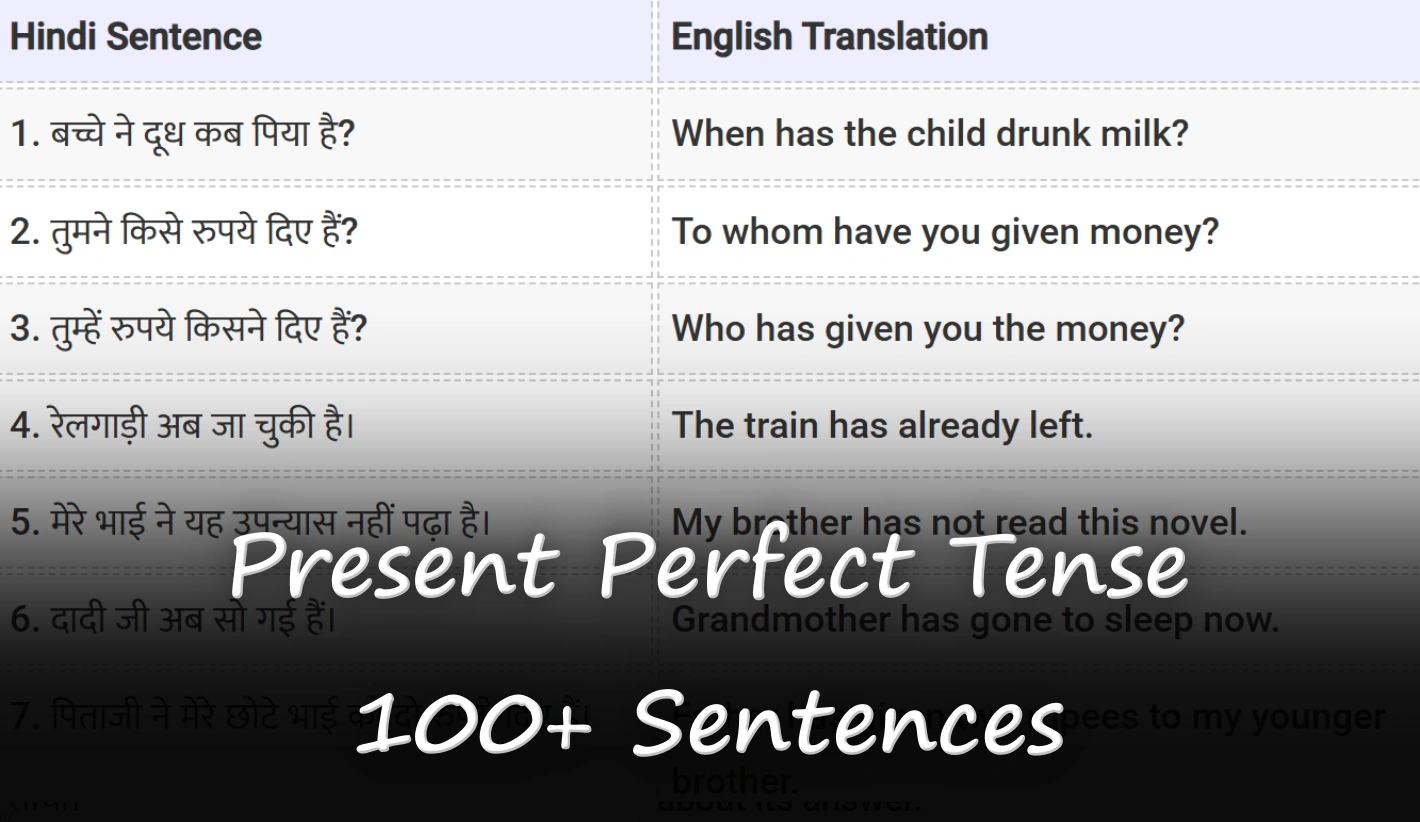
EXERCISE 4. (Miscellaneous) Translate the following sentences into English:
| Hindi Sentence | English Translation |
|---|---|
| 1. बच्चे ने दूध कब पिया है? | When has the child drunk milk? |
| 2. तुमने किसे रुपये दिए हैं? | To whom have you given money? |
| 3. तुम्हें रुपये किसने दिए हैं? | Who has given you the money? |
| 4. रेलगाड़ी अब जा चुकी है। | The train has already left. |
| 5. मेरे भाई ने यह उपन्यास नहीं पढ़ा है। | My brother has not read this novel. |
| 6. दादी जी अब सो गई हैं। | Grandmother has gone to sleep now. |
| 7. पिताजी ने मेरे छोटे भाई को दो रुपये दिए हैं। | Father has given two rupees to my younger brother. |
| 8. हिमानी ने अमरूद नहीं खाए हैं। | Himani has not eaten guavas. |
| 9. अंशु ने पाँच केले खा लिए हैं। | Anshu has eaten five bananas. |
| 10. क्या उसने कभी सफेद हाथी देखा है? | Has he ever seen a white elephant? |
| 11. मैंने आज तक सफेद हाथी नहीं देखा है। | I have never seen a white elephant till today. |
| 12. तुम इस नगर में कितने दिनों तक रहे हो? | How many days have you stayed in this city? |
| 13. गुप्ता जी ने हमें दो साल से नहीं पढ़ाया है। | Mr. Gupta has not taught us for two years. |
| 14. मैंने आज सुबह से कुछ भी नहीं खाया है। | I have not eaten anything since morning. |
| 15. तुम्हारे भाई ने आज किसकी पुस्तक चुरा ली है? | Whose book has your brother stolen today? |
Difficult words: किसे whom; किसने who; उपन्यास novel; कभी = ever, आज तक = till today; कितने दिनों तक = for how many days, how long; गुबह से since morning, किसकी पुस्तक = whose book.
Learn other English Grammar in Hindi Translation: