

Present Perfect Continuous Tense in Hindi – Rules, Examples and Exercises
Present Perfect Continuous Tense में कार्य पिछले समय से आरम्भ होकर वर्तमान समय तक जारी रहता है और प्रायः कार्य जारी रहने का समय भी दिया होता है। यदि सन्दर्भ से कार्य लगातार जारी रहने का भाव प्रकट हो तो समय की अवधि का होना विशेष महत्त्व नहीं रखता है।
नीचे दिये गये चार्ट को ध्यानपूर्वक पढ़िए-
| Person (पुरुष) |
Singular (एकवचन) |
Plural (बहुवचन) |
|---|---|---|
| I Person | I have been reading. मैं पढ़ता रहा हूँ। |
We have been reading. हम पढ़ते रहे हैं। |
| II Person | You have been reading. आप पढ़ते रहे हो। |
You have been reading. आप पढ़ते रहे हो। |
| III Person | He (She, It) has been reading. वह पढ़ता रहा है। |
They have been reading. वे पढ़ते रहे हैं। |
Rules (नियम):
- I, We, You, They तथा Plural Nolins के साथ Have been तथा मुख्य क्रिया की First Form के अन्त में, -ing जोड़ा जाता है।।
- He, She, It और Singular Nouns के साथ Has been तथा मुख्य क्रिया के अन्त में -ing जोड़ा जाता है।
नोट-
- Have been और Has been सहायक, क्रियाएं हैं।
- इस Tense में For/Since का प्रयोग होता है। निश्चित समय (Point of Time) के लिए Since तथा अनिश्चित समय (Period of Time) के लिए For का प्रयोग होता है।
- Examples: दो घंटे से = For two hours; दो बजे से = Since two o’clock; सुबह से = Since morning; 1994 से = Since 1994.
(A) Affirmative (Positive) Sentences
1. मैं दो घण्टे से अपना पाठ याद कर रहा हूँ।
I have been learning my lesson for two hours.
2. हम दो बजे से क्रिकेट खेल रहे हैं।
We have been playing cricket since two o’clock.
3. तुम सुबह से पत्र लिखते रहे हो।
You have been writing letters since morning.
4. उन्हें पाँच दिन से बुखार आ रहा है।
They have been suffering from fever for five days.
5. वह इस मकान में 1990 से रह रही है।
She has been living in this house since 1990..
6. आज सुबह से बारिश हो रही है।
It has been raining today since morning.
7. वह पिछले मंगलवार से स्कूल जा रहा है।
He has been going to school since Tuesday last. (OR) He has been going to school since last Tuesday.
8. माताजी एक घण्टे से रामायण पढ़ रही हैं।
Mother has been reading the Ramayana for one hour.
(B) Negative Sentences
9. मैं दो बजे से नहीं खेल रहा हूँ।
I have not been playing since two o’clock.
10. ये लड़कियों सुबह से अपना पाठ याद नहीं कर रही हैं।
These girls have not been learning their lessons since morning.
(C) Interrogative Sentences (Question Form)
First Type (‘क्या’ से आरम्भ होने वाले वाक्य):
11. क्या तुम 1990 से इस मकान में रह रहे हो?
Have you been living in this house since 1990?
12. क्या सुबह से वर्षा हो रही है?
Has it been raining since morning?
13. क्यों ये लड़कियाँ दो घण्टे से शोर नहीं मचा रही हैं?
Have these girls not been making a noise for two hours?
Second Type (Wh-Type questions):
14. वह एक सप्ताह से फुटबाल क्यों खेल रहा है?
Why has he been playing football for a week?
15. तुम्हारी बहिन 1993 से क्या कर रही है?
What has your sister been doing since 1993?
16. तुम दो माह से कहाँ रह रहे हो?
Where have you been living for two months?
17. डाक्टर साहब कब से इस मरीज को दवाई दे रहे हैं?
How long has the doctor been giving medicine to this patient? (OR) From when has the doctor been giving medicine to this patient? (OR) When has the doctor been giving medicine to this patient from?
18. तुम्हें सुबह से कौन बुला रहा है?
Who has been calling you since morning?
19. यह वक्ता कितने समय से भाषण दे रहा है?
How long has this lecturer been speaking?
20. ये बच्चे दोपहर से T.V. Serial क्यों नहीं देख रहे हैं?।
Why have these children not watching the T.V. Serial since noon?
पहिचान और अनुवाद के नियम
पहिचान –
- इस Tense के वाक्यों से ज्ञात होता है कि कार्य वर्तमान में कुछ समय से जारी है और अभी पूरा नहीं हुआ है।
- इस Tense के वाक्यों के अन्त में ‘रहा है, रही है, रहा हूँ, रहे हों’ आदि शब्द-समूह आते हैं और कार्य के जारी रहने का समय सामान्यतया दिया होता है।
नोट-
- Present Continuous Tense और Present Perfect Continuous Tense में निम्नलिखित अन्तर है-
- वह दौड़ रहा है। (Present Continuous)
He is running. - वह दस मिनट से दौड़ रहा है। (Present Perfect Continuous)
He has been running for ten minutes.
- वह दौड़ रहा है। (Present Continuous)
- Present Continuous में कार्य का लगातार होना पाया जाता है। Present Perfect Continuous में कार्य के जारी रहने का समय भी दिया होता है।
- Present Continuous में सहायक क्रिया-Is. Am, Are के साथ क्रिया की -ing Form प्रयुक्त होती है जबकि Present Perfect Continuous में सहायक क्रिया- Have been/Has been के साथ क्रिया की -ing Form प्रयुक्त होती है।
- Present Continuous में For/Since का प्रयोग नहीं होता है। Present Perfect Continuous में सामान्यतया For/Since का प्रयोग जेना है।
अनुवाद के नियम-
(A) Positive Sentences:
- I, We, You, They तथा Plural Nouns के लिए सहायक क्रिया (Helping Verb) Have been लगाकर Verb की First Form के अन्त में -ing जोड़ दिया जाता है, अर्थात Have been के साथ Verb की Present Participle Form का प्रयोग होता है।
- He, She, It तथा एकवचन की संज्ञाओं (Singular Nouns) के लिए Has been लगाकर क्रिया की First Form के पश्चात -ing जोड़ा जाता है अर्थात Verb की Present Participle Form का प्रयोग होता है।
- निश्चित समय (Point of Time) के लिए Since का प्रयोग होता है।
- अनिश्चित समय (Period of Time) के लिए For का प्रयोग होता है।
- इस Tense में Have been/Has been का प्रयोग सहायक क्रिया (Helping Verb) की तरह होता है।
- For/Since के प्रयोग के लिए निम्न विवरण को ध्यानपूर्वक पढ़िए-दो घण्टे से for two hours; दो बजे से since two o’clock; सुबह से-since morning; शाम से-since evening; कल से-since yesterday; 1990 से since 1990; दो साल से for two years; दो सप्ताह से for two weeks: तीन माह से for three months; आदि।
(B) Negative Sentences:
- Have/Has के बाद किन्तु Been से पहले ‘नहीं’ के लिए Not लिखा जाता है।
(C) Interrogative Sentences:
- प्रश्नवाचक वाक्य में यदि ‘क्या’ शब्द वाक्य में सबसे पहले प्रयुक्त हुआ है (First Type) तो इस ‘क्या’ के लिए What का प्रयोग नहीं होता है बल्कि वाक्य के कर्ता (Subject) के अनुसार सहायक क्रिया Have/Has के बाद कर्ता (Subject) का प्रयोग होता है।
- यदि ये वाक्य Negative भी है तो been से पहले not आता है।
- यदि प्रश्नवाचक वाक्य में प्रश्नसूचक शब्द वाक्य के बीच में है (Second Type) तो सर्वप्रथम इन शब्दों (जैसे-क्या, कब, कहाँ, कैसे, क्यों आदि) की अंग्रेजी लिखकर कर्ता के अनुसार Have/Has का प्रयोग होता है।
- प्रश्नवाचक वाक्यों के अन्त में प्रश्नवाचक चिन्ह (?) लगता है।
EXERCISE 1. (Positive Sentences) Translate the following sentences into English:
| Hindi Sentence | English Translation |
|---|---|
| 1. वह दो घण्टे से रह रहा है। | He has been living for two hours. (Better: He has been staying for two hours.) |
| 2. मैं तीन बजे से पुस्तक पढ़ रहा हूँ। | I have been reading a book since three o’clock. |
| 3. वे दो घण्टे से अपना कार्य कर रहे हैं। | They have been doing their work for two hours. |
| 4. वह 1990 से इस कॉलेज में पढ़ रहा है। | He has been studying in this college since 1990. |
| 5. मेरा भाई तीन बजे से हॉकी खेल रहा है। | My brother has been playing hockey since three o’clock. |
| 6. यह स्त्री तीन घण्टे से अपने कपड़े धो रही है। | This woman has been washing her clothes for three hours. |
| 7. मास्टर साहब तीन दिन से विद्यार्थियों की कापियाँ जाँच रहे हैं। | The teacher has been checking the students’ notebooks for three days. |
| 8. किसान सुबह सात बजे से खेत जोत रहा है। | The farmer has been ploughing the field since seven in the morning. |
| 9. हम इस शहर में चार माह से रह रहे हैं। | We have been living in this city for four months. |
| 10. श्याम को चार दिन से बुखार आ रहा है। | Shyam has been suffering from fever for four days. |
| 11. राम दो घण्टे से समाचार-पत्र पढ़ रहा है। | Ram has been reading the newspaper for two hours. |
| 12. यह धोबी तीन बजे से कपड़े धो रहा है। | This washerman has been washing clothes since three o’clock. |
Difficult words: कालिज = college; हॉकी = hockey; कापियाँ = exercise books; जाँचना = to examine; बुखार fever; यह धोबी = this washerman.
EXERCISE 2. (Negative Sentences) Translate the following sentences into English:
| Hindi Sentence | English Translation |
|---|---|
| 1. प्रथा इस विद्यालय में तीन वर्ष से नहीं पढ़ रही है। | Pratha has not been studying in this school for three years. |
| 2. डॉक्टर साहब तीन दिन से इस मरीज को दवाई नहीं दे रहे हैं। | The doctor has not been giving medicine to this patient for three days. |
| 3. राम एक महीने से इतिहास नहीं पढ़ रहा है। | Ram has not been studying history for one month. |
| 4. मैं दो घण्टे से पत्र नहीं लिख रहा हूँ। | I have not been writing a letter for two hours. |
| 5. तुम एक सप्ताह से स्कूल नहीं जा रहे हो। | You have not been going to school for a week. |
| 6. तुम्हें एक माह से बुखार नहीं आ रहा है। | You have not been suffering from fever for a month. |
| 7. यह सुनार दस दिन से अंगूठी नहीं बना रहा है। | This goldsmith has not been making a ring for ten days. |
| 8. तुम एक घण्टे से अपना कमरा साफ नहीं कर रहे हो। | You have not been cleaning your room for an hour. |
| 9. यह माली एक सप्ताह से बाग में काम नहीं कर रहा है। | This gardener has not been working in the garden for a week. |
| 10. हरी सुबह से खेत नहीं जोत रहा है। | Hari has not been ploughing the field since morning. |
| 11. आज सूर्य सुबह से नहीं चमक रहा है। | The sun has not been shining since morning. |
| 12. मेरा भाई तीन दिन से क्रिकेट नहीं खेल रहा है। | My brother has not been playing cricket for three days. |
Difficult words: मरीज = patient; दवाई = medicine; बुखार = fever; सुनार = goldsmith; माली = gardener, खेत जोतना = to plough the fields; क्रिकेट = cricket.
EXERCISE 3. (Interrogative Sentences) Translate the following sentences, into English:
(A) First Type –
| Hindi Sentence | English Translation |
|---|---|
| 1. क्या मोहन दो वर्ष से तुम्हारी सहायता कर रहा है? | Has Mohan been helping you for two years? |
| 2. क्या राम का भाई दो दिन से स्कूल नहीं जा रहा है? | Has Ram’s brother not been going to school for two days? |
| 3. क्या यह नौकर एक वर्ष से अच्छा कार्य कर रहा है? | Has this servant been doing good work for one year? |
| 4. क्या माताजी सुबह से आराम कर रही हैं? | Has mother been resting since morning? |
| 5. क्या आज दोपहर से वर्षा हो रही है? | Has it been raining since this afternoon? |
| 6. क्या तुम तीन वर्ष से परीक्षा नहीं देते रहे हो? | Have you not been taking the exam for three years? (Better: Have you not been appearing in the exam for three years?) |
(B) Second Type –
| Hindi Sentence | English Translation |
|---|---|
| 7. तुम एक सप्ताह से क्या करते रहे हो? | What have you been doing for a week? |
| 8. तुम्हारा कुत्ता आज आधी रात से क्यों भौंकता रहा है? | Why has your dog been barking since midnight today? |
| 9. मैं कब से तुम्हारी प्रतीक्षा कर रहा हूँ? | Since when have I been waiting for you? |
| 10. यह किसान दो दिन से कहाँ सोता रहा है? | Where has this farmer been sleeping for two days? |
| 11. तुम एक सप्ताह से यह कार्य किस प्रकार करते रहे हो? | How have you been doing this work for a week? |
| 12. वे चार बजे से क्यों पढ़ रहे हैं? | Why have they been studying since four o’clock? |
| 13. तुम्हें दो दिन से कौन पीटता रहा है? | Who has been beating you for two days? |
Difficult words: सुबह से = since morning; प्रतीक्षा करना = to wait; एक सप्ताह से = for a week; किस प्रकार = how; आधी रात = midnight; परीक्षा देना = to appear at the examina-tion (to take the examination).
EXERCISE 23. (Miscellaneous) Translate the following sentences into English:
| Hindi Sentence | English Translation |
|---|---|
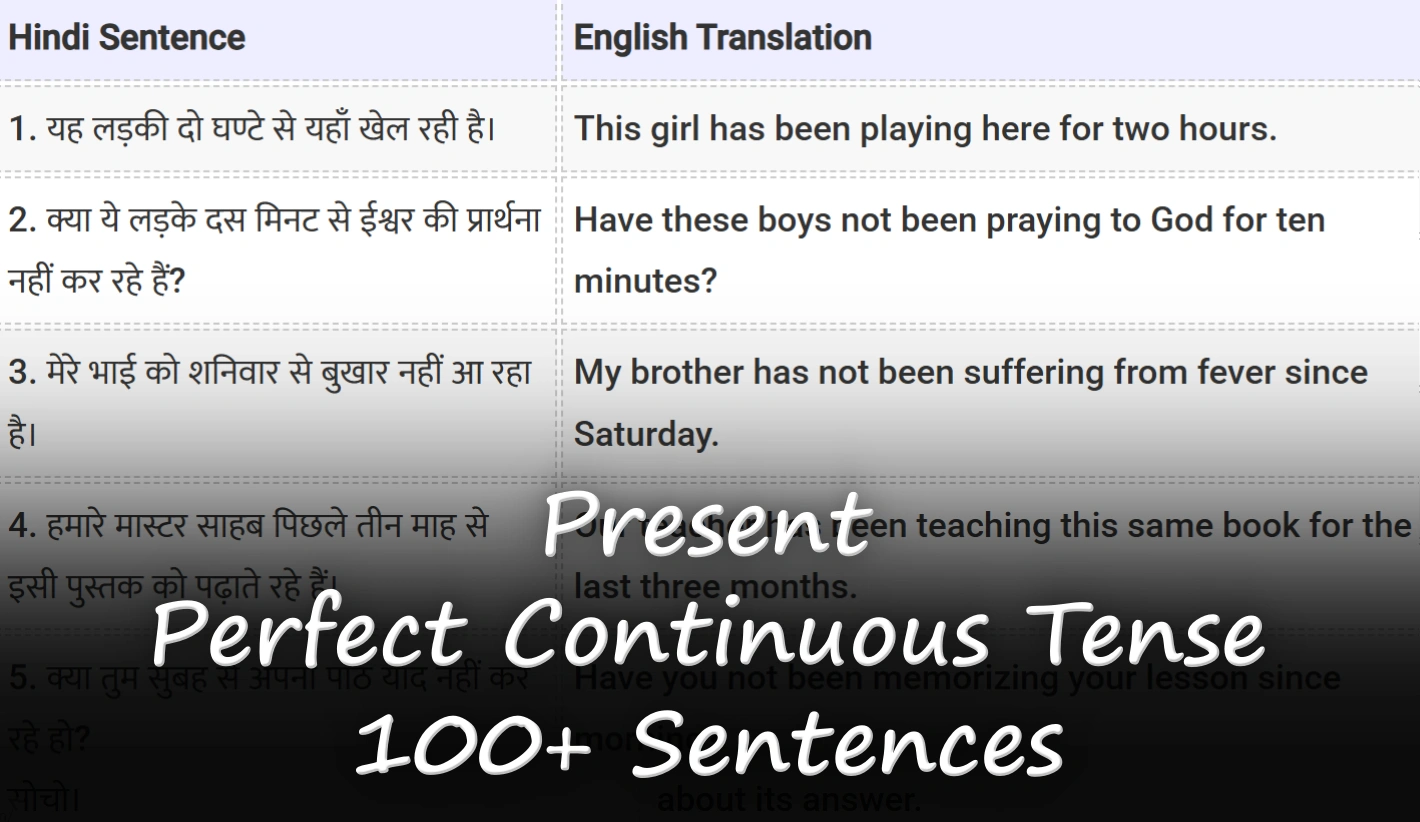
| 1. यह लड़की दो घण्टे से यहाँ खेल रही है। | This girl has been playing here for two hours. |
| 2. क्या ये लड़के दस मिनट से ईश्वर की प्रार्थना नहीं कर रहे हैं? | Have these boys not been praying to God for ten minutes? |
| 3. मेरे भाई को शनिवार से बुखार नहीं आ रहा है। | My brother has not been suffering from fever since Saturday. |
| 4. हमारे मास्टर साहब पिछले तीन माह से इसी पुस्तक को पढ़ाते रहे हैं। | Our teacher has been teaching this same book for the last three months. |
| 5. क्या तुम सुबह से अपना पाठ याद नहीं कर रहे हो? | Have you not been memorizing your lesson since morning? |
| 6. लम्बे समय से मनुष्य प्रकृति के रहस्यों को जानने की चेष्टा करता रहा है। | Man has been trying to understand the mysteries of nature for a long time. |
| 7. हम महीनों से इस नाटक के लिए तैयारियाँ करते रहे हैं। | We have been making preparations for this play for months. |
| 8. तुम्हें तीन माह से अंग्रेजी कौन पढ़ाता रहा है? | Who has been teaching you English for three months? |
| 9. तुम एक सप्ताह से किसकी सहायता कर रहे हो? | Whose help have you been giving for a week? / Whom have you been helping for a week? |
| 10. क्या आप दिनभर क्रिकेट की कमेंट्री नहीं सुनते रहे हो? | Have you not been listening to the cricket commentary all day? |
| 11. क्या आपके पड़ोसी आपकी सहायता एक वर्ष से नहीं करते रहे हैं? | Have your neighbors not been helping you for a year? |
| 12. तुम्हारा भाई दोपहर से ताश क्यों खेलता रहा है? | Why has your brother been playing cards since noon? |
Difficult words : उस मिनट = ten minutes; प्रकृति = nature; रहस्य् = mysteries; नाटक = drama; कमेन्टरी = commentary; पड़ोसी = neighbours; ताश = cards.
Learn other English Grammar in Hindi Translation: