

Have बहुवचन की क्रिया है। Has एकवचन की क्रिया है। Present Perfect Tense में इन दोनों का प्रयोग सहायक क्रिया (Helping Verb) के रूप में होता है। Has/Have का Past Tense- “Had” है। सहायक क्रिया के रूप में इसका प्रयोग Past Perfect Tense में होता है। Future Perfect Tense में Will have/Shall have का प्रयोग होता है। इस Tense में Will और Shall सहायक क्रियायें हैं जबकि Have का प्रयोग मुख्य क्रिया (Main Verb) के रूप में होता है। Future Perfect Tense में Will have/Shall have सहायक क्रिया के रूप में प्रयोग की जाती हैं। इस Tense में Will have/Shall have के साथ मुख्य क्रिया की Third Form का प्रयोग होता है।Future Perfect Continuous Tense में Will have been/Shall have been सहायक क्रिया हैं। इनके साथ मुख्य क्रिया की First Form के अन्त में -ing जोड़ा जाता है।
‘Have’, ‘Has’ और ‘Had’ का मुख्य क्रिया के रूप में प्रयोग
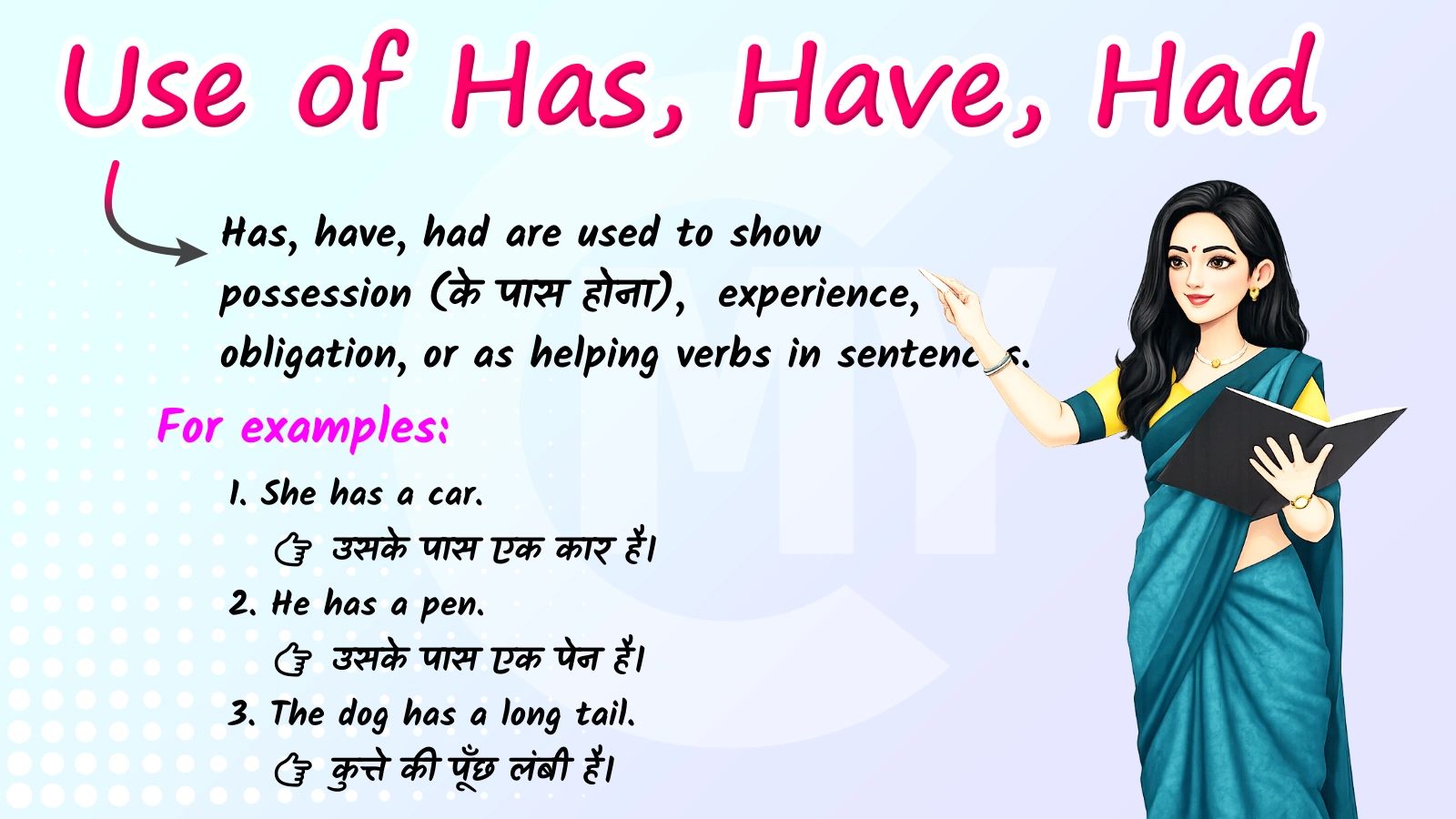
Has, have, had are used to show possession (के पास होना), experience, obligation, or as helping verbs in sentences.
(Has / Have / Had का प्रयोग किसी के पास कुछ होने या किसी कार्य को पूरा दिखाने के लिए किया जाता है।)
(A) Positive Sentences
Rule (नियम) 1:
- Present Indefinite Tense में I, We, You, They तथा बहुवचन की संज्ञाओं के साथ ‘रखना’ के अर्थ में Have का प्रयोग होता है।
- Present Indefinite Tense में He, She, It तथा एकवचन की संज्ञाओं के साथ ‘रखना’ के अर्थ में Has का प्रयोग होता है।
- Past Indefinite Tense में ‘रखना’ के अर्थ में प्रत्येक कर्ता (Subject) के साथ Had का प्रयोग होता है।
Present Tense में:
1. मेरे पास एक साइकिल है। (मैं एक साइकिल रखता हूँ।)
I have a cycle.
2. उनके पास दस पैन हैं। (वे दस पैन रखते हैं।)
They have ten pens.
3. हमारे पास दो घोड़े हैं। (हम दो घोड़े रखते हैं।)
We have two horses.
4. तुम्हारे पास तीन पुस्तके हैं। (तुम तीन पुस्तकें रखते हो।)
You have three books.
5. मीरा के पास एक रेडियो है। (मीरा एक रेडियो रखती है।)
Mira has a radio.
Past Tense में:
1. हरी के पास एक स्कूटर या। (हरी एक स्कूटर रखती था।)
Hari had a scooter.
2. हमारे पास पाँच घोड़े थे। (हम पाँच घोड़े रखते थे।)
We had five horses.
3. इस लड़की के पास पाँच अंगूठियाँ थीं। (यह लड़की पाँच अंगूठियों रखती थी।)
This girl had five rings.
(B) Negative Sentences
Rule (नियम) 2:
- Negative वाक्यों में Has, Have या Had के पश्चात No यो Not का प्रयोग होता है। जब किसी वस्तु की संख्या एक से अधिक हो तो केवल Not का प्रयोग होगा।
- जब संख्या एक हो तो No या Not में से किसी का भी प्रयोग किया जा सकता है।
1 . मेरे पास बहुत-सी पुस्तकें नहीं हैं।
I have not many books.
2. मीरा के पास दो अंगूठियाँ नहीं है।
Mira has not two rings.
3. राम के पास पाँच पैन नहीं है।
Rama has not five pens.
4. उनके पास दो दुकानें नहीं थीं।
They had not two shops.
5. मेरे पास कोई पुस्तक नहीं है।
I have no book.
मैं एक भी पुस्तक नहीं रखता हूँ।
I have not any book.
(C) Interrogative Sentences
Rule (नियम) 3:
- प्रश्नवाचक वाक्यों में Have, Has, Had कर्ता से पहले आते हैं। और Had का प्रयोग कर्ता के अनुसार होता है। Have, Has, Had का प्रयोग कर्त्ता से पहले किया जाता है।
- कहाँ, कब, क्यों, कैसे आदि प्रश्नसूचक शब्द यदि वाक्य के बीच में हो तो सर्वप्रथम इन शब्दों की अंग्रेजी आती है और फिर कर्ता से पहले कर्ता के अनुसार Have, Has, Had का प्रयोग किया जाता है।
1. क्या तुम्हारे पास पाँच पुस्तकें है?
Have you five books?
2. क्या उसके पास एक रेडियो था?
Had he (she) a radio?
3. क्या राम के पास पाँच पैन नहीं थे?
Had Ram not five pens?
4. कल तुम्हारे पास घड़ी क्यों नहीं थी?
Why had you no watch yesterday?
Possessive Uses of have / has / had
1. Ownership / Belonging
Shows that something belongs to someone. (किसी चीज़ का मालिक होना / किसी के पास कोई वस्तु होना)
- I have a house. (मेरे पास एक घर है।)
- She has a bike. (उसके पास एक बाइक है।)
- They had a big farm. (उनके पास एक बड़ा खेत था।)
2. Relationship
Shows family or social relationships. (परिवार या सामाजिक संबंध बताने के लिए)
- He has two sisters. (उसकी दो बहनें हैं।)
- She had many friends. (उसके कई दोस्त थे।)
- I have a good teacher. (मेरे एक अच्छे शिक्षक हैं।)
3. Body parts / Physical features
Used to describe parts of the body or appearance. (शरीर के अंग या शारीरिक बनावट बताने के लिए)
- She has blue eyes. (उसकी आँखें नीली हैं।)
- The dog has a long tail. (कुत्ते की पूँछ लंबी है।)
- He had strong hands. (उसके हाथ मजबूत थे।)
4. Personal qualities / Characteristics
Describes qualities, skills, or traits. (गुण, क्षमता या स्वभाव बताने के लिए)
- She has patience. (उसमें धैर्य है।)
- He had courage. (उसमें साहस था।)
- They have confidence. (उनमें आत्मविश्वास है।)
5. Illness / Conditions
Used to talk about sickness or health problems. (बीमारी या स्वास्थ्य की स्थिति बताने के लिए)
- She has a fever. (उसे बुखार है।)
- I had a headache. (मुझे सिरदर्द था।)
- He has asthma. (उसे दमा है।)
6. Abstract possession (ideas, feelings, experiences)
Things you can’t physically touch. (ऐसी चीज़ें जो दिखाई नहीं देतीं (विचार, भावना, आशा))
- I have an idea. (मेरे पास एक विचार है।)
- She has a plan. (उसके पास एक योजना है।)
- They had hope. (उनके पास आशा थी।)
Non-Possessive Uses of have / has / had
1. Daily activities / Routines
Here have means do / take / enjoy, not possession. (यहाँ have = करना / लेना / आनंद लेना)
- I have breakfast at 8 a.m. (मैं सुबह 8 बजे नाश्ता करता हूँ।)
- She has a bath. (वह स्नान करती है।)
- They had a walk. (उन्होंने टहलना किया।)
📌 यह possession नहीं है → main verb है
2. Experiences
Used for things that happen to someone. (कोई घटना या अनुभव होना)
- She had a bad dream. (उसे बुरा सपना आया।)
- I have an interesting experience. (मुझे एक रोचक अनुभव हुआ है।)
- They had an accident. (उनका दुर्घटना हो गई।)
3. Illness / discomfort (temporary)
अस्थायी बीमारी या तकलीफ़
- I have a cold. (मुझे सर्दी है।)
- He had a fever. (उसे बुखार था।)
4. Obligation / necessity — “have to”
Shows duty or compulsion. (मजबूरी / कर्तव्य / आवश्यक होना)
- I have to study. (मुझे पढ़ना पड़ता है।)
- She has to obey the rules. (उसे नियमों का पालन करना पड़ता है।)
- They had to leave early. (उन्हें जल्दी जाना पड़ा।)
📌 यहाँ have = modal-type main verb की तरह काम करता है
5. Causative use (make/arrange something to be done)
Structure: have + object + past participle (किसी से काम करवाना)
- I had my hair cut. (मैंने अपने बाल कटवाए।)
- She has her car repaired. (वह अपनी कार ठीक करवा रही है।)
- They will have the house painted. (वे घर की पुताई करवाएँगे।)
6. Auxiliary (helping verb) — Perfect tenses
Used with a past participle.
- I have finished my work. (मैंने अपना काम पूरा कर लिया है।
- She has gone home. (वह घर चली गई है।)
- They had left before noon. (वे दोपहर से पहले जा चुके थे।)
📌 यहाँ have / has / had = helping verb (सहायक क्रिया), possession नहीं (पास होना नहीं)
Forming Interrogatives and Negatives
Question और Negative में do / does / did + have का प्रयोग करके भी बनाए जाते हैं।
- Has → Have बन जाता है।
- Had → did + have बन जाता है।
| Affirmative / Statement (साधारण वाक्य) |
Interrogative / Question (प्रश्नवाचक) |
Negative (नकारात्मक) |
|---|---|---|
| 1. I have a book. मेरे पास एक किताब है। |
Do you have a book? / Have you book? क्या तुम्हारे पास एक किताब है? |
I do not have a book. / I have not a book. मेरे पास किताब नहीं है। |
| 2. She has a car. उसके पास एक कार है। |
Does she have a car? क्या उसके पास एक कार है? |
She does not have a car. उसके पास कार नहीं है। |
| 3. They had money. उनके पास पैसे थे। |
Did they have money? क्या उनके पास पैसे थे? |
They did not have money. उनके पास पैसे नहीं थे। |
| 4. We have a house. हमारे पास एक घर है। |
Do we have a house? क्या हमारे पास घर है? |
We do not have a house. हमारे पास घर नहीं है। |
| 5. He has a pen. उसके पास एक पेन है। |
Does he have a pen? क्या उसके पास पेन है? |
5He does not have a pen. उसके पास पेन नहीं है। |
| 6. I had a bike. मेरे पास एक बाइक थी। |
Did I have a bike? क्या मेरे पास बाइक थी? |
I did not have a bike. मेरे पास बाइक नहीं थी। |
| 7. She has two sisters. उसकी दो बहनें हैं। |
Does she have two sisters? क्या उसकी दो बहनें हैं? |
She does not have two sisters. उसकी दो बहनें नहीं हैं। |
| 8. They have a farm. उनके पास एक खेत है। |
Do they have a farm? क्या उनके पास खेत है? |
They do not have a farm. उनके पास खेत नहीं है। |
| 9. We had a dog. हमारे पास एक कुत्ता था। |
Did we have a dog? क्या हमारे पास कुत्ता था? |
We did not have a dog. हमारे पास कुत्ता नहीं था। |
| 10. He has a problem. उसके पास एक समस्या है। |
Does he have a problem? क्या उसके पास समस्या है? |
He does not have a problem. उसके पास समस्या नहीं है। |

(A) Affirmative Sentences:
| क्र.सं. | Hindi Sentence | English Translation |
|---|---|---|
| 1. | मेरे पास एक स्कूटर है। | I have a scooter. |
| 2. | हरी के पास 12 पैसे हैं। | Hari has twelve paise. |
| 3. | शीला के पास एक रेडियो है। | Sheela has a radio. |
| 4. | सुनीता के पास एक ट्रांजिस्टर है। | Sunita has a transistor. |
| 5. | मीरा के पास कोई पुस्तक नहीं है। | Meera has no book. / Meera does not have any book. |
| 6. | मुकेश के पास कोई पुस्तक नहीं है। | Mukesh has no book. / Mukesh does not have any book. |
| 7. | रमेश के पास एक वॉशिंग मशीन थी। | Ramesh had a washing machine. |
(B) Negative Sentences:
| क्र.सं. | Hindi Sentence | English Translation |
|---|---|---|
| 8. | विजय के पास कूलर नहीं था। | Vijay did not have a cooler. / Vijay had no cooler. |
| 9. | मेरे पास अब दस रुपये नहीं थे। | I did not have ten rupees now. |
| 10. | कल मेरे पास पचास रुपये थे। | I had fifty rupees yesterday. |
| 11. | सीता के पास टेलीविजन सेट नहीं था। | Sita did not have a television set. |
| 12. | मोहन के पास दीवार घड़ी नहीं थी। | Mohan did not have a wall clock. |
| 13. | अंशू के पास हाथ की घड़ी नहीं थी। | Anshu did not have a wristwatch. |
| 14. | हिमानी के पास परसों अलार्म घड़ी नहीं थी। | Himani did not have an alarm clock the day before yesterday. |
(C) Interrogative Sentences:
| क्र.सं. | Hindi Sentence | English Translation |
|---|---|---|
| 15. | क्या तुम्हारे पास कार नहीं थी? | Didn’t you have a car? / Did you not have a car? |
| 16. | क्या हमीद के पास आरी नहीं थी? | Didn’t Hamid have a saw? / Did Hamid not have a saw? |
| 17. | क्या जेम्स के पास जेब घड़ी थी? | Did James have a pocket watch? |
| 18. | क्या तुम्हारे पास बाइबिल नहीं थी? | Didn’t you have a Bible? / Did you not have a Bible? |
| 19. | क्या इस लड़के के पास कोई बन्दूक नहीं थी? | Didn’t this boy have a gun? / Did this boy not have any gun? |
(D) Wh-Type Interrogative Sentences:
| क्र.सं. | Hindi Sentence | English Translation |
|---|---|---|
| 20. | कल इस लड़के के पास कॉपी क्यों नहीं थी? | Why didn’t this boy have a notebook yesterday? |
| 21. | रेखा के पास मेरा कैमरा क्यों था? | Why did Rekha have my camera? |
| 22. | कल अंशु के पास कैंची क्यों नहीं थी? | Why didn’t Anshu have scissors yesterday? |
| 23. | भावना के पास सूती चादर कब थी? | When did Bhavana have the cotton sheet? |
| 24. | इस सुनार के पास हथौड़ा कहाँ था? | Where did this goldsmith have the hammer? |
Difficult words: स्कूटर scooter; रेडियो radio; ट्रांजिस्टर = transistor, कूलर = cooler, टेलीविजन सैट = television set, television; दीवाल घड़ी clock; हाथ की घड़ी = wrist watch; परसों = day before yesterday; अलार्म घड़ी = alarm watch; कार= car; आरी = saw; बाइबिल = Bible; जेब घड़ी = pocket watch; कापी = exercise book, copy; कैमरा camera; कैंची = scissors; सूती चादर = cotton sheet; हथौड़ा = hammer.
‘Will Have’ और ‘Shall Have’ का मुख्य क्रिया के रूप में प्रयोग
नका प्रयोग भविष्यकाल (Future Tense) में “के पास होगा / होगी / होंगे” के अर्थ में किया जाता है।
| क्र.सं. | English Sentence | Hindi Meaning |
|---|---|---|
| 1. | I shall have a car. | मेरे पास एक कार होगी। |
| 2. | He will have a scooter. | उसके पास एक स्कूटर होगा। |
| 3. | She will have a new dress. | उसके पास एक नई पोशाक होगी। |
| 4. | We shall have a big house. | हमारे पास एक बड़ा घर होगा। |
| 5. | They will have a dog. | उनके पास एक कुत्ता होगा। |
| 6. | You will have a new phone. | तुम्हारे पास नया फ़ोन होगा। |
| 7. | Ramesh will have a computer. | रमेश के पास एक कंप्यूटर होगा। |
| 8. | I shall have enough money. | मेरे पास पर्याप्त पैसा होगा। |
| 9. | The teacher will have a book. | अध्यापक के पास एक किताब होगी। |
| 10. | She will have a bicycle. | उसके पास साइकिल होगी। |
| 11. | We shall have a meeting tomorrow. | हमारी कल एक बैठक होगी। |
| 12. | He will have some work to do. | उसके पास कुछ काम होगा। |
| 13. | You will have a chance to speak. | तुम्हें बोलने का अवसर मिलेगा। |
| 14. | I shall have time in the evening. | मेरे पास शाम को समय होगा। |
| 15. | They will have a test next week. | उनका अगले हफ्ते परीक्षण होगा। |
| 16. | The farmer will have a good crop. | किसान के पास अच्छी फसल होगी। |
| 17. | He will have a headache. | उसे सिरदर्द होगा। |
| 18. | I shall have a cup of tea. | मैं एक कप चाय लूँगा। |
| 19. | We shall have dinner at eight. | हम आठ बजे रात का खाना खाएँगे। |
| 20. | They will have a party tomorrow. | वे कल एक पार्टी करेंगे। |
| 21. | She will have a surprise. | उसे एक आश्चर्य मिलेगा। |
| 22. | He will have guests today. | आज उसके पास मेहमान होंगे। |
| 23. | You will have no problem. | तुम्हें कोई समस्या नहीं होगी। |
| 24. | We shall have a holiday next week. | हमारे पास अगले हफ्ते छुट्टी होगी। |
| 25. | He will have a chance to win. | उसके पास जीतने का मौका होगा। |
| 26. | I shall have lunch soon. | मैं जल्द ही दोपहर का भोजन करूँगा। |
| 27. | She will have a lot of homework. | उसके पास बहुत सारा गृहकार्य होगा। |
| 28. | They will have a new car soon. | उनके पास जल्द ही नई कार होगी। |
| 29. | You will have a beautiful garden. | तुम्हारे पास एक सुंदर बगीचा होगा। |
| 30. | We shall have great fun there. | हमें वहाँ बहुत मज़ा आएगा। |
Examples of Use of ‘Have’, ‘Has’, ‘Had’, ‘Will Have’ और ‘Shall Have’
Have (Main Verb) – वर्तमान काल (Present Tense):
| No. | English Sentence | Hindi Meaning |
|---|---|---|
| 1. | I have a beautiful garden behind my house where I grow many kinds of flowers. | मेरे घर के पीछे एक सुंदर बगीचा है जहाँ मैं कई प्रकार के फूल उगाता हूँ। |
| 2. | I have two brothers who study in different cities. | मेरे दो भाई हैं जो अलग-अलग शहरों में पढ़ते हैं। |
| 3. | I have a small car that I use to go to the office every day. | मेरे पास एक छोटी कार है जिसे मैं रोज़ दफ़्तर जाने के लिए उपयोग करता हूँ। |
| 4. | I have a few close friends with whom I share all my secrets. | मेरे कुछ करीबी दोस्त हैं जिनसे मैं अपने सारे राज़ साझा करता हूँ। |
| 5. | I have some free time in the evening to read novels and listen to music. | शाम को मेरे पास कुछ खाली समय होता है जिसमें मैं उपन्यास पढ़ता और संगीत सुनता हूँ। |
| 6. | I have a headache because I worked too long on the computer. | मुझे सिरदर्द है क्योंकि मैं कंप्यूटर पर बहुत देर तक काम करता रहा। |
| 7. | I have an old bicycle that still works perfectly. | मेरे पास एक पुरानी साइकिल है जो अभी भी बिल्कुल ठीक चलती है। |
| 8. | I have many dreams that I want to fulfill one day. | मेरे कई सपने हैं जिन्हें मैं एक दिन पूरा करना चाहता हूँ। |
| 9. | I have a habit of waking up early and going for a walk. | मेरी आदत है कि मैं सुबह जल्दी उठता हूँ और टहलने जाता हूँ। |
| 10. | I have a good idea about how to solve this problem. | मुझे इस समस्या को हल करने का अच्छा विचार है। |
Has (Main Verb) – वर्तमान काल (Present Tense):
| No. | English Sentence | Hindi Meaning |
|---|---|---|
| 11. | He has a large family that lives in a small village. | उसके पास एक बड़ा परिवार है जो एक छोटे से गाँव में रहता है। |
| 12. | She has a lovely smile that makes everyone happy. | उसके पास एक प्यारी मुस्कान है जो सबको खुश कर देती है। |
| 13. | He has a house near the river where he spends his weekends. | उसके पास नदी के पास एक घर है जहाँ वह अपने सप्ताहांत बिताता है। |
| 14. | She has a golden necklace that her grandmother gave her. | उसके पास एक सुनहरी माला है जो उसकी दादी ने दी थी। |
| 15. | He has some important documents to submit today. | उसके पास आज जमा करने के लिए कुछ महत्वपूर्ण दस्तावेज़ हैं। |
| 16. | She has two beautiful daughters who study in college. | उसकी दो सुंदर बेटियाँ हैं जो कॉलेज में पढ़ती हैं। |
| 17. | He has a kind heart that always helps poor people. | उसका दिल बहुत दयालु है जो हमेशा गरीबों की मदद करता है। |
| 18. | She has a lot of confidence while speaking in public. | उसे सार्वजनिक रूप से बोलते समय बहुत आत्मविश्वास होता है। |
| 19. | He has an interesting story to tell about his travels. | उसके पास अपनी यात्राओं की एक दिलचस्प कहानी है। |
| 20. | She has a cute puppy that follows her everywhere. | उसके पास एक प्यारा पिल्ला है जो हर जगह उसके पीछे जाता है। |
Had (Main Verb) – भूतकाल (Past Tense):
| No. | English Sentence | Hindi Meaning |
|---|---|---|
| 21. | I had a red car when I was in college. | जब मैं कॉलेज में था, तब मेरे पास एक लाल कार थी। |
| 22. | He had a small shop in the market five years ago. | पाँच साल पहले उसकी बाज़ार में एक छोटी दुकान थी। |
| 23. | She had a fever last night, so she couldn’t come. | उसे कल रात बुखार था, इसलिए वह नहीं आ सकी। |
| 24. | We had a meeting yesterday to discuss the project. | हमने कल परियोजना पर चर्चा करने के लिए एक बैठक की थी। |
| 25. | They had a big party when their son returned from abroad. | जब उनका बेटा विदेश से लौटा तो उन्होंने एक बड़ी पार्टी की थी। |
| 26. | I had some money, but I spent it all on books. | मेरे पास कुछ पैसे थे, पर मैंने सब किताबों पर खर्च कर दिए। |
| 27. | She had a pet cat that used to sleep on her bed. | उसके पास एक पालतू बिल्ली थी जो उसके बिस्तर पर सोया करती थी। |
| 28. | He had a problem with his car yesterday morning. | कल सुबह उसकी कार में समस्या थी। |
| 29. | We had many opportunities, but we missed them. | हमारे पास कई मौके थे, पर हमने उन्हें खो दिया। |
| 30. | They had a lot of work to do before the guests arrived. | मेहमानों के आने से पहले उनके पास करने के लिए बहुत सारा काम था। |
Will Have (Main Verb) – भविष्यकाल (Future Tense)
| No. | English Sentence | Hindi Meaning |
|---|---|---|
| 31. | I will have a new car next year if I save enough money. | अगर मैं पर्याप्त पैसा बचा लूँ तो अगले साल मेरे पास नई कार होगी। |
| 32. | He will have a chance to work abroad soon. | उसे जल्द ही विदेश में काम करने का अवसर मिलेगा। |
| 33. | She will have a beautiful house in the city after her marriage. | शादी के बाद उसके पास शहर में एक सुंदर घर होगा। |
| 34. | They will have more responsibilities after promotion. | पदोन्नति के बाद उनके पास और ज़िम्मेदारियाँ होंगी। |
| 35. | We will have enough time to finish the project tomorrow. | हमारे पास कल परियोजना पूरी करने के लिए पर्याप्त समय होगा। |
| 36. | You will have a great experience during the trip. | यात्रा के दौरान तुम्हें बहुत अच्छा अनुभव मिलेगा। |
| 37. | He will have new clothes for the festival. | त्योहार के लिए उसके पास नए कपड़े होंगे। |
| 38. | She will have no difficulty in solving this problem. | उसे यह समस्या हल करने में कोई कठिनाई नहीं होगी। |
| 39. | They will have a grand celebration next month. | अगले महीने वे एक भव्य उत्सव करेंगे। |
| 40. | He will have a lot of visitors at his new house. | उसके नए घर में बहुत से मेहमान आएंगे। |
Shall Have (Main Verb) – भविष्यकाल (Future Tense, I/We के साथ)
| No. | English Sentence | Hindi Meaning |
|---|---|---|
| 41. | I shall have a great time at the wedding next week. | अगले हफ्ते शादी में मुझे बहुत मज़ा आएगा। |
| 42. | We shall have a meeting on Monday to discuss our plan. | हम सोमवार को अपनी योजना पर चर्चा करने के लिए बैठक करेंगे। |
| 43. | I shall have my own office in a few months. | कुछ महीनों में मेरा अपना कार्यालय होगा। |
| 44. | We shall have a picnic if the weather is pleasant. | अगर मौसम सुहावना रहा तो हम पिकनिक पर जाएँगे। |
| 45. | I shall have a cup of coffee after finishing my work. | अपना काम खत्म करने के बाद मैं एक कप कॉफ़ी लूँगा। |
| 46. | We shall have new uniforms from next session. | अगले सत्र से हमारे पास नई वर्दियाँ होंगी। |
| 47. | I shall have a short break after the meeting. | बैठक के बाद मैं थोड़ा विश्राम करूँगा। |
| 48. | We shall have new computers in our office soon. | हमारे कार्यालय में जल्द ही नए कंप्यूटर होंगे। |
| 49. | I shall have many guests at home this weekend. | इस सप्ताहांत मेरे घर पर बहुत से मेहमान होंगे। |
| 50. | We shall have plenty of opportunities to improve ourselves. | हमारे पास खुद को सुधारने के कई अवसर होंगे। |
Note:
- Present Possession → have / has
- Past Possession → had
- Future Possession → will have / shall have
- Use “shall” with I & We (formal), otherwise “will” is fine in modern English.
Old vs. Modern English: Use of HAVE / HAS / HAD
| # | Old / Early Modern English | Modern English | हिन्दी अनुवाद (Meaning in Hindi) |
|---|---|---|---|
| 1. | Have you a book? | Do you have a book? | क्या तुम्हारे पास एक किताब है? |
| 2. | Has he a pen? | Does he have a pen? | क्या उसके पास एक पेन है? |
| 3. | Had you any money? | Did you have any money? | क्या तुम्हारे पास कोई पैसा था? |
| 4. | I have not a cow. | I do not have a cow. | मेरे पास कोई गाय नहीं है। |
| 5. | He has not a friend in this city. | He does not have a friend in this city. | इस शहर में उसका कोई दोस्त नहीं है। |
| 6. | She had not a chance to speak. | She did not have a chance to speak. | उसे बोलने का मौका नहीं मिला। |
| 7. | Have they a house? | Do they have a house? | क्या उनके पास एक घर है? |
| 8. | Has she any children? | Does she have any children? | क्या उसके बच्चे हैं? |
| 9. | Had he a brother? | Did he have a brother? | क्या उसका कोई भाई था? |
| 10. | I have not a horse to ride. | I don’t have a horse to ride. | मेरे पास सवारी करने के लिए घोड़ा नहीं है। |
| 11. | We have not time enough. | We do not have enough time. | हमारे पास पर्याप्त समय नहीं है। |
| 12. | Have you any doubt? | Do you have any doubt? | क्या तुम्हें कोई संदेह है? |
| 13. | He had not the courage to speak. | He did not have the courage to speak. | उसमें बोलने का साहस नहीं था। |
| 14. | Have I your permission? | Do I have your permission? | क्या मुझे आपकी अनुमति है? |
| 15. | She has not money to spend. | She does not have money to spend. | उसके पास खर्च करने के लिए पैसे नहीं हैं। |
| 16. | They have not the right to enter. | They do not have the right to enter. | उनके पास प्रवेश करने का अधिकार नहीं है। |
| 17. | Had we any food left? | Did we have any food left? | क्या हमारे पास कोई भोजन बचा था? |
| 18. | Have you a minute? | Do you have a minute? | क्या तुम्हारे पास एक मिनट है? |
| 19. | He has not the strength now. | He doesn’t have the strength now. | अब उसमें ताकत नहीं है। |
| 20. | I have not any doubt about it. | I don’t have any doubt about it. | मुझे इस बारे में कोई संदेह नहीं है। |
Grammar Insight
| Aspect | Old / Early Modern English | Modern English |
|---|---|---|
| Negative Form | Verb + not → I have not money. | Use do/does/did → I do not have money. |
| Question Form | Verb before subject → Have you a pen? | Use do/does/did → Do you have a pen? |
| Use of “Do” | Rare / Absent | Common and Natural |
| Tone | Formal, Literary | Natural, Conversational |
Remember:
- Old English: “Have you any idea?” (formal / British literature style)
- Modern English: “Do you have any idea?” (common spoken form)
- Both are grammatically correct, the choice depends on tone and context.